BiggerPockets Money
Cruising to FIRE in Her 40s (After Living Pay Check to Pay Check!)

Episode Summary
AI-generated · Mar 2026AI-generated summary — may contain inaccuracies. Not a substitute for the full episode or professional advice.
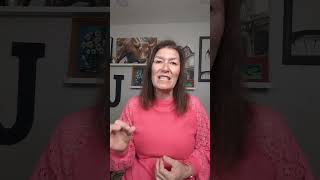
This episode features Emily, a guest who transformed her financial life from growing up in poverty and working three jobs to achieving a $2 million net worth and cruising towards financial independence (FIRE) by age 40. Her story is a powerful testament that one's starting point does not dictate their financial destination, demonstrating a remarkable shift from a scarcity mindset to one of abundance, peace, and purposeful wealth creation.
Emily's journey began with a wake-up call in her mid-20s. Despite making a decent corporate salary of $65,000-$70,000, she was spending it all, leasing an expensive Audi, and had minimal savings. A coworker introduced her to Dave Ramsey's baby steps, which provided a much-needed, simple framework for debt payoff and saving. This initial spark led her to dive deeper into personal finance, discovering JL Collins's *The Simple Path to Wealth* and the broader FIRE movement, which presented a 2.0 plan for an even earlier exit from corporate life.
Emily and her husband, Kenji, committed to a dual FIRE strategy, aiming to use a brokerage bridge fund to cover their expenses from age 40 to 60, before traditional retirement accounts become accessible. They aggressively saved 45-50% of their income, even after having a child and facing high self-employed insurance costs. Emily details their transition from high-stress corporate roles (where she peaked at a $200,000 compensation package) to self-employment, underpinned by significant liquidity and having paid off their mortgage, allowing them to pursue passion-driven work as a money coach and video game streamer, respectively.
Despite hitting a combined household income of $500,000 in a peak year, Emily and Kenji maintained extreme frugality, driving older cars and prioritizing saving over lifestyle inflation. Emily emphasizes the importance of a growth mindset, consistent investing (staying 100% in stocks even near FIRE, viewing market dips as buying opportunities), and the profound emotional peace and freedom that financial independence brings, allowing for generosity and ensuring a better future for their son. The episode concludes by challenging the notion that high incomes make FIRE journeys inapplicable to others, stressing that the core principles of living below your means and investing apply universally.
👤 Who Should Listen
- Anyone feeling trapped in a paycheck-to-paycheck cycle, even with a decent income.
- Individuals considering a career change or transition to self-employment, especially if they are burnt out from corporate work.
- Couples seeking inspiration and practical advice on aligning their financial goals and managing money together.
- Aspiring early retirees who want to understand strategies like 'dual FIRE' and aggressive investment approaches.
- Listeners struggling with a scarcity mindset about money and looking for ways to cultivate financial peace and freedom.
- People who believe that high-income earners' financial independence journeys are not applicable to them, but are open to challenging that belief.
🔑 Key Takeaways
- 1.Growing up in poverty and working three jobs does not define your future financial potential; a significant mindset shift and structured plan can lead to multi-million-dollar net worth and financial independence.
- 2.Dave Ramsey's baby steps can serve as a crucial entry point for individuals with no prior financial education, providing a simple, actionable path out of debt and towards saving.
- 3.The FIRE movement offers a '2.0 plan' beyond traditional investing advice, providing a framework for early retirement and an accelerated path to financial freedom through aggressive savings and investment in index funds.
- 4.A 'dual FIRE' strategy can involve funding a separate brokerage account as a bridge fund for early retirement (e.g., ages 40-60) before accessing traditional retirement accounts at a later age.
- 5.Even with high incomes, maintaining extreme frugality and consciously resisting lifestyle inflation is critical for rapidly accumulating wealth and achieving financial goals sooner.
- 6.Overcoming the fear of investing and embracing market volatility by viewing dips as opportunities to buy more assets on sale, rather than panic selling, is vital for long-term growth.
- 7.The psychological benefits of financial independence—such as peace, freedom from worry, and the ability to be generous—are often more impactful than the accumulated wealth itself.
- 8.Careers can compound, and many people will experience high-income years, making it possible to achieve FIRE even if starting from a modest income, by continually applying good money habits.
💡 Key Concepts Explained
Dave Ramsey's Baby Steps
A seven-step financial plan focused on getting out of debt, building an emergency fund, and then investing. Emily adopted this framework to gain control over her spending and start saving, finding its simplicity crucial for someone with no prior financial education.
Financial Independence, Retire Early (FIRE)
A lifestyle movement focused on aggressive saving and investing to accumulate enough wealth to retire decades earlier than traditional retirement age. For Emily, FIRE became her '2.0 plan,' offering an accelerated path to freedom beyond Dave Ramsey's 15% investing recommendation.
Dual FIRE
A less common FIRE strategy where a couple plans for an early retirement (e.g., ages 40-60) by funding a 'bridge fund' in a brokerage account, specifically for this interim period. The goal is to avoid touching traditional retirement accounts until later, allowing them to continue growing.
HSA as a Stealth Retirement Account
Utilizing a Health Savings Account (HSA) not just for current medical expenses but as a long-term investment vehicle with triple tax advantages (tax-deductible contributions, tax-free growth, tax-free withdrawals for qualified medical expenses). Emily hopes to load hers up and not touch it until much later in life.
Compounding
The process of generating earnings on an asset's reinvested earnings. Emily highlights the power of compounding by recalling a day when her investment accounts grew by an amount equal to her former W2 salary, emphasizing its slow start but exponential growth over time.
⚡ Actionable Takeaways
- →Adopt a structured financial plan like Dave Ramsey's baby steps to establish an emergency fund and systematically pay off debt, as Emily did when discovering the framework.
- →Commit to consistent budget meetings with your partner, even if they lack financial initiative, to align on shared goals and track progress, as Emily and Kenji have done for 10 years.
- →Seek out further education on investing beyond initial frameworks, for example, by reading resources like JL Collins's *The Simple Path to Wealth* to understand index funds and FIRE principles.
- →Prioritize living below your means and intentionally saving a significant portion of your income, even when experiencing higher earning years, to accelerate wealth accumulation.
- →Consider utilizing a Health Savings Account (HSA) as a 'stealth retirement account,' maximizing contributions and investing the funds for future healthcare expenses in retirement.
- →Cultivate a mindset of resilience during market downturns, reminding yourself that if you don't sell, you haven't locked in losses, and dips present opportunities to buy 'on sale'.
- →Build a robust emergency fund and maintain significant liquidity outside of retirement accounts to create a safety net, enabling career transitions or early retirement with greater confidence.
⏱ Timeline Breakdown
💬 Notable Quotes
“where you start does not define where you finish.”
“I just knew that money was scarce and from what I had perceived and that you had to work really hard for it.”
“I want to be done really soon. So like the idea that I had an out even sooner was like the 2.0 plan for me.”
“The only people who get hurt on a roller coaster are those who jump off.”
“The magic is not in the income generation. The magic is in the gathering.”
More from this guest
Emily
📚 Books Mentioned
Listen to Full Episode
📬 Get weekly summaries like this one
No spam. Unsubscribe anytime. By subscribing you agree to our Privacy Policy.
Continue Exploring