BiggerPockets Money
The Personal Financial Statement You NEED for FI
Episode Summary
AI-generated · Apr 2026AI-generated summary — may contain inaccuracies. Not a substitute for the full episode or professional advice.
In this episode, host Scott Trench of BiggerPockets Money outlines the crucial components of a robust personal financial statement specifically designed for individuals pursuing Financial Independence, Retire Early (FIRE). He emphasizes moving beyond simple net worth calculations to a more sophisticated, segmented approach.
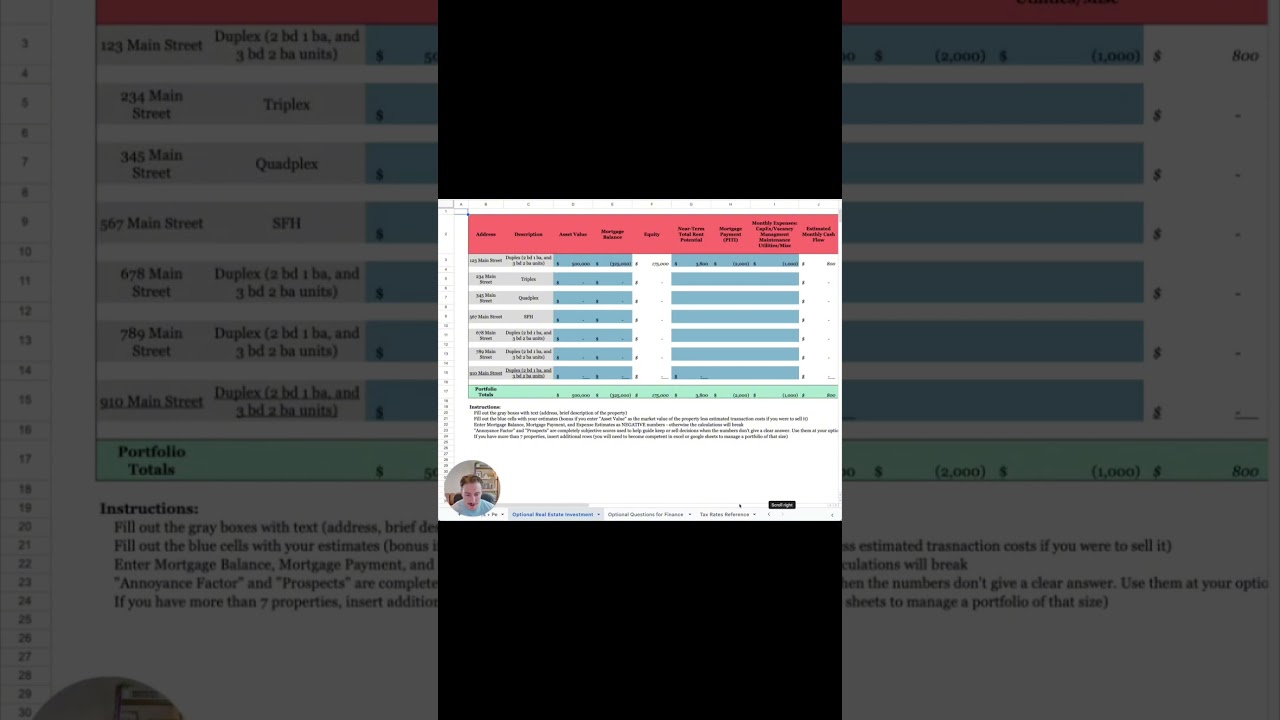
Trench details how to categorize assets, distinguishing between personal property (such as homes, vehicles, and beneficiary accounts like 529s) and a dedicated financial portfolio. The financial portfolio itself is further broken down into liquid assets (stocks, bonds, traditional retirement accounts, or after-tax portfolios) – which are critical for calculating a “4% withdrawal sequence” [00:37] – and illiquid assets, including real estate, private equity investments, alternative assets, and pensions.
The discussion also covers income and expenses with a focus on a reasonably sophisticated attempt at estimating tax liabilities. This includes federal taxes on ordinary income and capital gains, state taxes (accounting for progressive income tax brackets), and FICA contributions (Social Security and Medicaid). This comprehensive tax estimation is essential for accurately computing “net cash accumulation per year.”
Scott Trench states that this detailed calculation allows listeners to determine their “savings rate, which is the variable that is most important on the journey to financial independence” [01:09]. The financial statement framework also incorporates placeholders for various debts, additional assets, and intricate tax details like federal brackets, different income tax treatments, and state-specific standard deductions. Listeners can download a free XLS or Google Sheets template of this personal financial statement at biggerpocketsmoney.com/resources, no email required.
By the end of the episode, listeners will possess a clear, actionable framework for constructing a comprehensive personal financial statement tailored to accelerate their journey toward financial independence, complete with a practical tool to implement these strategies immediately.
👤 Who Should Listen
- Individuals actively pursuing financial independence and the FIRE movement.
- Anyone looking for a comprehensive and detailed method to track their personal finances beyond basic spreadsheets.
- Listeners who want to accurately calculate their net worth, savings rate, and tax liabilities for long-term financial planning.
- People seeking a structured, actionable template to organize their assets, debts, income, and expenses specifically for FI goals.
- Those interested in understanding how different asset types, liquid/illiquid classifications, and nuanced tax treatments impact their journey to financial freedom.
🔑 Key Takeaways
- 1.A good personal financial statement for FIRE separates personal property (homes, vehicles, 529s) from a financial portfolio for clearer tracking.
- 2.The financial portfolio should differentiate between liquid assets (stocks, bonds, retirement accounts) used to calculate a "4% withdrawal sequence" and illiquid assets (real estate, private equity, pensions).
- 3.Sophisticated tax estimation, including federal (ordinary income, capital gains), state (progressive brackets), and FICA, is vital for accurately understanding cash flow.
- 4.Computing your "net cash accumulation per year" (gross income minus spending minus tax liability) reveals your true ability to generate cash for FI.
- 5.Scott Trench identifies the "savings rate" as "the variable that is most important on the journey to financial independence" [01:09].
- 6.BiggerPocketsMoney provides a free, downloadable personal financial statement template in XLS or Google Sheets format at biggerpocketsmoney.com/resources, requiring no email for access.
💡 Key Concepts Explained
Personal Financial Statement for FIRE
This is a specialized financial document tailored for individuals pursuing Financial Independence, Retire Early (FIRE). Unlike basic net worth statements, it meticulously segments assets into liquid (suitable for a 4% withdrawal sequence) and illiquid categories, incorporates a sophisticated estimation of all tax liabilities (federal, state, and FICA), and explicitly calculates the 'savings rate' as the most crucial variable for tracking progress towards financial independence.
⚡ Actionable Takeaways
- →Download the free personal financial statement template from biggerpocketsmoney.com/resources to kickstart your detailed financial tracking for FIRE.
- →Segment your assets into personal property (e.g., home, car, 529) and a financial portfolio for enhanced clarity in your financial statement.
- →Break down your financial portfolio into liquid assets (stocks, bonds, traditional/after-tax accounts) and illiquid assets (real estate, private equity, pensions) to understand their distinct roles in your FI plan.
- →Undertake a detailed estimation of your annual tax liability, considering federal, state, and FICA taxes, to accurately assess your net cash flow.
- →Calculate your "net cash accumulation per year" and subsequently your savings rate, treating it as the primary metric for tracking progress towards financial independence.
⏱ Timeline Breakdown
💬 Notable Quotes
“This is the portfolio that you might use to calculate a 4% withdrawal sequence from.”
“We're going to take our total gross income minus our spending minus our tax liability, and that's going to get us to our net cash accumulation per year or our savings rate, which is the variable that is most important on the journey to financial independence.”
“We love building great tools and iterating on them constantly.”
Listen to Full Episode
📬 Get weekly summaries like this one
No spam. Unsubscribe anytime. By subscribing you agree to our Privacy Policy.
Continue Exploring