BiggerPockets Money
Your Path to Cashflow

Episode Summary
AI-generated · Apr 2026AI-generated summary — may contain inaccuracies. Not a substitute for the full episode or professional advice.
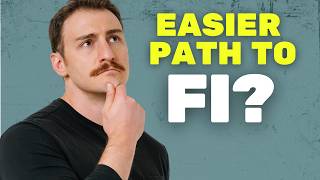
This episode from BiggerPockets Money presents real estate investing, specifically house hacking, as a powerful yet optional path to financial independence. The speaker clarifies that real estate is one tool among many, highlighting house hacking as its most impactful application. This strategy involves buying a multi-unit property, living in one part, and renting out the other to significantly reduce or eliminate housing costs.
The core argument for house hacking centers on its ability to keep living expenses extremely low over time, which is a major accelerator for financial independence. The speaker shares personal experience, noting that they began in real estate by buying a duplex, renting half, and aiming "to live for free or very low cost in the remaining side." This approach also acts as "training wheels as a landlord," allowing individuals to develop crucial property management skills with minimal initial risk.
Furthermore, the episode emphasizes the strategic advantages of real estate, such as the potential for substantial leverage. Investors can put down as little as "5% on this thing" while gaining exposure to an asset that, when managed well and held long-term, has the potential to outperform alternative investments like stocks or small businesses. However, this outperformance is contingent on effective operation and the use of leverage over an extended period.
The speaker also provides a crucial caveat, noting that while real estate can be powerful, it requires specific conditions: "you need to have the ability to train yourself on how to make great decisions in there, accept a little bit more risk, and use leverage, and hold for long periods of time." A key insight is that "transacting real estate is very expensive," and these costs, if not accounted for through long-term holding, can significantly erode returns, a detail often overlooked in superficial analyses.
Listeners will walk away with a clear understanding of house hacking as a specific, high-leverage real estate strategy for achieving financial independence. They will grasp the necessary commitment to long-term ownership, risk acceptance, and skill development required to capitalize on real estate's potential, especially when aiming to mitigate housing costs and build wealth effectively.
👤 Who Should Listen
- Individuals seeking actionable strategies for achieving financial independence.
- Aspiring real estate investors looking for a practical entry point into the market.
- First-time homebuyers considering non-traditional ways to reduce housing expenses.
- Anyone interested in developing landlord skills with minimal upfront risk.
- Listeners curious about leveraging real estate to potentially outperform traditional investments.
🔑 Key Takeaways
- 1.Real estate is presented as one powerful tool for financial independence, with house hacking identified as its most impactful application.
- 2.House hacking involves buying a multi-unit property, living in one unit, and renting out the others to achieve very low or free housing costs.
- 3.This strategy allows investors to use significant leverage, often with as little as a 5% down payment, and serves as "training wheels as a landlord" for skill development.
- 4.Real estate investing, when combined with leverage and effective long-term operation, has the potential to outperform stocks or small businesses.
- 5.Successful real estate investment requires developing decision-making skills, accepting higher risk, utilizing leverage, and committing to long-term holding.
- 6.Transaction costs in real estate are very high and can significantly "eat to your returns" if properties are not held for extended periods.
💡 Key Concepts Explained
House Hacking
House hacking is a real estate strategy where an individual buys a multi-unit property (like a duplex, triplex, or quadplex) or even a single-family home with rentable spaces, lives in one unit or room, and rents out the others. This episode highlights it as the "most powerful use case for real estate" because it allows the owner to live "for free or very low cost," significantly reducing personal housing expenses and accelerating financial independence.
⚡ Actionable Takeaways
- →Explore house hacking as a strategy to significantly lower your housing costs, potentially by purchasing a duplex.
- →Investigate options for a low down payment, such as 5%, to leverage real estate acquisitions.
- →Commit to holding real estate investments for long periods to mitigate the impact of high transaction costs on your overall returns.
- →Actively develop landlord and property management skills, viewing initial real estate ventures like house hacking as practical training.
- →Research market timing and specific local conditions before buying, as these factors can significantly impact investment outcomes.
⏱ Timeline Breakdown
💬 Notable Quotes
“"The most powerful use case for real estate is house hacking."”
“"One of the best ways to do that was to buy a duplex, rent out half of it, and attempt to live for free or very low cost in the remaining side of that."”
“"You can put down 5% on this thing and it's training wheels as a landlord."”
“"Transacting real estate is very expensive. It can eat to your returns is often missed in cursory analysis."”
Listen to Full Episode
📬 Get weekly summaries like this one
No spam. Unsubscribe anytime. By subscribing you agree to our Privacy Policy.
Continue Exploring