Conan O'Brien Needs a Friend
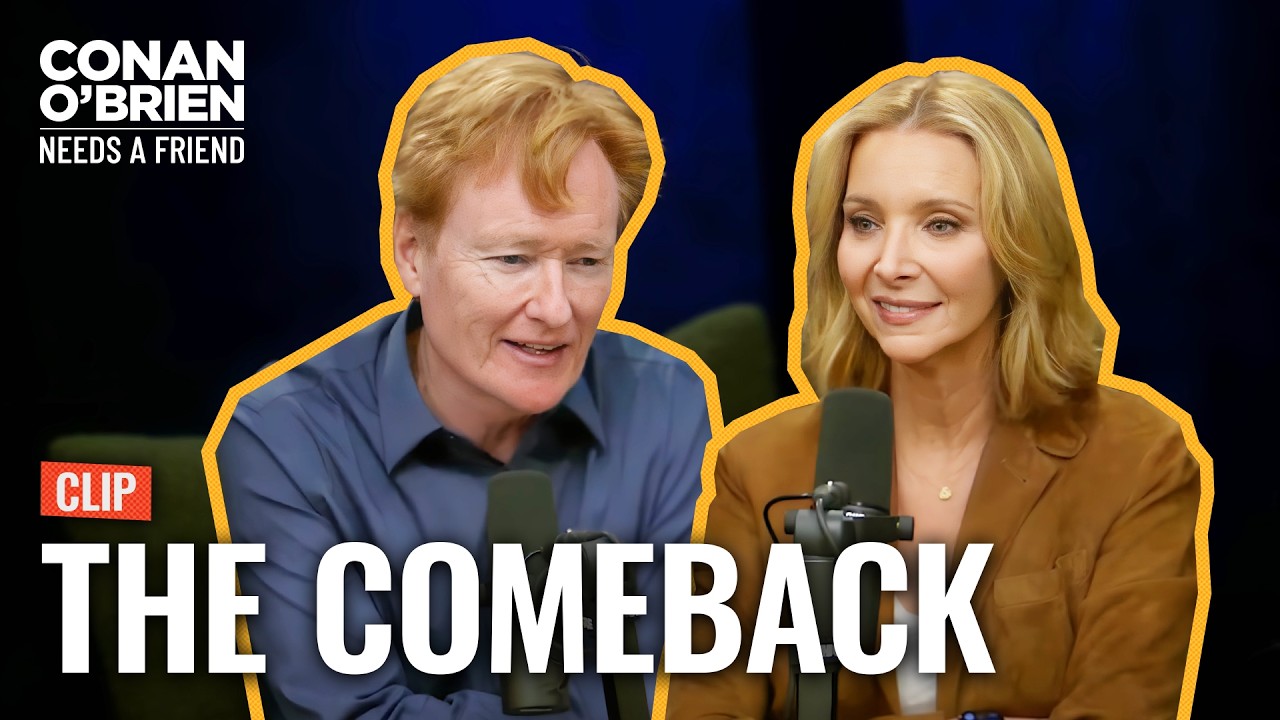
Lisa Kudrow Was Surprised When "The Comeback" Wasn't Picked Up | Conan O'Brien Needs A Friend
Episode Summary
AI-generated · Apr 2026AI-generated summary — may contain inaccuracies. Not a substitute for the full episode or professional advice.
Lisa Kudrow joins Conan O'Brien to reflect on the groundbreaking and often misunderstood HBO series, *The Comeback*. Kudrow, widely known for her role as Phoebe Buffay on *Friends*, dives into the unique position *The Comeback* held, pioneering a satirical take on reality television as early as 2005, years before the genre, and shows like *Keeping Up with the Kardashians*, fully exploded. The discussion centers on the show's initial reception, its surprising non-renewal, and how it ultimately cultivated a devoted audience over time.
Kudrow recounts her genuine surprise when HBO initially decided not to pick up *The Comeback* for a second season, despite her conviction that the show was "really good" (01:16). Conan playfully teases her about this, hinting at her "privilege" (01:38) but the conversation quickly shifts to the phenomenon of shows that are initially overlooked but gain significant traction and critical re-evaluation years later. They draw parallels to series like *Party Down*, noting how quality work can find its audience regardless of initial broadcast success, becoming a "nice little Swiss watch" (02:29) that holds up over time.
The actress shares specific examples of the show's impact, including an anecdote about David Bowie contacting HBO for DVDs so he wouldn't miss episodes while on tour (03:19). She reveals that *The Comeback* initially faced a wave of "bad reviews because people didn't understand what they were seeing" (04:06), with some critics later issuing retractions. Despite ratings that were on par with, or even better than, *Entourage*'s first season (04:19), the show was cancelled, a decision she later discovered was due to a single executive at HBO (04:55).
Kudrow also reflects on her emotional response to the cancellation. Initially, she claims she "didn't feel bad" (05:08) because she believed they had executed the show to the absolute best of their ability, feeling a sense of accomplishment rather than failure. However, after Conan's prodding, she admits to having eventually felt a "gut-wrenching" (05:54) sadness, acknowledging that such intense emotions are often a necessary part of creating good work.
Listeners will walk away with an intimate understanding of the unpredictable nature of show business, the long-term power of quality content over initial critical or executive reception, and the nuanced journey of a series finding its dedicated audience long after its original run.
👤 Who Should Listen
- Fans of Lisa Kudrow's work, particularly those interested in *The Comeback* and its legacy.
- Aspiring television writers, producers, and creators curious about the challenges of pitching, producing, and getting shows renewed.
- Anyone interested in the unpredictable nature of the entertainment industry and how shows find their audience over time.
- Viewers fascinated by the history of reality television and its early satirical representations.
- Those who appreciate discussions on the perseverance of artistic quality despite initial critical or executive resistance.
🔑 Key Takeaways
- 1.Lisa Kudrow's series *The Comeback* was ahead of its time, satirizing reality television in 2005 before the genre, exemplified by shows like *Keeping Up with the Kardashians*, became mainstream (00:00).
- 2.Kudrow was genuinely surprised when *The Comeback* was not picked up for a second season, convinced of its quality despite initial critical misunderstanding (01:05).
- 3.Shows like *The Comeback* and *Party Down* illustrate a phenomenon where quality television can build a significant audience and appreciation years after its initial broadcast (02:03).
- 4.High-profile fans, such as David Bowie, actively sought out *The Comeback*, with Bowie contacting HBO for DVDs to watch while on tour (03:19).
- 5.*The Comeback* initially received negative reviews from critics who "didn't understand what they were seeing," but some reviews were later revised or retracted (04:06).
- 6.Despite having ratings comparable to or better than *Entourage*'s first season, *The Comeback*'s non-renewal was a puzzling decision (04:19).
- 7.Kudrow eventually learned that a single HBO executive was responsible for the decision not to pick up *The Comeback* (04:55).
- 8.Kudrow initially felt no regret about the cancellation, believing they had done their best work, but later admitted to feeling a "gut-wrenching" sadness, recognizing it as part of the creative process (05:08).
💡 Key Concepts Explained
The Comeback Effect
This concept describes the phenomenon where a television show, initially misunderstood or underappreciated upon its release, gains a significant cult following and critical re-evaluation years later. The episode presents *The Comeback* and *Party Down* as prime examples, where quality and ahead-of-its-time content eventually finds a dedicated audience, leading to belated appreciation and sometimes even revivals.
⏱ Timeline Breakdown
💬 Notable Quotes
“"Were you surprised when it didn't get picked up? ... Just cuz it was really good." - Lisa Kudrow (01:05)”
“"David Bowie got in touch with HBO because he was going to be on tour. He didn't want to miss anything. So, send him whatever it is." - Lisa Kudrow (03:19)”
“"We had a lot of bad reviews because people didn't understand what they were seeing, right? And then uh by the time halfway through there were revised reviews like retractions." - Lisa Kudrow (04:06)”
“"I didn't feel bad because I thought, well, look, this is about the best I can do. And I think we did it about the best that it could be done. So, I've got nothing to feel bad about." - Lisa Kudrow (05:08)”
More from this guest
Lisa Kudrow
Listen to Full Episode
📬 Get weekly summaries like this one
No spam. Unsubscribe anytime. By subscribing you agree to our Privacy Policy.
Continue Exploring


