Conan O'Brien Needs a Friend
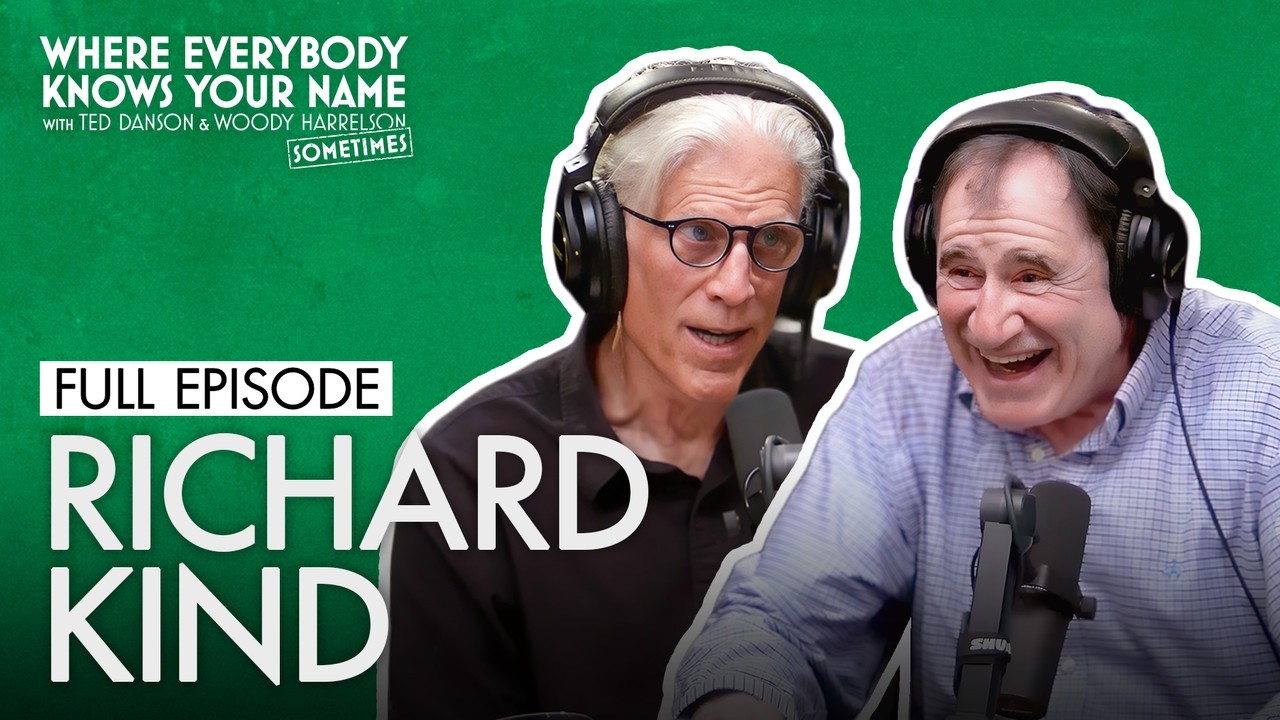
Richard Kind (FULL EPISODE) | Where Everybody Knows Your Name
Episode Summary
AI-generated · Apr 2026AI-generated summary — may contain inaccuracies. Not a substitute for the full episode or professional advice.
Richard Kind, the prolific character actor known for his roles in *Spin City*, *Mad About You*, and *Curb Your Enthusiasm*, offers a candid and self-deprecating look into his extensive career and personal philosophy. In this conversation, Kind grapples with his own self-perception as an actor, admitting that he "pulled the wool over people's eyes for about 20, 20, 30 years" before truly learning to "tell the truth" in his craft [10:10]. He shares insights into the rigorous training at Second City, which he calls his "Harvard of acting" [14:26], and reflects on the unique challenges and rewards of being a character actor versus a leading star. Kind's conversation is peppered with humorous anecdotes, surprising personal revelations, and observations about the state of the world.
The actor delves into his experience at Second City, recounting how he was hired despite claiming "I don't improvise" and developed his skills through nightly performances over four and a half years [17:16]. He contrasts his journey with the typical path of many aspiring actors who leave the business around 27-28, emphasizing his dedication to the craft [18:16]. Kind also discusses the physical manifestations of his anxiety, revealing struggles with psoriasis and vitiligo, which he connects to his deep-seated nervousness despite his successful career [00:00, 19:17]. He champions the arts, arguing that laughter and performance are "immeasurably healthy and wonderful," disagreeing with the cliché that actors are "not curing cancer" [09:09].
Kind shares poignant stories, including Charles Grodin's secret humanitarian work for people on death row [03:02] and a humorous account of Andy Rooney walking out of one of Grodin's terrible plays [04:03]. He touches upon his relationship with his parents, noting his mother's unwavering support versus his father's skepticism about his talent [09:09]. The discussion also veers into broader societal topics, with Kind expressing concern over political disunity, critiquing the lack of intelligence among some congressmen, and lamenting the current state of America [31:34, 34:37, 35:38]. He humorously recounts three major instances where his confident predictions about pop culture and industry trends—Farah Fawcett's poster, *Who Wants to be a Millionaire*, and Callaway's Big Bertha golf club—were utterly wrong [43:46].
Listeners will walk away with an appreciation for Richard Kind's authentic humor, his profound self-awareness, and his heartfelt reflections on acting, personal anxieties, and societal observations. The episode offers a deep dive into the mind of a beloved performer, revealing the unexpected blend of confidence and humility that defines his unique presence.
👤 Who Should Listen
- Aspiring actors seeking candid insights into the realities of the craft and career longevity.
- Fans of Richard Kind interested in his personal stories, self-reflections, and comedic timing.
- Listeners curious about the evolution of comedy training from institutions like Second City.
- Individuals interested in an actor's perspective on the entertainment industry's pressures and rewards.
- Anyone grappling with self-doubt and anxiety, seeking relatable experiences from a successful public figure.
- Those who enjoy lighthearted yet surprisingly deep discussions about politics, societal issues, and personal philosophies.
🔑 Key Takeaways
- 1.Richard Kind admits he "pulled the wool over people's eyes" as an actor for 20-30 years, becoming "much better" later by learning to "tell the truth" in his craft [10:10].
- 2.He describes his four-and-a-half-year tenure at Second City as his "Harvard of acting," where he learned improvisation nightly despite initially protesting "I don't improvise" [17:16].
- 3.Kind differentiates between "maple" lead actors and "satellite" character actors, stating his role is to "get a laugh every three lines" in sitcoms to prevent viewers from changing the channel [22:36, 24:22].
- 4.He reveals his personal struggles with psoriasis and vitiligo, linking his physical manifestations of anxiety to his deep nervousness about the world despite his successful career [00:00, 19:17].
- 5.Kind humorously recounts being confidently wrong about three major predictions: Farah Fawcett's poster, *Who Wants to be a Millionaire*, and Callaway's Big Bertha golf club [43:46].
- 6.He highlights the unexpected historical trend of undertakers being the most common prior profession for congressmen, emphasizing the importance of staff over elected officials for substantive work [31:34, 33:35].
- 7.Kind believes that laughter and what actors "put out in the world" can be "immeasurably healthy and wonderful," disagreeing with the cliché that they're "not curing cancer" [09:09].
- 8.He laments the current political climate where congressmen "only see each other at work" and don't interact as "human beings," contributing to disunity [35:38].
💡 Key Concepts Explained
Second City Improv Training
Richard Kind describes Second City as his "Harvard of acting," detailing its origins from University of Chicago intellectuals and its evolution into a comedy powerhouse [14:26, 15:13]. His personal experience highlights how nightly improvisation, even for someone who initially claimed "I don't improvise," became a rigorous and essential method for developing into a skilled actor [17:16].
Maple vs. Satellite Character Acting
This is Kind's self-developed framework for categorizing actors within a production [22:18]. "Maple" actors are the central figures, like the lead in a sitcom around whom the show revolves. "Satellite" character actors, like Kind himself, exist to "spice up" the main narrative and are tasked with delivering specific comedic beats, often needing to "get a laugh every three lines" in a three-camera sitcom to maintain audience engagement [24:22].
"Telling the Truth" in Acting
Kind's personal evolution in acting involved moving from merely being "entertaining"—a phase where he felt he "pulled the wool over people's eyes"—to a more mature stage where he learned to truly "tell the truth" in his performances [10:10]. He believes it takes "20, 25 years to become an actor," emphasizing that true skill comes from embodying honesty in a role, a quality he admires in actors like Mary Steenburgen [11:10].
⚡ Actionable Takeaways
- →Recognize that mastery in a creative field, like acting, can take "20, 25 years to be a good actor" [11:10], encouraging patience and persistence.
- →Cultivate self-awareness by distinguishing between merely "entertaining" and genuinely "telling the truth" in your craft, as Kind did in his acting evolution [10:10].
- →Embrace opportunities to learn new skills, even if you initially claim you "don't" do them, like Kind learning improvisation at Second City by doing it every night [17:16].
- →Challenge your own strong opinions and "overconfidence" by reflecting on past instances where you were "wrong," as Kind did with his predictions [43:46].
- →Advocate for arts and education, recognizing their importance in teaching "a way of thinking" and building confidence, as Kind passionately supports [32:34, 33:35].
- →Seek opportunities for unity and human connection, understanding that political and social divisions are exacerbated when people "only see each other at work" and not "as human beings" [35:38].
⏱ Timeline Breakdown
💬 Notable Quotes
“I deserve the career I have now because I really pulled the wool over people's eyes for about 20, 20, 30 years.”
“In order to be a good actor, you don't need to improvise. But in order to be a good improviser, you must be a good actor.”
“I kind of disagree [with 'we're not curing cancer']. I think what we put out in the world, laughter and all of that stuff is immeasurably healthy and wonderful.”
“I believe people want unity. I 100% do.”
“I don't know whether I entirely believe this, but when I read an obituary about somebody who I know or somebody's father passes away, I go, 'Well, at least they don't have to deal with America today.'”
More from this guest
Richard Kind
Listen to Full Episode
📬 Get weekly summaries like this one
No spam. Unsubscribe anytime. By subscribing you agree to our Privacy Policy.
Continue Exploring