Diary of a CEO
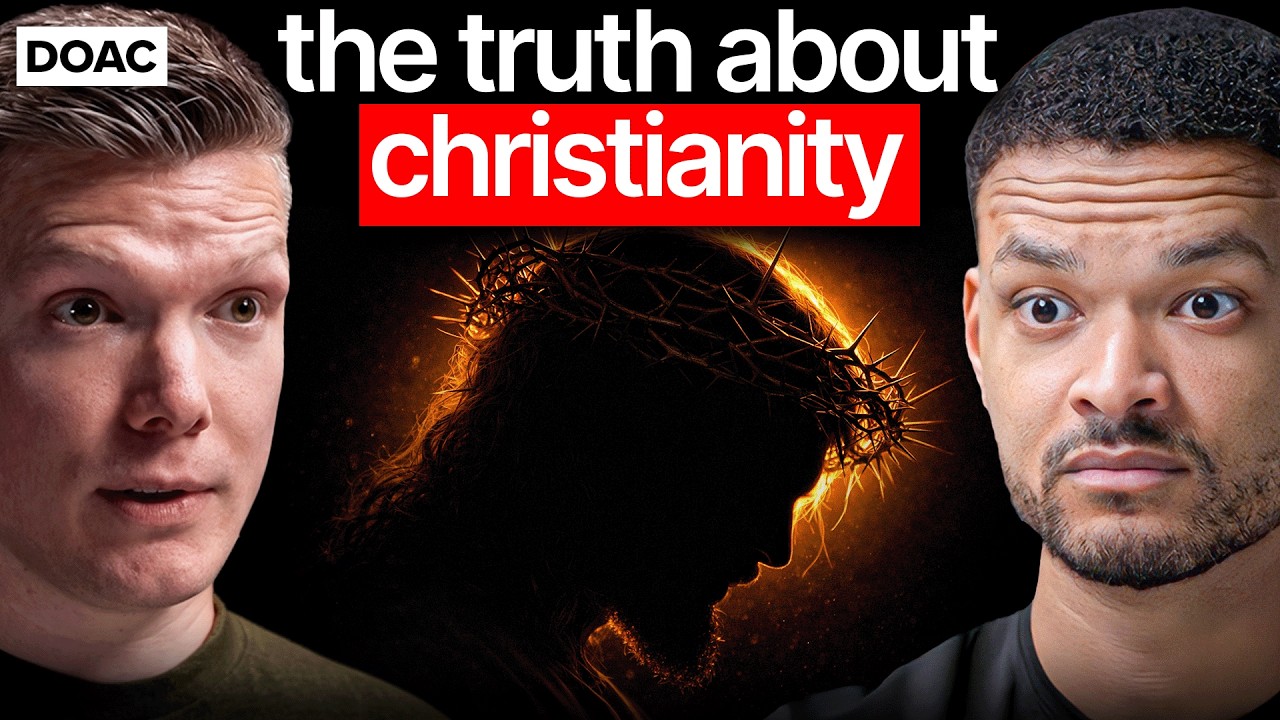
No.1 Christianity Expert: The Truth About Christianity! The Case For Jesus (Historian's Proof)
Episode Summary
AI-generated · Apr 2026AI-generated summary — may contain inaccuracies. Not a substitute for the full episode or professional advice.
This episode features historian and theologian Wesley, who makes a compelling case for the historical reliability of Jesus and the Bible, positioning Christianity as a definitive antidote to the contemporary crisis of purpose and meaning. Addressing host Steven Bartlett's agnostic background and high standard for evidence, Wesley presents a multi-faceted argument intended to persuade a generation increasingly struggling with mental health and seeking answers beyond secular explanations.
👤 Who Should Listen
- Individuals grappling with existential questions about meaning, purpose, and morality in a modern, individualistic society.
- Those who have explored or been influenced by 'new atheism' and are seeking intellectual counter-arguments or alternative perspectives on faith.
- Skeptics and open-minded listeners who 'require a really high standard of evidence' (11:15) for religious claims and are interested in historical and philosophical defenses of Christianity.
- Anyone curious about the historical reliability of the Bible, the case for Jesus's existence and resurrection, and the methods of biblical scholarship.
- People experiencing anxiety, depression, or a sense of being 'unanchored' and are exploring how religious belief might offer community and purpose.
- Christians interested in specific arguments and frameworks to articulate their faith's foundation and 'give a reason for the hope' (94:01) they have.
🔑 Key Takeaways
- 1.Wesley, a historian and theologian specializing in ancient biblical manuscripts, contends that widespread belief in the 'lie that we are the sum of our actions' leads to a world 'lacking in purpose and meaning' (00:00).
- 2.He notes a recent reversal of the decline in religion, with 63% of US adults identifying as Christian, Bible sales hitting a 21-year high in 2025, and Christian and gospel music streams increasing by 20% in 2024 (02:02).
- 3.Wesley argues that the 'new atheism' movement, while influential in print, failed to provide practical answers for ultimate identity questions and meaning in a complex, over-connected world (04:04).
- 4.He presents the historical case for Jesus by comparing the four biographical accounts (Gospels: Matthew, Mark, Luke, John) and earlier writings by Paul to the four biographies of Emperor Tiberius, noting a 'phenomenal amount of source information' for Jesus (12:16, 14:21).
- 5.Addressing the 'gap' argument between Jesus's life and written accounts, Wesley explains that the ancient world was an oral culture (15:56), and 99% of historians agree the New Testament books were written 'in the lifetime of the eyewitnesses' (22:27).
- 6.He debunks the 'Chinese whispers' analogy (23:28), arguing that stories were told in large groups with many witnesses, and the disciples proclaimed the resurrection in Jerusalem, 'the scene of the crime,' a risky act if disingenuous (25:33, 26:34).
- 7.The problem of evil (44:56), a significant atheist objection, is countered by Wesley's assertion that acknowledging 'evil with a capital E' implies 'good with a capital G,' suggesting a moral law and lawgiver beyond purely evolutionary or biological explanations (44:56-46:58).
- 8.Wesley clarifies that 'everybody is going to hell' (78:47) in the sense that 'no one is good but God alone' (79:48), defining hell as the experience of full separation from God's goodness for those who reject Him, and heaven as being 'full of people who understand they are not good enough' and trust in Jesus (80:49-81:49).
💡 Key Concepts Explained
New Atheism
A philosophical movement, popular in the early 2000s with figures like Richard Dawkins and Sam Harris, that advocates for a secular, rational worldview and critically examines religious belief. The guest argues it was more effective in academic discourse than in providing practical meaning for real life (03:04, 04:04).
Expressive Individualism
A sociological term describing a cultural trend that glamorizes individual autonomy, remote work, and delayed personal commitments. The episode links this to people feeling 'unanchored' and experiencing increased mental health issues, contributing to a search for deeper meaning (07:09-08:09).
Verbal Plenary Inspiration
A Christian theological term explaining the nature of biblical authorship. It states that while human authors wrote the Bible's 66 books (verbal, plenary), they did so under the guidance and influence of the Holy Spirit (inspiration), making it the inspired word of God (18:24).
Mythological Drift
A concept referring to the potential for stories to become exaggerated or corrupted over time, similar to the 'Chinese whispers' game. The guest argues this was mitigated in biblical accounts by the ancient world's oral culture, multiple witnesses, and the apostles' public proclamation of events in 'the scene of the crime' (24:32-26:34).
Problem of Evil
A prominent philosophical and theological challenge to the existence of an omnipotent, omniscient, and benevolent God, questioning why such a God would permit suffering and evil. The guest counters that acknowledging 'evil with a capital E' implicitly points to a standard of 'good with a capital G' and thus a moral lawgiver (43:55-45:58).
Intelligent Design
A view that certain features of the universe and living things are best explained by an intelligent cause, rather than an undirected process like natural selection. The guest, while not a scientist, aligns with this perspective for explaining the origins of life and the universe (53:40, 63:50).
⚡ Actionable Takeaways
- →Reflect on whether your pursuit of individualistic goals or 'low-key narcissism' (08:09) correlates with increased anxiety or a lack of fulfillment, as suggested in the episode.
- →Investigate the guest's arguments for the historical reliability of the Bible and Jesus by exploring the publicly available evidence, including ancient manuscripts and eyewitness testimonies (11:15-12:16).
- →Consider that doubts about God, especially during times of 'struggle and pain and suffering' (41:50), are acknowledged and even presented within the Bible, such as in the Psalms and John the Baptist's questioning of Jesus (41:50-43:55).
- →Examine the source of your moral values, asking if they are grounded in an intrinsic 'Judeo-Christian ethic' of equal value, or extrinsic evolutionary advantages, as discussed when addressing the problem of evil (49:04).
- →Think about the 'point' of your life beyond mere survival, reproduction, or material success, considering the Bible's assertion that you are 'created with meaning and purpose and intention' (69:34-70:36).
- →Explore the concept of 'salvation' as 'received not achieved' (86:53), understanding that according to scripture, acceptance into heaven is based on faith in Jesus's sacrifice rather than personal good deeds or religious adherence (83:51-84:52).
⏱ Timeline Breakdown
💬 Notable Quotes
“"Everybody is going to hell. And it's not because they don't believe in God. And look, I'm a historian and a theologian. So, I study ancient biblical manuscripts. And if you truly understand what this book is saying, I don't want you to experience that." [00:00]”
“"I am convinced beyond a reasonable doubt that there's actual evidence for the existence of God, the historical reliability of the Bible and the philosophical explanations for meaning and purpose." [01:01]”
“"Liars make poor martyrs in that you will die for something you believe is true, but the chances of you dying for something you know is not true are less likely." [38:46]”
“"Heaven isn't full of good people. Heaven is full of people who understand they are not good enough." [79:48]”
More from this guest
Wesley
Listen to Full Episode
📬 Get weekly summaries like this one
No spam. Unsubscribe anytime. By subscribing you agree to our Privacy Policy.
Continue Exploring


