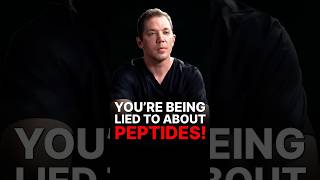
Diary of a CEO
"PATIENT ON MY FLIGHT HAD 5 MINUTES TO LIVE!"

Episode Summary
AI-generated · Apr 2026AI-generated summary — may contain inaccuracies. Not a substitute for the full episode or professional advice.
This episode features a powerful first-person account from a medical professional detailing an urgent in-flight emergency. The speaker recounts volunteering when a call went out for a doctor on a transatlantic flight, only to find a young passenger rapidly entering anaphylactic shock with "5 minutes to live" due to a previously unknown allergy. This gripping narrative explores the quick thinking and difficult decisions made under extreme pressure, which ultimately saved a life and prompted significant aviation policy changes.
Faced with a passenger whose throat was "closing up" and no EpiPen available on board, the speaker discovered that the plane's emergency kit contained epinephrine, the same medicine found in an EpiPen, but formulated for cardiac arrest and with a much larger needle. With no internet connection to consult and time running out, the doctor performed "rough calculations" to guesstimate a safe dosage and administered the life-saving injection in the first-class cabin.
The medical professional stayed with the patient for the remaining eight hours of the flight, continuously monitoring his condition, and successfully stabilized him without needing to divert the plane. This dramatic intervention not only saved the young man's life but also had a far-reaching impact when the speaker shared the story on YouTube, accumulating "almost 10 million views."
The story's viral reach caught the attention of Senate Majority Leader Chuck Schumer's office, who contacted the speaker to advocate for mandatory EpiPens on commercial flights. This collaboration led to calls on the FAA for policy changes, resulting in a significant improvement: "70% of planes" are now equipped with EpiPens, preventing future similar crises.
Listeners will walk away with an appreciation for the impact of individual courage and medical ingenuity in high-stakes situations, alongside a powerful illustration of how a single, compelling personal story can catalyze widespread legislative and systemic change in public safety.
👤 Who Should Listen
- Healthcare professionals interested in real-world emergency medicine and improvisation.
- Air travelers concerned about in-flight medical emergencies and safety protocols.
- Advocates and policymakers interested in how individual stories can drive systemic change.
- Anyone curious about the critical decisions and quick thinking required in high-stakes situations.
- Individuals interested in the intersection of personal narrative and public health policy.
- People seeking inspiring stories of courage and impact in unexpected circumstances.
🔑 Key Takeaways
- 1.A doctor on a flight successfully treated a passenger in severe anaphylactic shock who had only "5 minutes to live" and no EpiPen, using cardiac arrest epinephrine from the plane's emergency kit.
- 2.Despite the different formulation and dosage, the doctor performed "rough calculations" to improvise a life-saving treatment with a larger needle, emphasizing the need for quick, decisive action in emergencies.
- 3.The speaker monitored the patient every "15 to 30 minutes" for eight hours until landing, demonstrating sustained medical care and preventing a flight diversion.
- 4.Sharing the dramatic in-flight rescue story on YouTube garnered "almost 10 million views," highlighting the power of personal narratives to capture public attention and drive awareness.
- 5.Senate Majority Leader Chuck Schumer's office directly intervened after seeing the story, requesting the speaker's help to advocate for EpiPens on planes.
- 6.Advocacy efforts following this incident led to the FAA changing policies, resulting in "70% of planes" now being equipped with EpiPens to prevent similar emergencies.
- 7.Even individuals with no prior known allergies can experience sudden and life-threatening anaphylactic reactions.
💡 Key Concepts Explained
Anaphylactic shock
A severe, potentially life-threatening allergic reaction where the patient's throat closes up due to an allergy. In this episode, a passenger experienced this suddenly without a prior known allergy.
Epinephrine (vs. EpiPen)
Epinephrine is the critical medicine used to treat anaphylactic shock, found in an EpiPen for easy administration. The episode highlights that while EpiPens were absent, epinephrine in a different formulation and dosage (for cardiac arrest) was available in the emergency kit, requiring improvisation.
⚡ Actionable Takeaways
- →If medically qualified, consider volunteering your expertise during in-flight emergencies, as the speaker did when "a doctor on board?" was called.
- →Be aware that standard aircraft emergency kits may not contain specific life-saving medications like EpiPens for common anaphylactic reactions.
- →Consider documenting and sharing impactful personal experiences on public platforms to raise awareness and advocate for policy reform, similar to the YouTube video that gained millions of views.
- →Support legislative efforts that arise from public safety incidents, like the FAA changes prompted by Chuck Schumer's office, to ensure widespread availability of critical medical supplies on planes.
- →Familiarize yourself with basic emergency protocols, as unexpected medical situations can arise in confined spaces like flights, requiring quick thinking.
⏱ Timeline Breakdown
💬 Notable Quotes
“"His throat's closing. He's going to die in 5 minutes."”
“"I need to do some rough calculations here and just uh guesstimate here because otherwise he's going to lose his life."”
“"And now 70% of planes... have EpiPens on board where that will never have to happen."”
Listen to Full Episode
📬 Get weekly summaries like this one
No spam. Unsubscribe anytime. By subscribing you agree to our Privacy Policy.
Continue Exploring