The School of Greatness
They’re About To Reset Your Money - Your Last Chance To Build Wealth Is Now | Jaspreet Singh

Episode Summary
AI-generated · Apr 2026AI-generated summary — may contain inaccuracies. Not a substitute for the full episode or professional advice.
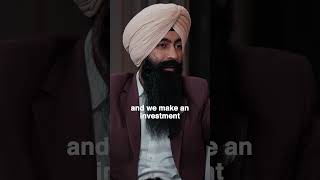
In this episode, financial educator and CEO Jaspreet Singh joins Lewis Howes to issue an urgent warning: the window for building wealth is rapidly closing. He asserts that the convergence of humans and technology in the "fifth industrial revolution," driven by AI, is fundamentally reshaping the economy faster than any previous industrial shift, threatening job security and traditional financial strategies. Singh, known for helping tens of millions understand money, explains why current economic volatility, rising inflation, and AI's exponential growth demand an immediate and radical shift in personal finance. He reveals his own "oh crap moment" at Briefs Media, where he realized AI would bankrupt his company by 2030 unless they pivoted, illustrating the profound and rapid changes underway (06:05).
👤 Who Should Listen
- Individuals concerned about the future of work and their finances due to AI and rapid economic changes.
- Anyone feeling overwhelmed or misinformed by traditional financial advice related to 401ks, homeownership, and basic savings.
- People seeking specific, actionable strategies to eliminate debt, build savings, and begin investing effectively.
- Aspiring investors looking to move beyond passive strategies and identify opportunities for active investing in a changing economy.
- Parents interested in instilling a healthy, proactive, and abundant money mindset in their children.
- Entrepreneurs and employees who want to learn how to legally leverage tax codes for personal and business financial advantage.
🔑 Key Takeaways
- 1.AI's adoption rate is vastly exceeding the internet's, making its economic impact significantly more disruptive and requiring individuals to potentially perform the work of 10 people to remain competitive within five years (04:02, 10:11).
- 2.Traditional wealth-building methods like relying solely on 401ks and homeownership are insufficient; 401ks, for instance, were never meant as sole retirement plans and often carry hidden fees averaging 1.26% annually for accounts under $1 million (18:22, 19:23).
- 3.Saving money in a bank can mean effectively losing value due to inflation, which often outpaces interest rates, making individuals poorer over time (15:20).
- 4.Wealthy individuals operate with a different "rule book," prioritizing financial education over formal education and ensuring their money works for them, rather than working hard merely to earn money (14:17, 17:22).
- 5.The "75/15/10" rule suggests that for every dollar earned, a maximum of 75 cents should be spent, a minimum of 15 cents invested, and a minimum of 10 cents saved, forming a foundation for wealth accumulation (30:36).
- 6.Active investing, which focuses on identifying "Main Street shifts" (identifiable trends in consumer spending like the pandemic's pet product boom), can yield slightly better returns (e.g., 13% vs. 10% annually) that compound into significantly more wealth over decades (47:20, 48:01).
- 7.Protecting wealth involves understanding and legally optimizing taxes—recognizing different income categories have different tax rates (e.g., 37% for earned income vs. 20% for investment income) and leveraging deductions like real estate depreciation (51:02, 55:04).
- 8.A foundational belief system for wealth includes understanding that "money is a tool," "money is abundant," believing "I will become wealthy," and recognizing "it is my duty to become wealthy" (65:13).
💡 Key Concepts Explained
Fifth Industrial Revolution
This term describes the current economic era characterized by the rapid convergence of humans and technology, especially AI. It's presented as having a much faster adoption rate and greater economic impact than previous industrial revolutions, necessitating a proactive financial response (02:01).
Financial Danger Zone
Jaspreet Singh defines this as the state of having credit card debt or less than $2,000 saved for emergencies. He emphasizes that individuals in this zone should prioritize eliminating debt and building basic savings before engaging in non-essential spending (28:34).
75/15/10 Rule
This is a framework for allocating income: 75% is the maximum for spending, 15% is the minimum for investing, and 10% is the minimum for saving. It's presented as a system to ensure money is consistently put aside for wealth building before all of it is spent (30:36).
Hope and Pray Method of Investing
This refers to the common but often insufficient strategy of relying on assets like a house or a 401k as the sole means of retirement. Singh argues it often leads to insufficient funds due to hidden costs, lack of income generation, and insufficient returns (41:51).
Main Street Shift
A term used to describe identifiable trends in everyday consumer behavior or economic activity (e.g., increased pet ownership during the pandemic). Identifying these shifts allows active investors to strategically place their money where it's already moving, potentially yielding slightly better returns (48:01).
Wealth Belief System
Singh proposes a four-part belief system: 'Money is a tool,' 'Money is abundant,' 'I will become wealthy,' and 'It is my duty to become wealthy.' This framework is crucial for rewiring one's mindset from scarcity and fear to an empowered, proactive approach to money (65:13).
⚡ Actionable Takeaways
- →Eliminate credit card debt and save a minimum of $2,000 for emergencies to exit the "financial danger zone" (28:34).
- →Implement the "75/15/10" rule for income allocation, creating separate bank accounts for spending, investing, and saving to automate wealth building (31:38).
- →Reduce or eliminate non-essential expenses like streaming subscriptions if in the financial danger zone, redirecting that time and money towards earning or skill development (29:36).
- →Use the IRS tax withholding calculator to avoid overpaying taxes and giving the government a 0% loan through a tax refund (54:03).
- →Explore opening an LLC for a passion or side project to legally leverage business write-offs (e.g., equipment, travel, education) to offset W2 income (56:04).
- →Begin your financial journey one small step at a time, such as getting out of debt or earning an extra $100 a week, rather than feeling overwhelmed by the entire process (61:11).
- →Adopt language that shifts your mindset from scarcity to possibility, such as saying "we can't afford it *yet*" instead of "we can't afford it" (75:21).
- →Teach children the value of hardship, struggle, and selfless service, and encourage their financial literacy by learning alongside them from resources like YouTube videos (76:23).
⏱ Timeline Breakdown
💬 Notable Quotes
“Right now, America is facing the largest retirement crisis of history.”
“Companies within 5 years are going to expect every individual person to do the same task that 10 people are doing today. If you cannot do the job of what 10 people do today, you are going to have a really hard time finding a job or keeping a job.”
“The best investors are dead people because they don't sell.”
“Money is a tool. Money is abundant. I will become wealthy and it is my duty to become wealthy.”
More from this guest
Jaspreet Singh
📚 Books Mentioned
Listen to Full Episode
📬 Get weekly summaries like this one
No spam. Unsubscribe anytime. By subscribing you agree to our Privacy Policy.
Continue Exploring