Valuetainment
Can Anything Change in Iran Without Regime Change?

Episode Summary
AI-generated · Apr 2026AI-generated summary — may contain inaccuracies. Not a substitute for the full episode or professional advice.
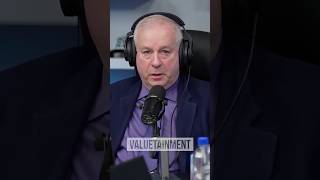
The speaker on Valuetainment delivers a challenging and radical perspective on the future of Iran, asserting unequivocally that "without regime change, nothing's going to change." He immediately addresses the core dilemma of how to motivate the Iranian populace into another uprising, acknowledging the profound fear instilled by the government's lethal response to previous protests, such as the one observed in January.
The discussion then explores potential strategic leverage points, with the speaker suggesting that supporting the Kurds could prove to be a "very good distraction" for the Iranian Revolutionary Guard, thereby diverting their attention and resources. The segment also ventures into the realm of external military intervention, raising the question of whether entities like Mossad or the IDF could get involved, though the speaker notes their operations are constrained, being "under a short leash" and influenced by figures like former President Trump.
Identifying himself as an "interested observer" rather than a military expert, the speaker maintains a firm conviction that regime change represents the "most effective end game" for Iran. He clarifies that his focus is on the strategic objective rather than the intricate details of military execution, emphasizing the necessity of a fundamental shift in governance.
Ultimately, this episode offers a direct and uncompromising viewpoint on the complex geopolitical situation in Iran. It posits that piecemeal reforms are insufficient and that only a complete overhaul of the existing regime can bring about meaningful transformation, prompting listeners to consider the drastic measures that might be required.
👤 Who Should Listen
- Listeners interested in the geopolitical future and stability of Iran.
- Individuals seeking a radical perspective on regime change and its necessity in entrenched political systems.
- Anyone studying the dynamics of internal dissent and external influence in the Middle East.
- Students of international relations focused on the Iranian government and its opposition.
- People curious about the role of regional military actors like Mossad and IDF in potential conflicts.
🔑 Key Takeaways
- 1.Significant change in Iran is deemed impossible by the speaker "without regime change."
- 2.The central challenge is how to incentivize the Iranian people into another uprising, given the government's violent suppression and the resulting fear.
- 3.Supporting the Kurds is proposed as a potential strategic maneuver, serving as a "very good distraction" for the Iranian Revolutionary Guard.
- 4.The possibility of Mossad or IDF involvement is considered, though tempered by an acknowledgment of their operational limitations, including being "under Trump's control."
- 5.The speaker, as an "interested observer," firmly believes that regime change is the "most effective end game" for Iran.
⏱ Timeline Breakdown
💬 Notable Quotes
“How do you incentivize the Iranian people into another uprising? Which they did in January, but now they have fear cuz they know that the government is going to kill them.”
“The Kurds were at least a a good start. It would be actually a very good distraction uh to the uh to the Revolutionary Guard.”
“To me, that would be the most effective um end game.”
“without regime change, nothing's going to change.”
Listen to Full Episode
📬 Get weekly summaries like this one
No spam. Unsubscribe anytime. By subscribing you agree to our Privacy Policy.
Continue Exploring