Ranked List
Best Podcast Episodes About Formula 1
We've compiled 18 podcast episodes about formula 1 from Acquired and distilled each into AI-generated summaries, key takeaways, and actionable insights. Each episode is scored by depth of insight — the most information-dense conversations are ranked first so you can skip straight to the best.
18 episodes rankedBrowse all formula 1 episodes →
18 Episodes Ranked by Insight Depth
#1
Acquired
The physics of F1 cars are awesome.
- →Colin Chapman of Lotus introduced the first small wings to F1 cars in 1968, marking the beginning of downforce's critical role in improving cornering traction.
- →The fundamental aerodynamic challenge in F1 is balancing downforce, which enhances grip, with drag, which creates resistance and slows the car on straightaways.
Apr 2026aerodynamics
#2
Acquired
The Evolution of Speed in Formula 1
- →Early F1 aerodynamic innovations by Colin Chapman in 1968 introduced small wings to increase downforce for better cornering, but at the cost of increased drag on straightaways.
- →The Lotus 78 in the late 1970s revolutionized F1 aerodynamics by turning the entire car into an inverted wing, using the Venturi effect to create a "ground effect" that sucked the car onto the track with minimal drag.
Apr 2026aerodynamics
#3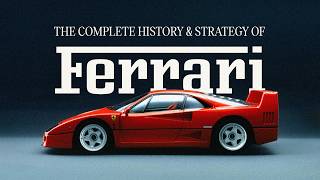
Acquired
Ferrari: What happens when you staple a luxury brand to a sports team? (Audio)
- →Ferrari holds the "highest ratio of people who know about their products to people who actually own their products of any company in human history" with over a billion people recognizing the brand but only around 180,000 owners globally [02:29].
- →Enzo Ferrari, a "natural-born entrepreneur and marketer" [28:40], strategically leveraged national heroism (the prancing horse from Francesco Baracca) and emotional symbolism (Rosso Corsa, Ferrari Red) to build the brand's mystique [25:56, 30:02].
Apr 2026luxury brand building
#4
Acquired
Why F1 success is all about exploiting gaps in the rules
- →F1 success has fundamentally shifted from maximizing engine power or aerodynamic efficiency to identifying and exploiting subtle gaps in the sport's regulations.
- →Early F1 design, exemplified by the six-wheeled car, showcases a period when less prescriptive rules allowed for more radical and fundamental engineering innovations.
Mar 2026motorsport
#5
Acquired
Formula 1 episode is live!
- →Formula 1 is the world's premier motorsports series and surprisingly its most popular annual sporting event, drawing 827 million viewers globally.
- →The sport's initial appeal was built on a "marriage of fast cars, glitz, glamour" associated with brands like Lotus and Ferrari and iconic venues such as Monte Carlo.
Mar 2026motorsports
#6
Acquired
How Ferrari got Michael Schumacher an extra edge with custom tires
- →Ferrari identified a loophole in F1 tire regulations that allowed teams to choose between two manufacturers, Bridgestone or Michelin.
- →Due to significant issues with Bridgestone, nearly all other F1 teams opted to switch to Michelin tires.
Mar 2026ferrari
#7
Acquired
Building F1 into an empire... without contracts
- →Bernie Ecclestone preferred operating without formal contracts, emphasizing handshake agreements and personal trust over extensive legal documents in his business dealings.
- →Ecclestone's philosophy rejected what he termed the 'American way' of '92-page contracts that no one reads or understands,' advocating for simplicity and direct accountability.
Mar 2026bernie ecclestone
#8
Acquired
Why do race cars have spoilers?
- →Race car spoilers are designed to generate downforce, which helps the car stick to the road better on turns, rather than simply adding weight.
- →Colin Chapman of Lotus was a significant pioneer, introducing the first airfoils or wings on race cars in 1968 to increase downforce for faster cornering.
Mar 2026aerodynamics
#9
Acquired
F1 cars are unbelievably efficient.
- →F1 engines are significantly more fuel-efficient than road cars, losing only 50% of energy to heat compared to 70-80% in standard vehicles.
- →The high fuel efficiency in F1 directly enables cars to carry less fuel, reducing overall weight and increasing speed.
Mar 2026engine efficiency
#10
Acquired
This F1 driver won the title after a fatal crash
- →Jochen Rindt was posthumously awarded the 1970 F1 Drivers' Championship despite being killed in a practice session four races before the season's end, due to his insurmountable points lead.
- →Bernie Ecclestone, a close friend of Rindt, was reportedly devastated by his death, which served as a profound personal catalyst.
Mar 2026motor racing
#11
Acquired
Why race cars had cigarette logos all over them
- →Iconic Formula 1 drivers like Ayrton Senna, Michael Schumacher, and Alain Prost prominently featured cigarette company logos, particularly Marlboro, on their race cars for a significant period.
- →The FIA initially banned sponsorships but reversed this stance, deeming it too purist and necessary for the financial viability of F1 teams.
Mar 2026sports sponsorship
#12
Acquired
Is F1 the only sport where you can be a fan without actually watching?
- →A significant and growing portion of Formula 1 fans are deeply engaged with the sport without watching live races.
- →The Netflix series *Drive to Survive* has fundamentally redefined F1 fan engagement, becoming a primary source of connection for many.
Apr 2026drive to survive
#13
Acquired
Why does Red Bull have an F1 team?
- →Red Bull's entry into Formula 1 was strategically timed to capitalize on the void left by EU regulations forcing tobacco advertising out of the sport.
- →Red Bull broke the traditional F1 sponsorship mold by becoming a constructor, developing deep competency in racing rather than just a passive sponsor.
Mar 2026red bull
#14
Acquired
The deadly early years of auto racing
- →In the 1950s, auto racing was characterized by extreme danger, epitomized by a Mercedes crash at Le Mans that killed 82 people.
- →The 1955 Le Mans disaster was so devastating that four remaining Grands Prix were cancelled.
Mar 2026auto racing history
#15
Acquired
Why F1 has had ZERO fatalities since 2014
- →The FIA implemented a mandatory safety device across all F1 cars in response to crashes occurring in 2014.
- →The new device is characterized as a "really, really rigid, robust, heavy thing" placed directly above the driver.
Apr 2026f1 safety
#16
Acquired
How to build a luxury car brand... with racing
- →Motorsport and racing are considered the "legitimizing heritage" for fast luxury car brands, a strategic insight shared by figures like Enzo Ferrari and Bernie (Ecclestone).
- →Bernie purposefully associated his dealerships and brand with Formula 1 in the mid-1960s to capitalize on this heritage.
Mar 2026luxury cars
#17
Acquired
The insane stats behind Formula 1
- →Formula 1 is the unique motorsport requiring teams to design and build their cars from scratch, representing an insane engineering feat.
- →Each F1 car costs $20 million to make, with hundreds of millions more invested in its development.
Mar 2026motorsport
#18
Acquired
Senna's death kicked off an era of safety reform in F1
- →Ayrton Senna's funeral in Brazil was the largest attended public funeral in history, with an estimated three million people showing up in the streets.
- →At the time of his death, Senna was recognized as "the best race car driver in the world," a natural talent who had risen to the pinnacle of his sport.
Mar 2026ayrton senna