Topic
Best Formula 1 Podcast Episodes
Formula 1 is covered across 18 podcast episodes in our library — including Acquired. Conversations explore core themes like downforce, drag, ground effect, drawing on firsthand experience and research from leading practitioners.
Below you'll find key insights, core concepts, and actionable advice aggregated from the top episodes — followed by a ranked list of the best formula 1 discussions to explore next.
Key Insights on Formula 1
- 1.Early F1 aerodynamic innovations by Colin Chapman in 1968 introduced small wings to increase downforce for better cornering, but at the cost of increased drag on straightaways.
- 2.The Lotus 78 in the late 1970s revolutionized F1 aerodynamics by turning the entire car into an inverted wing, using the Venturi effect to create a "ground effect" that sucked the car onto the track with minimal drag.
- 3.Ground effect cars, like the Lotus 78 driven by Mario Andretti, were so effective at high-speed cornering that they became a safety hazard, leading to their outlawing by the FIA and a requirement for flat-bottomed cars in 1983.
- 4.F1 engine technology significantly advanced in fuel efficiency, with only 50% of energy lost to heat compared to 70-80% in road cars, and horsepower tripled from 300 to roughly 1,000 HP.
- 5.Turbochargers, an "insane invention," harness unused energy from exhaust gases to compress intake air, increasing oxygen for more powerful combustion cycles and greater engine power.
- 6.In the early 1990s, the Williams team introduced advanced electronic driving aids such as traction control, anti-lock brakes, active suspension, and semi-automatic transmissions, making their cars incredibly dominant.
Key Concepts in Formula 1
Downforce
Downforce is an aerodynamic force that pushes a racing car into the ground, increasing its grip and traction, especially during cornering. It was initially achieved with small wings but presented a trade-off with drag, slowing cars on straightaways.
Drag
Drag is the resistance a car faces as it moves through the air, impeding its forward motion. While downforce is crucial for traction, excessive drag is detrimental to overall speed, forcing engineers to find optimal balances.
Ground effect
Ground effect is an aerodynamic phenomenon where the car's underbody is shaped like an inverted airplane wing, creating a low-pressure zone underneath that effectively sucks the car onto the track. This significantly increased traction with less drag than traditional wings, revolutionizing F1 speed.
Venturi effect
The Venturi effect describes how fluid velocity increases as it passes through a constricted area, leading to a decrease in pressure. In F1's ground effect cars, this principle was applied to the underbody tunnels to create the crucial low-pressure zone, enhancing downforce.
Actionable Takeaways
- ✓Analyze complex engineering challenges by identifying fundamental trade-offs, such as balancing downforce for grip against drag for speed, as seen in early F1 aerodynamic development.
- ✓Study historical examples of rapid technological adoption and subsequent regulation, like the ground effect cars and electronic aids in F1, to understand innovation cycles and industry governance.
- ✓Consider how advancements in highly specialized fields, like F1 engine efficiency or turbocharging, can have downstream applications and benefits for broader consumer technologies.
- ✓When innovating, anticipate potential safety implications or competitive imbalances that might arise from disruptive technologies, learning from F1's regulatory responses to ground effects and electronics.
- ✓Appreciate the iterative process of design and refinement, from Colin Chapman's small wings in 1968 to the comprehensive ground effect design of the Lotus 78, demonstrating continuous improvement.
Top Episodes — Ranked by Insight (showing 10 of 18)
View all 18 →
Acquired
The Evolution of Speed in Formula 1
Early F1 aerodynamic innovations by Colin Chapman in 1968 introduced small wings to increase downforce for better cornering, but at the cost of increased drag on straightaways.
Acquired
The physics of F1 cars are awesome.
Colin Chapman of Lotus introduced the first small wings to F1 cars in 1968, marking the beginning of downforce's critical role in improving cornering traction.
Acquired
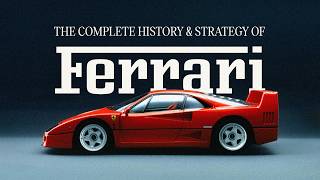
Ferrari: What happens when you staple a luxury brand to a sports team? (Audio)
Ferrari holds the "highest ratio of people who know about their products to people who actually own their products of any company in human history" with over a billion people recognizing the brand but only around 180,000 owners globally [02:29].

Acquired
Why F1 success is all about exploiting gaps in the rules
F1 success has fundamentally shifted from maximizing engine power or aerodynamic efficiency to identifying and exploiting subtle gaps in the sport's regulations.

Acquired
Formula 1 episode is live!
Formula 1 is the world's premier motorsports series and surprisingly its most popular annual sporting event, drawing 827 million viewers globally.

Acquired
How Ferrari got Michael Schumacher an extra edge with custom tires
Ferrari identified a loophole in F1 tire regulations that allowed teams to choose between two manufacturers, Bridgestone or Michelin.

Acquired
Building F1 into an empire... without contracts
Bernie Ecclestone preferred operating without formal contracts, emphasizing handshake agreements and personal trust over extensive legal documents in his business dealings.

Acquired
Why do race cars have spoilers?
Race car spoilers are designed to generate downforce, which helps the car stick to the road better on turns, rather than simply adding weight.

Acquired
F1 cars are unbelievably efficient.
F1 engines are significantly more fuel-efficient than road cars, losing only 50% of energy to heat compared to 70-80% in standard vehicles.

Acquired
This F1 driver won the title after a fatal crash
Jochen Rindt was posthumously awarded the 1970 F1 Drivers' Championship despite being killed in a practice session four races before the season's end, due to his insurmountable points lead.
Episodes ranked by insight density — scored on key takeaways, concepts explained, and actionable advice. AI-generated summaries; listen to full episodes for complete context.


