Ranked List
Best Acquired Episodes
We've ranked all 28 summarised episodes of Acquired by insight density — scored on number of key takeaways, concepts explained, and actionable advice. The most information-dense conversations appear first so you can skip straight to the best.

The physics of F1 cars are awesome.
→ Colin Chapman of Lotus introduced the first small wings to F1 cars in 1968, marking the beginning of downforce's critical role in improving cornering traction.
The Evolution of Speed in Formula 1
→ Early F1 aerodynamic innovations by Colin Chapman in 1968 introduced small wings to increase downforce for better cornering, but at the cost of increased drag on straightaways.
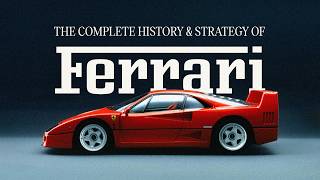
Ferrari: What happens when you staple a luxury brand to a sports team? (Audio)
→ Ferrari's unique business model thrives on extreme scarcity, intentionally producing one car less than market demand, contrasting sharply with mass-market auto manufacturers.

Formula 1 (Audio)
→ Formula 1 originated from post-WWII auto racing, characterized by extreme danger and early teams often going bankrupt, eventually consolidating around three pillars: British engineering prowess, Monaco's glitz and glamour, and Ferrari's luxury branding and racing heritage.

Spygate and Crashgate: Formula One's scandals
→ Spygate involved McLaren obtaining the complete specifications of Ferrari's Formula One car, leading to major court hearings regarding stolen documents and their potential competitive use [00:00].

Why F1 success is all about exploiting gaps in the rules
→ F1 success has fundamentally shifted from maximizing engine power or aerodynamic efficiency to identifying and exploiting subtle gaps in the sport's regulations.

Formula 1 episode is live!
→ Formula 1 is the world's premier motorsports series and surprisingly its most popular annual sporting event, drawing 827 million viewers globally.

Is the NFL finally going global?
→ The NFL is actively pursuing global expansion because it has "effectively run out of running room in this country," making international growth a critical driver for its $23 billion revenue goals.

How Ferrari got Michael Schumacher an extra edge with custom tires
→ Ferrari identified a loophole in F1 tire regulations that allowed teams to choose between two manufacturers, Bridgestone or Michelin.

Building F1 into an empire... without contracts
→ Bernie Ecclestone preferred operating without formal contracts, emphasizing handshake agreements and personal trust over extensive legal documents in his business dealings.

Is F1 the only sport where you can be a fan without actually watching?
→ Netflix's *Drive to Survive* has created a significant segment of Formula 1 fans who do not watch actual races.

Why do race cars have spoilers?
→ Race car spoilers are designed to generate downforce, which helps the car stick to the road better on turns, rather than simply adding weight.

F1 cars are unbelievably efficient.
→ F1 engines are significantly more fuel-efficient than road cars, losing only 50% of energy to heat compared to 70-80% in standard vehicles.

This F1 driver won the title after a fatal crash
→ Jochen Rindt was posthumously awarded the 1970 F1 Drivers' Championship despite being killed in a practice session four races before the season's end, due to his insurmountable points lead.

Why race cars had cigarette logos all over them
→ Iconic Formula 1 drivers like Ayrton Senna, Michael Schumacher, and Alain Prost prominently featured cigarette company logos, particularly Marlboro, on their race cars for a significant period.

How SpaceX's rocket factory is different... and let's them build way cheaper.
→ SpaceX assembles its rockets horizontally on the ground, a method distinct from most US companies that build them vertically.

How SpaceX changed the space industry structure with NASA in 2008
→ NASA's 2008 International Space Station resupply contract represented a significant shift in space policy, moving from an internal design-and-operate model to potentially allowing new commercial entrants.

The runaway success of "F1: the Movie" with Brad Pitt
→ The film starring Brad Pitt, referred to as "F1: the Movie," achieved an unprecedented $630 million worldwide box office, making it the highest-grossing sports movie ever.

Why does Red Bull have an F1 team?
→ Red Bull's entry into Formula 1 was strategically timed to capitalize on the void left by EU regulations forcing tobacco advertising out of the sport.

The deadly early years of auto racing
→ In the 1950s, auto racing was characterized by extreme danger, epitomized by a Mercedes crash at Le Mans that killed 82 people.

Formula One cars are upside-down airplane wings
→ Formula One cars generate downforce by employing an "upside down airplane wing" design principle.

Why F1 has had ZERO fatalities since 2014
→ The FIA implemented a mandatory safety device across all F1 cars in response to crashes occurring in 2014.

How to build a luxury car brand... with racing
→ Motorsport and racing are considered the "legitimizing heritage" for fast luxury car brands, a strategic insight shared by figures like Enzo Ferrari and Bernie (Ecclestone).

The insane stats behind Formula 1
→ Formula 1 is the unique motorsport requiring teams to design and build their cars from scratch, representing an insane engineering feat.

Senna's death kicked off an era of safety reform in F1
→ Ayrton Senna's funeral in Brazil was the largest attended public funeral in history, with an estimated three million people showing up in the streets.

What's new in F1 for 2026
→ Formula 1 is set for its most significant regulatory and structural changes in decades beginning in 2026.

Are F1 teams a good business? Yes, for some of them…
→ Top Formula 1 teams like Mercedes, Ferrari, and McLaren generate substantial annual revenues, reaching figures between $650 million and $800 million.

Why F1 drivers refused to wear their seatbelts... and how the sport got safer
→ Historically, F1 drivers opted not to wear seatbelts, believing it was safer to be ejected from a crashing car than to be trapped and risk fire.