The All-In Podcast
Anthropic vs The Pentagon
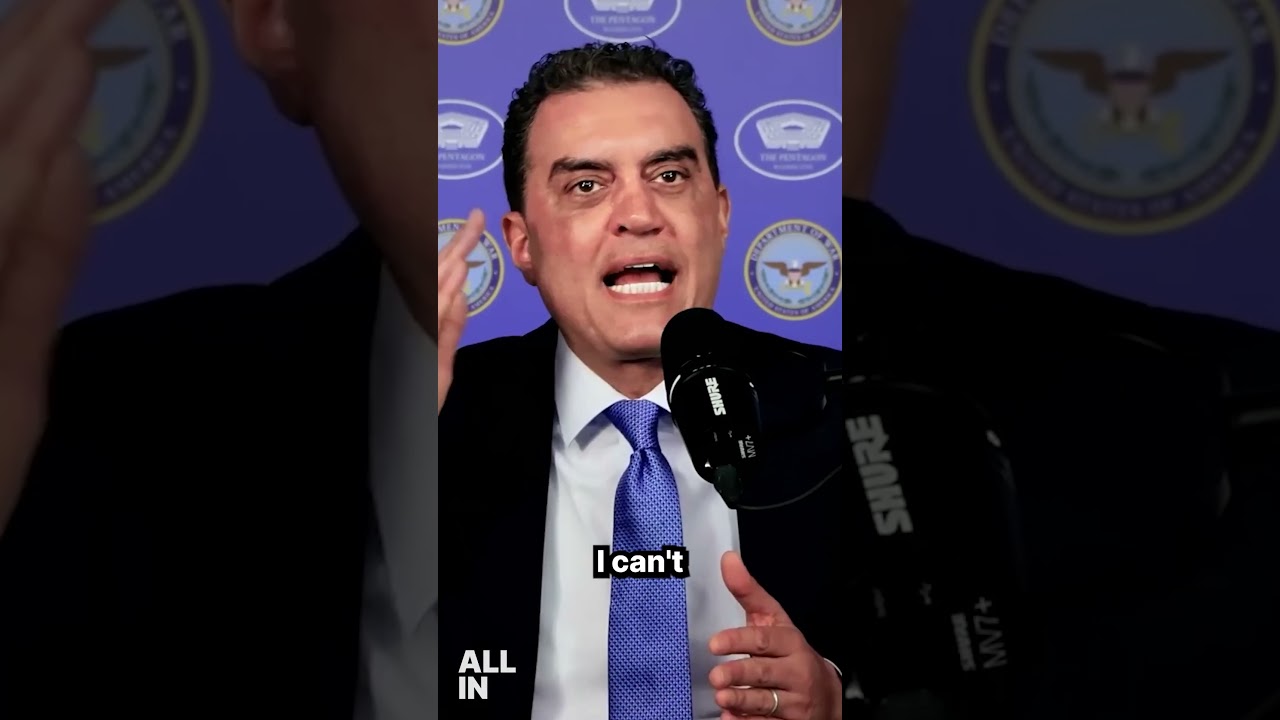
Episode Summary
AI-generated · Apr 2026AI-generated summary — may contain inaccuracies. Not a substitute for the full episode or professional advice.
This episode of The All-In Podcast details a tense, three-month negotiation between a technology company, implicitly Anthropic (given the episode title), and the US Department of Defense, referred to as the 'Department of War.' The central thesis presented by one of the speakers is the fundamental incompatibility between the Department's insistence on pre-approved 'exceptions' for AI usage and the unpredictable, rapidly evolving nature of AI applications in critical national security contexts. The speaker argues that applying a blanket 'department war stuff' use-case restriction, while seemingly clear, becomes unworkable when dealing with emergent threats and technologies.
The speaker recounts giving scenarios to illustrate their point, such as a 'Chinese hypersonic missile example' and a 'drone swarm,' for which the Department offered specific exceptions. However, the speaker rejected this approach, stating, 'The exceptions doesn't work. I I can't predict for the next 20 years what all the things we might do use AI for.' They highlighted the absurdity of needing to seek approval during a crisis by comparing it to a '9/11 unique black swan event' where one would 'have to go clear it with them' before taking action. These were described as 'Golden Dome scenarios,' used to underscore the grave implications.
The negotiation culminated in a moment of exasperation for the speaker when a Department official suggested, 'Just call me if you need another exception.' The speaker emphasized the irrationality of this, questioning, 'But what if the balloon's going up at that moment and it's like a decisive action we have to take? I I'm not going to call you to do something. It's like not rational.' This exchange underscored a deep philosophical and practical divide in how Silicon Valley tech companies and the Pentagon approach the deployment of cutting-edge AI.
Listeners will walk away with a clear understanding of the profound challenges and ethical dilemmas at the intersection of advanced AI development and national security. The episode illuminates the bureaucratic hurdles and philosophical clashes that arise when attempting to integrate agile, unpredictable technologies like AI into rigid, consequence-averse defense frameworks, particularly concerning the speed and autonomy required for real-time threat responses.
👤 Who Should Listen
- Founders and executives of AI companies considering government or defense contracts.
- Policymakers and strategists within the Department of Defense and other national security agencies.
- Academics and researchers studying the ethical and practical implications of AI in military applications.
- Government affairs professionals navigating complex negotiations between tech and defense sectors.
- Anyone interested in the challenges of integrating rapidly evolving technology into traditional bureaucratic systems.
- Venture capitalists and investors evaluating companies working at the intersection of AI and national security.
🔑 Key Takeaways
- 1.The speaker emphatically rejected the Department of War's 'exceptions' model for AI use, stating, 'The exceptions doesn't work. I I can't predict for the next 20 years what all the things we might do use AI for.'
- 2.Specific hypothetical threats like a 'Chinese hypersonic missile example' and a 'drone swarm' were used as 'Golden Dome scenarios' to illustrate the necessity of immediate AI deployment.
- 3.The speaker compared the need for pre-approval to a '9/11 unique black swan event,' highlighting the impracticality of seeking clearance during an urgent national crisis.
- 4.A Department of War official's suggestion to 'Just call me if you need another exception' was met with frustration, as it disregarded the time-critical nature of military decisions.
- 5.The core conflict lies in the inability of traditional bureaucratic processes to accommodate the rapid, unpredictable evolution and application of artificial intelligence in defense.
- 6.The negotiation process took three months, underscoring the significant time and effort required to bridge the gap between tech industry agility and government protocol.
💡 Key Concepts Explained
Golden Dome scenarios
These are hypothetical, high-stakes situations, likely involving national security, used by the speaker during negotiations with the Department of War. The speaker employed these scenarios, such as a 'Chinese hypersonic missile example' or a 'drone swarm,' to demonstrate the critical need for rapid AI deployment without the delays of bureaucratic 'exceptions' or pre-approvals.
The 'Exceptions' Model
This refers to the Department of War's proposed approach of granting specific, pre-approved permissions for certain AI applications, rather than a broad framework. The speaker argued this model is unworkable because it's impossible to predict all future AI use cases over a long timeframe, making it inadequate for dynamic national security threats.
⚡ Actionable Takeaways
- →For tech companies engaging with defense, develop specific, high-stakes 'black swan' or 'Golden Dome scenarios' to illustrate the limitations of pre-approved 'exceptions' for AI use.
- →Advocate for adaptable frameworks for AI deployment in defense that prioritize speed and autonomy for decisive action over rigid pre-approvals.
- →Challenge the notion that all potential AI applications can be predicted and categorized over long time horizons like 20 years, especially in national security contexts.
- →When negotiating with government agencies on rapidly evolving technologies, articulate the irrationality of requiring bureaucratic clearance during real-time critical events.
- →Document and publicly share the philosophical and practical clashes encountered when integrating cutting-edge technology into traditional government structures to foster broader understanding and policy change.
- →For defense policymakers, explore new models for AI governance that balance oversight with the operational necessities of rapid response in unpredictable global scenarios.
⏱ Timeline Breakdown
💬 Notable Quotes
“"If you don't want your stuff to be used for department war stuff, you shouldn't be selling to the department of war."”
“"The exceptions doesn't work. I I can't predict for the next 20 years what all the things we might do use AI for."”
“"Immediately came to mind was like 9/11. You you have to go check with them. You know, if you find out there's another 9/11 unique black swan event that's going to occur and you have to go clear it with them."”
“"But what if the balloon's going up at that moment and it's like a decisive action we have to take? I I'm not going to call you to do something. It's like not rational."”
Listen to Full Episode
📬 Get weekly summaries like this one
No spam. Unsubscribe anytime. By subscribing you agree to our Privacy Policy.
Continue Exploring