The All-In Podcast
Anthropic's Generational Run, OpenAI Panics, AI Moats, Meta Loses Major Lawsuits
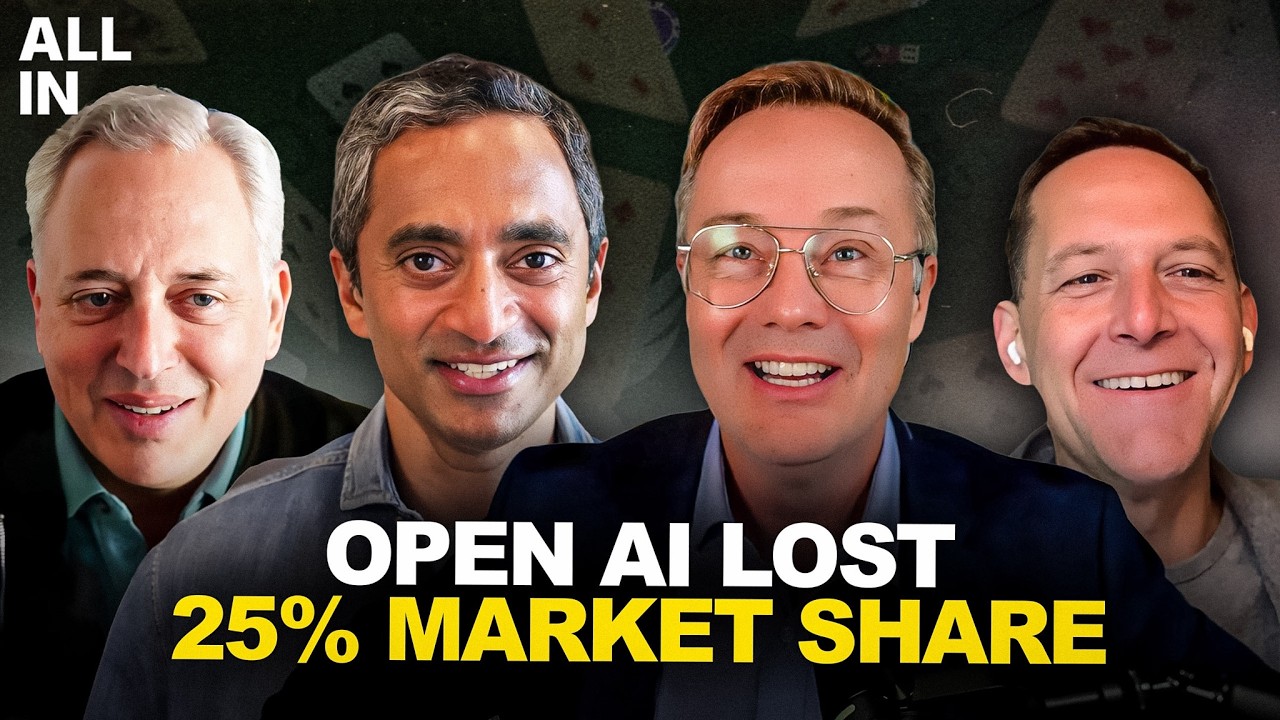
Episode Summary
AI-generated · Mar 2026AI-generated summary — may contain inaccuracies. Not a substitute for the full episode or professional advice.
This episode of The All-In Podcast unpacks the seismic shifts occurring in the artificial intelligence landscape, examining the diverging trajectories of major AI labs, the re-evaluation of public market valuations, and the profound societal and geopolitical implications of this technological revolution. The panel, including Chamath Palihapitiya, David Freeberg, David Saxs, and Jason Calacanis, provides a high-level overview of how AI is disrupting traditional business models and personal lives, with a particular focus on the escalating tech race between global powers.
The discussion highlights Anthropic's "generational run," driven by its enterprise-focused offerings like "co-work" and the agentic Opus 4.6 model, which reportedly added $6 billion to its annual run rate in February alone [02:00, 03:05]. Saxs, however, raises philosophical objections to Anthropic's alleged "regulatory capture strategy," arguing its push for a Washington-based permissioning regime for AI models and chips could create anti-competitive moats [05:10]. In contrast, OpenAI, despite its consumer dominance with ChatGPT, is reportedly experiencing a market share decline and is pivoting towards enterprise, even cancelling its Sora video app project and offering private equity investors a guaranteed 17.5% return for AI deployments [15:23, 17:25]. The hosts debate the future of consumer AI, with Freeberg envisioning paid "meta services" potentially costing $80-$100 monthly, while Saxs anticipates a hybrid model combining free ad-supported and premium tiers [20:30, 23:32].
Chamath introduces the concept of a "SAS apocalypse," presenting a chart that illustrates a "rerationalization in the public markets" where the "years to earn back" for many SaaS companies have sharply increased, questioning their long-term durability in an era of "super intelligence" [29:37, 30:39]. He argues that consumers increasingly seek "abundance brands" that prioritize cheaper, faster, and better products over traditional brand affiliation, potentially leading to the erosion of brand value [38:49]. The conversation also delves into Meta's recent legal setbacks, including a $375 million New Mexico verdict for child exploitation and an LA jury finding Meta and YouTube negligent for designing addictive platforms that harmed a young user's mental health [50:11]. Saxs critiques the broader trend of tort litigation, advocating for personal responsibility, though Chamath notes that trial lawyers have found a new "pathway of product liability language" to bypass Section 230 protections, signaling a potential "death by a thousand cuts" for social media giants [54:04, 64:14].
The episode concludes with a significant announcement: David Saxs and David Freeberg have been appointed to President Trump's PCAST (President's Council of Advisors on Science and Technology), tasked with addressing the critical "industrial race" against China in foundational research and technological industrialization [72:26, 75:28]. Freeberg highlights China's rapid ascent, now publishing 50% more scientific papers than the U.S. annually. The hosts reflect on AI's ability to dramatically compress work timelines, likening it to a "Star Trek replicator" that can manifest complex ideas into reality in just days, profoundly disorienting established notions of work and value [49:00].
Listeners will gain a comprehensive understanding of the current state and future trajectory of the AI industry, from specific company strategies and market valuations to the societal challenges of platform addiction and the geopolitical imperative of technological leadership.
👤 Who Should Listen
- Technology investors and venture capitalists interested in AI market dynamics and valuations.
- Founders and executives in AI, SaaS, and enterprise software navigating market disruption.
- Policymakers and government officials concerned with AI regulation and global tech competition.
- Parents seeking to understand the impacts of social media and AI on children, and strategies for digital well-being.
- Individuals interested in the legal and ethical debates surrounding technology platforms.
- Anyone curious about the future of consumer AI and its monetization models.
🔑 Key Takeaways
- 1.Anthropic is experiencing a "generational run" driven by enterprise solutions like co-work and its Opus 4.6 agentic model, which added $6 billion in annual run rate in February alone [02:00, 03:05].
- 2.David Saxs criticizes Anthropic's "regulatory capture strategy," arguing its pursuit of a permissioning regime for AI models and chips creates anti-competitive moats favoring large, established companies [05:10].
- 3.OpenAI, despite its consumer chatbot dominance, is seeing its market share decline and is pivoting to enterprise, having cancelled projects like the Sora video app and offering private equity investors guaranteed 17.5% returns for AI deployment [15:23, 17:25].
- 4.Consumer AI monetization is debated, with Freeberg predicting widespread subscription models for "meta services" at $80-$100/month, while Saxs believes a hybrid of free ad-supported and premium tiers will prevail [20:30, 23:32].
- 5.Chamath Palihapitiya warns of a "rerationalization in the public markets" and a "SAS apocalypse," where the potential for "super intelligence" causes investors to question the long-term durability and value of traditional software companies [29:37, 30:39].
- 6.Meta faced significant legal defeats, including a $375 million verdict in New Mexico for child exploitation and an LA jury finding its platforms negligent for harming a young user's mental health through addictive design [50:11].
- 7.Trial lawyers are successfully circumventing Section 230 protections using "product liability language," creating a "death by a thousand cuts" scenario for social media companies [64:14, 65:17].
- 8.David Saxs and David Freeberg have been appointed to President Trump's PCAST, focusing on an "industrial race" with China in critical technologies like AI, nuclear power, and biotech, with China now publishing 50% more scientific papers than the U.S. [72:26, 75:28].
💡 Key Concepts Explained
Regulatory Capture Strategy
David Saxs explains this as Anthropic's alleged attempt to influence Washington to create a "permissioning regime" for AI models and chips. This strategy suggests that by requiring government approval for new releases, existing large companies can establish moats, making it harder for new entrants to compete and limiting overall innovation [05:10].
SAS Apocalypse
Jocularly used to describe the re-evaluation of Software as a Service (SaaS) company valuations in the public markets due to the disruptive potential of AI. Chamath Palihapitiya presents data showing significantly increased "years to earn back" for SaaS stocks, implying a fundamental questioning of their long-term durability and cash flow in a world approaching "super intelligence" [29:37, 30:39].
Abundance Brands
Chamath Palihapitiya introduces this concept, suggesting that in an AI-driven future, consumers will prioritize products that are "cheaper, faster, better" and offer greater "abundance" over traditional brand affiliation. He uses Tesla and BYD as examples of companies that provide superior value propositions, leading to the erosion of pricing power for legacy premium brands [38:49].
Strangulation as a Service
Chamath Palihapitiya describes enterprise clients' desire for AI to simplify complex user interfaces and products. This concept implies that users want to bypass multiple applications and simply "tell [AI] what I need it to do," with the AI handling the underlying complexity, thereby "strangling" the need for traditional UIs and streamlining workflows [41:51].
Halo (High Asset Low Obsolescence) Portfolio
David Saxs mentions this as a type of investment strategy for an AI-disrupted world. It refers to businesses with significant physical assets that are less susceptible to rapid obsolescence by AI, such as "physical experiences" like Disneyland, natural gas production, or space industry ventures, which are expected to have greater durability [34:46].
⚡ Actionable Takeaways
- →If investing in AI, understand the distinct go-to-market strategies and revenue recognition methods of companies like OpenAI (consumer, API, conservative revreck) versus Anthropic (enterprise, "gross tonnage" revreck) to make informed comparisons [10:14].
- →For parents, consider implementing age-gating for social media (e.g., waiting until 16 or 18) and utilizing parental controls or phone lockers, as prolonged use is correlated with youth depression and anxiety [51:50, 68:20].
- →Evaluate your portfolio for "high asset low obsolescence" (Halo) businesses or those focused on "physical experiences" as potential counter-AI investments, given the projected erosion of traditional brand value by "abundance brands" [34:46, 38:49].
- →Explore AI tools like "Open Claw" or Perplexity's "Computer" to streamline desktop operations and potentially automate tasks typically done through individual apps, embracing the "strangulation as a service" trend to boost productivity [42:19].
- →For business, leverage AI to "vibecode" or auto-research new solutions, as the episode highlights how AI can compress "many man months" of work into days and significantly improve metrics like click-through rates [46:57].
- →Recognize the ongoing "industrial race" in AI and other advanced technologies, particularly in relation to China, and consider how this geopolitical competition may shape future policy and investment opportunities [75:28].
⏱ Timeline Breakdown
💬 Notable Quotes
“"Anthropic on a generational run and open AI crashing out a bit, boys." - Jason Calacanis [02:00]”
“"If you as a company don't want your products to be used in war, don't sell to the Department of War. It's in the name." - Emil Michael (quoted by David Saxs) [06:26]”
“"If super intelligence is coming, we have to be very careful about what we're willing to pay for these things." - Chamath Palihapitiya [31:11]”
“"I think that brands go to zero." - Chamath Palihapitiya [38:09]”
“"It's like very weird. This makes it feel like a simulation to me that everything can just manifest itself. It's the Star Trek version of the world." - Jason Calacanis [49:00]”
“"We never talk about responsibility. We always talk about where the government failed us and where these companies failed us and we never talk about what did we individually do wrong." - David Saxs [54:04]”
Listen to Full Episode
📬 Get weekly summaries like this one
No spam. Unsubscribe anytime. By subscribing you agree to our Privacy Policy.
Continue Exploring