BiggerPockets Money
The FIRE Strategy That Actually Works (Coast FI)
Episode Summary
AI-generated · Mar 2026AI-generated summary — may contain inaccuracies. Not a substitute for the full episode or professional advice.
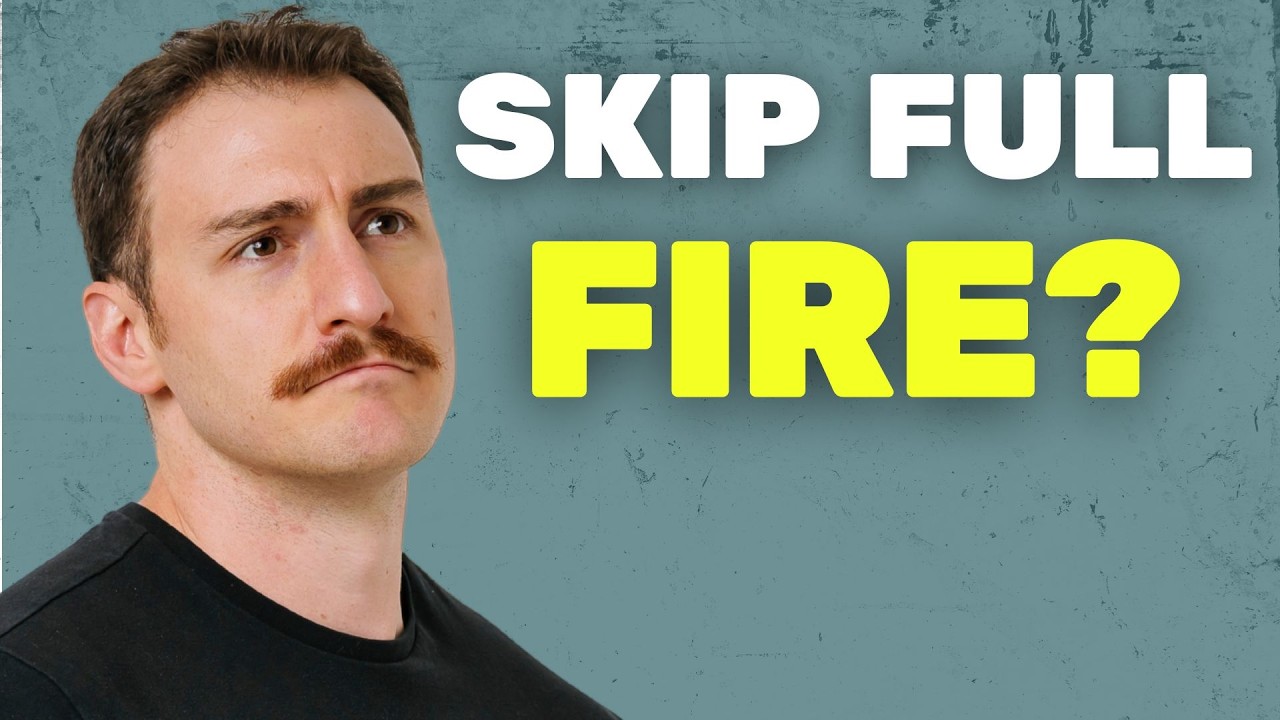
Evan Lawler, known as The Financial Foundation on Instagram and YouTube, joins Mindy Jensen and Scott Trench to outline his concrete financial plan to achieve Coast FI. Lawler, a 25-year-old mechanical engineer, is aggressively pursuing a goal of reaching $500,000 invested by age 30, a number he projects will grow to an inflation-adjusted $200,000 per year retirement income by age 65 without further contributions. He explains why Coast FI appeals to him: it feels more achievable than traditional FI (building $400k-$500k in 8-10 years vs. $5 million in 20), it assumes he will continue to work, and it keeps the option for traditional FI open. Lawler started investing at 16, accumulating $25,000 before college, and has since aggressively paid down $30,000 in student loans while increasing his savings rate.
Currently earning just under $100,000, Lawler invests nearly $40,000 annually, primarily into his Roth IRA and Roth 401k, with 100% allocation to US equities (S&P 500/FX AIX). His choice to max out Roth accounts is driven by a desire for future flexibility and tax-free withdrawals, believing these early years are his "first in, last out" opportunity. A cornerstone of his strategy is extreme frugality: he spends less than $40,000 per year, sharing a small, no-frills 650 sq ft apartment in the Philadelphia suburbs for $1,195/month (split with his girlfriend). He discusses making trade-offs like buying smaller furniture and foregoing in-unit laundry, emphasizing that while some amenities are forgone, the financial savings are substantial.
Lawler acknowledges he is slightly behind his $500,000 by 30 goal based on current projections, but plans to increase his income to make up ground. Scott Trench challenges his conservative projections, arguing that career growth for an engineer in their 20s is rarely linear and will likely accelerate his timeline. They discuss the potential for real estate investing (house hacking) in the Philadelphia market as a way to build wealth, especially for those with strong, but not ultra-high, engineering salaries. Lawler expresses interest but notes the research commitment required.
He details his side hustle as a content creator for "The Financial Foundation" and also explores the importance of negotiation skills for career advancement, receiving advice to create a "praise folder" and proactively discuss future opportunities with his manager. Lawler proudly characterizes his life as a "rich life," focusing on what brings him joy despite his frugal spending. He shares an evolution in his relationship with money, moving from agonizing over small expenses to recognizing that major financial decisions move the needle far more than minor ones, allowing him to sleep sounder and enjoy life more.
👤 Who Should Listen
- Young professionals and recent graduates aiming for early financial independence.
- Engineers or individuals in high-ROI degree fields seeking to optimize their savings and investments.
- Anyone interested in understanding and implementing the Coast FI strategy for their own financial plan.
- Listeners looking for practical, specific strategies for extreme frugality, especially regarding housing costs.
- Individuals considering prioritizing Roth contributions for long-term tax advantages and flexibility.
- People seeking to improve their career negotiation skills for salary increases and promotions.
🔑 Key Takeaways
- 1.Coast FI enables financial independence by accumulating a target investment amount early, allowing the money to grow passively for retirement while individuals continue working.
- 2.Evan Lawler plans to achieve his Coast FI goal of $500,000 by age 30, which is projected to grow to an inflation-adjusted $200,000 annual retirement income by age 65 without further contributions.
- 3.Aggressive savings in early career, such as Evan investing nearly $40,000 annually from a sub-$100,000 salary, is a critical component for hitting Coast FI goals.
- 4.Prioritizing Roth IRA and Roth 401k contributions, especially in early career, provides future tax flexibility and a hedge against potentially rising tax rates.
- 5.Keeping housing costs exceptionally low, as demonstrated by Evan's shared $1,195/month apartment in a medium-cost-of-living area, is the most significant lever for a high savings rate.
- 6.Adopting a "frugal but rich life" philosophy allows for strategic spending on joy-bringing items while cutting costs on non-essential amenities like an in-unit washer/dryer.
- 7.Career growth and negotiation skills, including building a "praise folder" and proactively discussing future opportunities with management, are underestimated components of accelerating financial goals.
💡 Key Concepts Explained
Coast FI
Coast FI (Financial Independence) is a strategy where an individual saves and invests a substantial amount of money early in their career, then stops contributing to retirement accounts, allowing that invested sum to grow passively until traditional retirement age. This episode highlights it as a more obtainable goal than traditional FI, offering flexibility to continue working or pivot careers without the pressure of future contributions for retirement.
Praise Folder
A 'praise folder' is an email folder where an employee saves positive feedback, compliments, and documented accomplishments from colleagues or supervisors. This episode suggests creating one as a powerful tool to quantify contributions and build a strong case for salary raises or promotions during performance reviews.
⚡ Actionable Takeaways
- →Identify your personal Coast FI number and set an aggressive timeline for reaching it, similar to Evan's goal of $500,000 by age 30.
- →Prioritize maxing out Roth IRA and Roth 401k contributions, especially early in your career, to leverage tax-free growth and future withdrawal flexibility.
- →Critically evaluate your housing costs, as reducing them (e.g., sharing an apartment or house hacking) can be the most significant factor in boosting your savings rate.
- →Create a "praise folder" in your work inbox to collect positive feedback and accomplishments, using it to strengthen your position during future salary or promotion negotiations.
- →Proactively discuss career growth opportunities and required performance metrics with your manager well in advance (e.g., 6-12 months) of annual review cycles to facilitate promotions and raises.
- →Consider opening a brokerage account for additional income beyond maxing retirement accounts, to build liquidity and flexibility for future goals like real estate investments or entrepreneurship.
- →Analyze the true cost versus marginal benefit of amenities like an in-unit washer/dryer, recognizing that saving hundreds of dollars a month can significantly accelerate investment goals.
⏱ Timeline Breakdown
💬 Notable Quotes
“I think it's hard to imagine for some people building a $5 million portfolio over 20 years, but it might be more obtainable to say, hey, I can make $400,000 or $500,000 over 8 to 10 years.”
“You buy yourself the opportunity to choose.”
“Live like no one else now so you can live like no one else later.”
“The smaller expenses that financially ambitious people tend to agonize over really do not move the needle compared to the three to five big decisions that you might make throughout the year.”
More from this guest
Evan Lawler
Listen to Full Episode
📬 Get weekly summaries like this one
No spam. Unsubscribe anytime. By subscribing you agree to our Privacy Policy.
Continue Exploring


