The Dave Ramsey Show
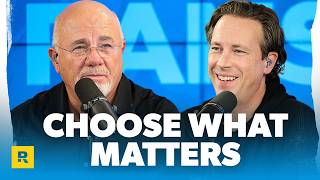
Own Your Choices, Starting Now | April 24, 2026

Episode Summary
AI-generated · Apr 2026AI-generated summary — may contain inaccuracies. Not a substitute for the full episode or professional advice.
This episode of The Dave Ramsey Show, hosted by Jade Warshaw and Dr. John Deloney, strongly emphasizes the critical importance of intentional choices and taking full ownership of one's financial circumstances to achieve freedom. The hosts assert that many financial struggles stem from a reactive, victim mindset rather than proactive decision-making. Through a series of diverse caller scenarios, they consistently advocate for radical honesty about one's situation and the willingness to make difficult trade-offs for long-term peace and financial autonomy, challenging conventional wisdom that often prioritizes theoretical monetary gains over emotional and relational well-being.
👤 Who Should Listen
- Couples navigating pre-marital financial decisions or blending finances in a marriage.
- Individuals burdened by high-interest debt, especially car loans or student loans, seeking a path to rapid freedom.
- Anyone feeling stuck in their financial journey due to perceived limitations or past mistakes.
- Adult children dealing with financially irresponsible parents and struggling to set boundaries.
- Long-distance landlords considering the sale of a rental property for better personal financial alignment.
- Young adults facing significant early-life financial choices, such as living arrangements, car purchases, or debt repayment strategies.
🔑 Key Takeaways
- 1.Combined finances should be reserved exclusively for married couples, as engagement is merely a planning period for the wedding, not a test of commitment.
- 2.The belief that one can 'have it all at the same time' is a cultural lie that leads to difficult dilemmas, requiring individuals to prioritize values and make intentional trade-offs.
- 3.Debt, regardless of its mathematical interest rate, incurs a 'soul tax,' 'sleep tax,' and 'relational tax,' diminishing peace and personal autonomy.
- 4.Long-distance landlordship, particularly for properties not intentionally chosen as investments, often leads to unnecessary stress and missed opportunities for homeownership where one truly lives.
- 5.Adult children of financially irresponsible parents must establish clear boundaries and offer support in the form of budgeting advice and accountability, not monetary bailouts, to avoid enabling harmful patterns.
- 6.High-interest debt, such as a 30% truck loan for a 21-year-old, demands extreme, immediate action like selling depreciating assets to achieve rapid freedom.
- 7.Engaging in complex family financial schemes, like Ladybird deeds to protect a deceased parent's assets, often involves low profit potential, high liability, and significant emotional cost, making it wise to opt out.
- 8.Credit repair companies are generally unnecessary as they often destroy your credit to achieve settlements you could negotiate yourself by directly contacting creditors with cash offers.
💡 Key Concepts Explained
The 'Culture's Greatest Lie'
This refers to the societal message that individuals can 'have it all at the same time'—e.g., a passion job, a stay-at-home parent, and homeownership. The episode highlights that in reality, people inevitably face trade-offs, and true financial freedom often requires prioritizing certain values over others, rather than striving for an impossible simultaneous ideal.
Debt's 'Soul Tax' / 'Sleep Tax' / 'Relational Tax'
Beyond just the interest rate, debt imposes significant emotional and psychological burdens. These 'taxes' manifest as persistent worry, stress, loss of peace, and strain on personal relationships, even if the math suggests investing might yield a higher return. The hosts argue that freedom from this 'tax' is invaluable.
'Drawing a Line in the Sand'
This is a decisive commitment to stop borrowing money for anything, regardless of emergencies or perceived needs. This mindset shift forces individuals to engage their creative problem-solving skills to find cash-based solutions for unexpected expenses, rather than resorting to new debt, thereby accelerating debt payoff and fostering financial discipline.
⚡ Actionable Takeaways
- →If engaged, maintain separate finances and only combine money after the marriage ceremony to solidify commitment.
- →Identify your core values regarding work, family, and lifestyle, then make financial choices that align with these values, acknowledging that saying 'yes' to one thing means saying 'no' to another.
- →Prioritize aggressively paying off all debt, even if it means sacrificing theoretically higher investment returns, to eliminate the 'soul tax' of owing money.
- →Sell any long-distance rental properties that you would not actively choose to buy today, using the equity to address current financial goals like buying a home where you live.
- →Refuse to provide monetary assistance to financially irresponsible adult family members; instead, offer practical help with budgeting and accountability, setting firm boundaries.
- →If carrying high-interest debt on depreciating assets like vehicles, sell them immediately and drive a cheaper, paid-for alternative, even if it feels like a 'clunker.'
- →For cars valued under $5,000, consider carrying only liability insurance to save money, provided you have an emergency fund sufficient to replace the vehicle if it's totaled.
- →Rather than hiring a credit repair company, directly contact creditors for old debts, offering a cash settlement of 40-50% of the original amount, and get the agreement in writing.
⏱ Timeline Breakdown
💬 Notable Quotes
“"Normal is broke and common sense is weird."”
“"You're worth more than you're getting right now."”
“"I don't want you to feel like this world that you and your wife live in is happening to you. I want y'all to... take full ownership of the choices you're making."”
“"The borrower is slave to the lender."”
“"Everything is an exchange. It's like, well, what do you want to exchange for your freedom? It's a short sacrifice. There's always a sacrifice to win. And winning isn't just in dollars and cents. It's in peace."”
“"The thing that makes me a man at 21 is absolute freedom."”
“"Don't think. Just go. Just go. Just go. Just do it."”
Listen to Full Episode
📬 Get weekly summaries like this one
No spam. Unsubscribe anytime. By subscribing you agree to our Privacy Policy.
Continue Exploring