Diary of a CEO
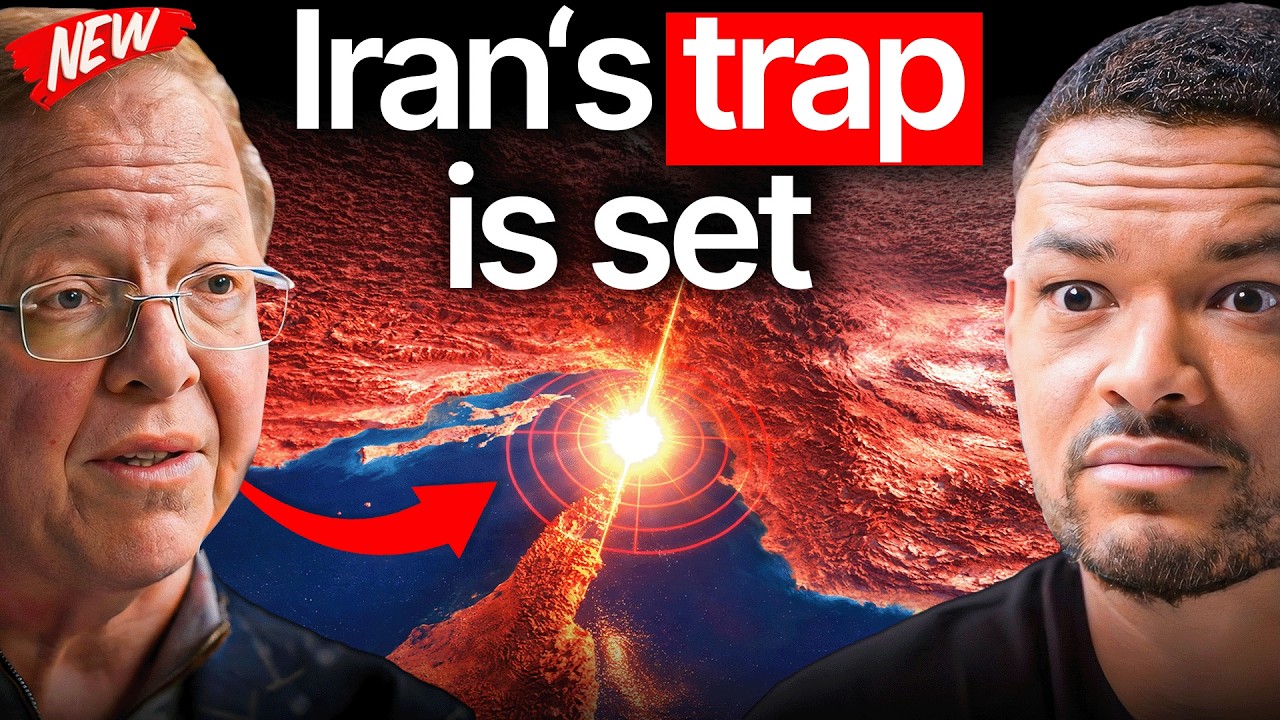
URGENT UPDATE - The Iran War Expert: The Most Dangerous Stage Begins Now
Episode Summary
AI-generated · Apr 2026AI-generated summary — may contain inaccuracies. Not a substitute for the full episode or professional advice.
Professor Robert Pape, a political science professor at the University of Chicago with 27 years of experience and author of "Bombing to Win," returns to the podcast to update listeners on the escalating conflict in Iran. Pape, who spent 21 years modeling hypothetical bombing campaigns against Iran, asserts that the current US strategy is not weakening Iran but actively strengthening it. He argues that Iran has realized the US cannot defeat them, citing the ineffectiveness of conventional bombing against deeply buried arsenals and the political reactions of a galvanized population.
Professor Pape details how the conflict has progressed through the "escalation trap" he previously outlined, with Stage Three (ground operations) now on the horizon. He explains that while the US can destroy industrial targets, it cannot eliminate Iran's enriched uranium, effectively "kicking the can down the road." Pape highlights Israel's repeated role as a "diplomatic spoiler," disrupting potential US-Iran negotiations by assassinating key Iranian figures. He contrasts the chaotic decision-making within the White House with Iran's strategic and increasingly effective responses, including their ability to control the Strait of Hormuz.
The discussion further explores the severe implications of President Trump's threat to "end an entire civilization in one night," calling it a declaration of genocidal intent that strengthens Iranian nationalism and pushes the pro-democracy movement to support nuclear deterrence. Pape projects two possible futures: a protracted ground war to secure Iranian oil fields and uranium, or Iran solidifying its position as an emerging "fourth center of world power" alongside the US, China, and Russia. He outlines Iran's 10-point peace proposal as a clear bid for regional hegemony, demonstrating their growing leverage.
The professor warns of the global economic fallout, including rising oil prices and inflation affecting the US and Europe, and declares NATO "for all practical purposes dead" due to a lack of trust in US military leadership. He suggests that the only viable off-ramp for the US involves a deal that includes enforceable military containment of Israel and Israel joining the Non-Proliferation Treaty (NPT), accepting IAEA inspections. However, Pape acknowledges the political difficulty of such a deal, predicting a prolonged period of instability between ground war preparations and Iran's ascendance.
👤 Who Should Listen
- Anyone seeking a deep, unvarnished analysis of the current conflict between the US and Iran.
- Listeners interested in how military strategy, international relations, and domestic politics intersect in global conflicts.
- Individuals concerned about the geopolitical shifts and the potential for a new 'fourth center of world power.'
- Anyone wanting to understand the potential economic consequences of the Middle East conflict, including impacts on oil prices and inflation.
- Citizens interested in the role of political leadership and the implications of extreme rhetoric in international diplomacy.
- Those interested in the historical context and predictive modeling of military campaigns and their outcomes.
🔑 Key Takeaways
- 1.The US strategy in Iran is strengthening Iran rather than weakening it, as Iran has realized the US cannot defeat its deeply buried military assets.
- 2.Traditional bombing campaigns are ineffective against deeply buried enriched uranium and missiles, only destroying visible targets and failing to deter a determined population.
- 3.Israel has acted as a "diplomatic spoiler" on multiple occasions, disrupting potential US-Iran peace negotiations by assassinating key Iranian figures.
- 4.President Trump's threat to "end an entire civilization in one night" serves to bond the Iranian population and regime, pushing the pro-democracy movement to support nuclear weapons for deterrence.
- 5.The conflict has reached a "fork in the road" between a ground war to seize Iranian oil fields and uranium, or Iran becoming an emerging fourth center of world power.
- 6.Iran's 10-point peace proposal, if accepted, would validate its position as the top power in the Persian Gulf and reorient America's Asian allies.
- 7.The escalating conflict contributes to rising global oil prices, increased inflation, and higher bond prices, significantly impacting the US and European economies.
- 8.NATO is deemed "for all practical purposes dead" as European allies are unlikely to follow American military leadership after perceived catastrophic failures and demands for their forces.
💡 Key Concepts Explained
Escalation Trap
A framework describing how a conflict can predictably escalate through stages. Stage one involves leadership change bombing leading to a stronger regime; stage two is horizontal escalation where the regime lashes back, potentially taking strategic choke points like the Strait of Hormuz; and stage three is the ground option to reclaim control. This episode introduces a potential stage four, where Iran becomes a major world power.
Diplomatic Spoiler
An actor, in this case, Israel, that undermines or sabotages diplomatic efforts towards peace or negotiation. The episode cites instances where Israeli actions, such as assassinating negotiators or launching initial strikes, have derailed US attempts to de-escalate with Iran.
Leadership Decapitation
A military strategy aiming to remove enemy leaders in the belief that it will destabilize the regime and facilitate regime change. Professor Pape argues that in Iran's case, this has backfired, strengthening the regime and population's resolve rather than weakening them.
Legitimacy Shock Cycle
A domestic political trap, analogous to the international escalation trap, where extreme political alternatives lead to an unstable balance and a continuous cycle of worsening outcomes for the middle ground. This leads to back-and-forth shifts that don't solve underlying problems.
Amphibious Operations
A military operation where troops on ships or landing vessels move from water onto a beach, typically to establish a 'beachhead' or foothold. This is discussed as a potential ground operation strategy to take coastal regions and eventually oil fields within Iran.
⚡ Actionable Takeaways
- →Prioritize voting for centrist political candidates who advocate for stable, long-term policies to avoid cycles of extreme and ineffective leadership.
- →Do not track the progression of the war based on rhetoric or negotiations, but rather by the verifiable movement of deployed military forces.
- →Understand the potential economic impacts of geopolitical conflicts on personal finances, such as rising gas prices and general inflation.
- →Recognize that military action often has significant political consequences that can overwhelm tactical military effects, as seen in historical and current conflicts.
⏱ Timeline Breakdown
💬 Notable Quotes
“"We're not weakening Iran. We have strengthened Iran and we can't stop their drone attacks. And what you're seeing is far more chaotic decision-making is happening in the White House than is happening in the government of Iran."”
“"The problem always was, no matter uh which year we did this, you wouldn't be able to destroy the enriched material, the actual gold. So, if you're panning for gold, you see what I mean? And you've got the gold. Uh you can destroy the pan, you can even destroy the river, you can't get the gold."”
“"This branch is becoming more evident hour by hour. Either we go through with the ground war or Iran becomes an emerging not right away fourth center of world power."”
“"No American president has threatened to end a civilization before, which is at the heart of the genocide treaties in 1948. The intent to commit genocide."”
More from this guest
Robert Pape
📚 Books Mentioned
Listen to Full Episode
📬 Get weekly summaries like this one
No spam. Unsubscribe anytime. By subscribing you agree to our Privacy Policy.
Continue Exploring


