Huberman Lab
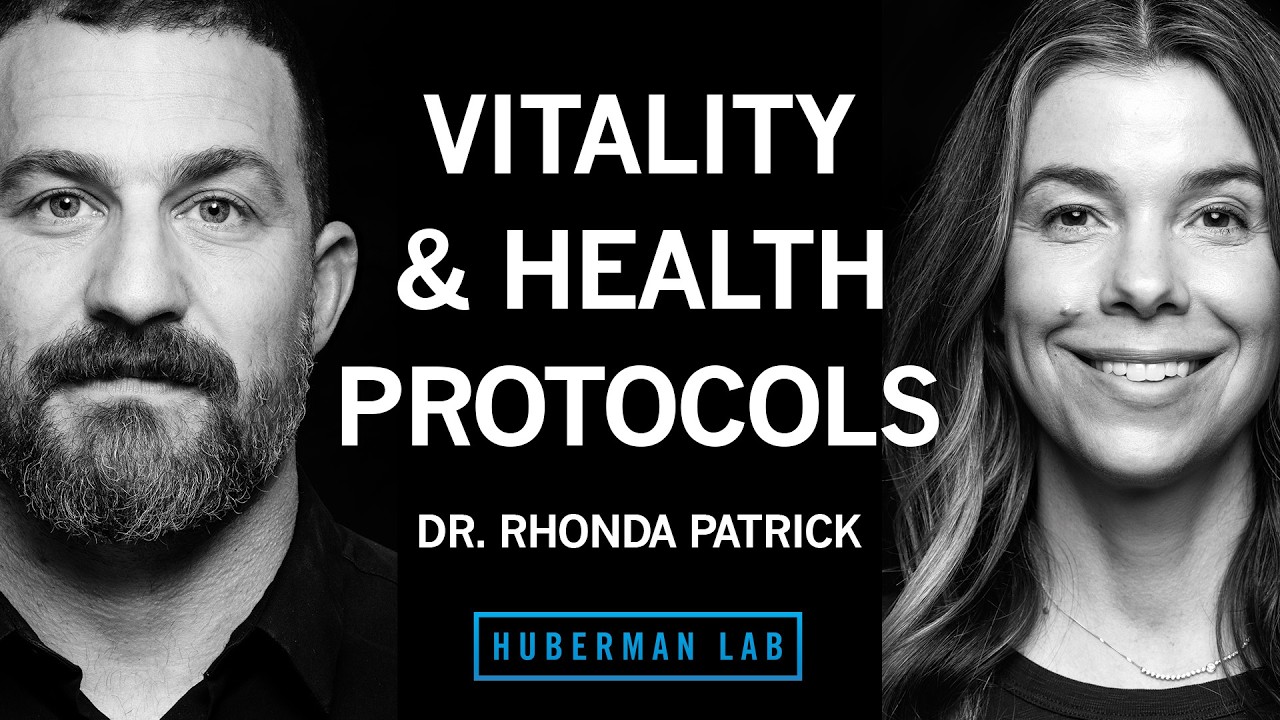
The Best Vitality & Health Protocols | Dr. Rhonda Patrick
Episode Summary
AI-generated · Mar 2026AI-generated summary — may contain inaccuracies. Not a substitute for the full episode or professional advice.
Dr. Rhonda Patrick, a biomedical scientist and leading public health educator, joins Dr. Andrew Huberman to detail the latest science-backed protocols for enhancing vitality, improving health, and preventing disease. Dr. Patrick shares her exact exercise, nutrition, and supplementation regimens, diving deep into the scientific mechanisms and logic underpinning each recommendation. The conversation underscores that even small, consistent efforts can yield significant health benefits, challenging conventional wisdom in several areas.
Dr. Patrick highlights the profound impact of "exercise snacks," noting that just 9 minutes a day (three 3-minute bursts of vigorous movement) is associated with a 40% reduction in all-cause mortality, a 40% reduction in cancer-related mortality, and a 50% reduction in cardiovascular-related mortality. She outlines her own rigorous routine, which includes 5-6 hours of high-intensity interval training and multi-joint heavy resistance training per week, often working down to singles in lifts like deadlifts and cleans. She emphasizes that intense exercise, even in short 10-minute bursts, acutely boosts neuronal connections, improves executive function by 14%, and increases plasma serotonin, which is crucial for impulse control. Counterintuitively, she advises becoming "more obsessed with training and less obsessed with protein," aiming for 1.2-1.6 grams per kilogram of body weight, rather than the often-cited 1 gram per pound.
The discussion delves into the critical role of diet and gut health, with Dr. Patrick explaining how processed carbohydrates and saturated fats (especially without fiber) contribute to a "post-prandial inflammatory response." This involves the leakage of lipopolysaccharide (LPS) from the gut into the bloodstream, which is linked to feelings of lethargy, depressive symptoms, and social withdrawal. Crucially, LPS binding to LDL particles (particularly small, dense LDL) can obscure the apoB protein, preventing their recycling by the liver and leading to their lodging in arterial walls, thus initiating atherosclerosis. She stresses the importance of visceral fat, a metabolically active and inflammatory type of fat around organs, which significantly elevates the risk of early death and cancer and can increase rapidly even without overall weight gain.
Dr. Patrick also details her approach to intermittent fasting, utilizing it both as a behavioral tool for caloric deficit and to induce a "metabolic switch" to ketogenesis. This metabolic state, she notes, generates clean energy, reduces oxidative stress, and activates beneficial brain-derived neurotrophic factor (BDNF). Other key topics include the benefits of stopping eating 3 hours before bed for cardiovascular health (linked to a 20% lower risk of cardiovascular events), the nuanced role of cortisol (beneficial spikes vs. detrimental chronic elevation), and the potential for L-glutamine (5-20g daily) to support immune function, though she cautions against excessive daily N-acetylcysteine (NAC) due to its potential to blunt exercise adaptations. Listeners will gain a comprehensive understanding of how to implement a holistic, evidence-based approach to optimizing their physical and mental well-being.
👤 Who Should Listen
- Anyone seeking science-backed strategies for improving overall health, vitality, and longevity.
- Individuals interested in specific, detailed exercise, nutrition, and supplementation protocols from a leading expert.
- People concerned about reducing their risk of chronic diseases such as cancer and cardiovascular disease.
- Those wanting to understand the intricate links between gut health, inflammation, and their impact on physical and mental well-being.
- Individuals looking for effective strategies to manage visceral fat and improve insulin sensitivity.
- Athletes or highly active individuals interested in optimizing training adaptations, recovery, and immune function through diet and supplements.
🔑 Key Takeaways
- 1.Short bursts of vigorous exercise, termed "exercise snacks" (e.g., 9 minutes total per day), are associated with significant reductions in all-cause mortality (40%), cancer-related mortality (40%), and cardiovascular mortality (50%).
- 2.High-intensity exercise, even for 10 minutes, can immediately increase neuronal connections, improve executive function by 14%, and elevate plasma serotonin levels, contributing to improved impulse control.
- 3.Dr. Patrick suggests that people should be "more obsessed with training and less obsessed with protein," aiming for 1.2-1.6 grams of protein per kilogram of body weight, as excessive protein intake from whole foods can lead to unintended caloric surplus.
- 4.Processed carbohydrates and saturated fats, especially without a fiber matrix, can trigger a post-prandial inflammatory response by promoting lipopolysaccharide (LPS) leakage from the gut, which contributes to fatigue, depression, and atherosclerosis.
- 5.Visceral fat, the deep fat surrounding internal organs, is highly metabolically active and inflammatory, posing double the risk of early death and a 44% higher chance of cancer, and can accumulate rapidly even in lean individuals.
- 6.Intermittent fasting can serve as both a behavioral tool for caloric deficit and a metabolic switch to ketogenesis, offering benefits like clean energy production, reduced oxidative stress, and activation of brain-derived neurotrophic factor (BDNF).
- 7.Ceasing food intake 3 hours before bedtime can lead to a beneficial cardiovascular reset during sleep, resulting in lower blood pressure and heart rate, which is associated with a 20% reduced risk of cardiovascular events.
- 8.Cortisol spikes from hormetic stressors like intense exercise or intermittent fasting are beneficial, promoting adaptations, unlike the detrimental "slow drip" of chronically elevated cortisol caused by chronic stress or sleep deprivation, which can lead to receptor resistance and dysregulation.
💡 Key Concepts Explained
Exercise Snacks
Short bursts of unstructured vigorous movement, typically 1-3 minutes in duration, performed multiple times throughout the day. This episode highlights that accumulating just 9 minutes of these daily is associated with substantial reductions in all-cause, cancer, and cardiovascular mortality, demonstrating their powerful impact on health outcomes.
Post-prandial Inflammatory Response
The immune system activation and subsequent inflammation that occurs after consuming certain meals, particularly those high in refined carbohydrates and saturated fats. Dr. Patrick explains that this response can involve lipopolysaccharide (LPS) leakage from gut bacteria into the bloodstream, contributing to fatigue, mood disturbances, and the initiation of atherosclerosis.
Metabolic Switch (Ketogenesis)
A physiological state where the body shifts from primarily using carbohydrates for fuel to burning fatty acids and producing ketone bodies, which typically occurs after liver glycogen stores are depleted. This episode frames it as a beneficial state induced by intermittent fasting or intense exercise, leading to cleaner energy production, reduced oxidative stress, and the activation of growth factors like BDNF in the brain.
Visceral Fat
Deep adipose tissue that accumulates around internal organs in the abdominal cavity, distinct from subcutaneous fat. This episode identifies visceral fat as metabolically active and a secretor of inflammatory compounds, strongly linked to insulin resistance, increased risk of early death (double the risk), and a 44% higher chance of various cancers, even in individuals who appear lean.
⚡ Actionable Takeaways
- →Incorporate 1-3 minute vigorous "exercise snacks" into your day, aiming for a total of 9 minutes or more, to significantly reduce mortality risks.
- →Design your weekly exercise routine to include 5-6 hours of vigorous intensity, combining high-intensity interval training (HIIT) with multi-joint heavy resistance training (e.g., deadlifts, squats, cleans).
- →Prioritize whole-food protein sources like turkey burgers, pasture-raised chicken, wild Alaskan salmon, and grass-fed steak, aiming for approximately 1.2-1.6 grams per kilogram of body weight.
- →Pair protein sources with micronutrient-dense greens such as sauteed collard greens or kale to enhance nutrient intake and support gut health.
- →Actively avoid ultra-processed foods, refined sugars, and saturated fats (especially without fiber) to mitigate post-prandial inflammation and protect against gut permeability and arterial plaque formation.
- →Implement a strategy to stop eating at least 3 hours before your bedtime to optimize cardiovascular health and enhance parasympathetic nervous system activity during sleep.
- →Consider supplementing with 5 grams of L-glutamine daily, increasing to 15-20 grams (in 5-gram doses) when traveling or exposed to pathogens, to potentially support immune function and gut health.
- →Be mindful of the timing of powerful antioxidants like N-acetylcysteine (NAC) and high-dose Vitamin E, as taking them too close to intense exercise may blunt beneficial adaptations.
⏱ Timeline Breakdown
💬 Notable Quotes
“"Individuals that do on the high end so they're doing you know 3 minutes of this short burst of an unstructured type of exercise snack and they do it three times a day. So it's a total of 9 minutes a day. Okay, that's associated with a 40% reduction in all-cause mortality, 40% reduction in cancer related mortality, a 50% reduction in cardiovascular related mortality."”
“"I think that we need generally speaking, I think people should become more obsessed with training and less obsessed with protein. Like the protein will complement the training."”
“"It's not that you don't want some antioxidants, it's just like you don't want to overdose on taking too much knack and too much vitamin C and too much vitamin E because there's also something called reductive stress."”
“"The problem is is when you have that slow drip, then you know, not only are you're you're increasing they're changing the receptor, you know, activation, but also they become resistant to the cortisol and so you're not getting the benefits. You know, cortisol represses inflammation, right? It's it suppresses the immune system, but like so you're not getting that anti-inflammatory effect from cortisol. It's being disregulated."”
More from this guest
Dr. Rhonda Patrick
Listen to Full Episode
📬 Get weekly summaries like this one
No spam. Unsubscribe anytime. By subscribing you agree to our Privacy Policy.
Continue Exploring