Invest Like the Best
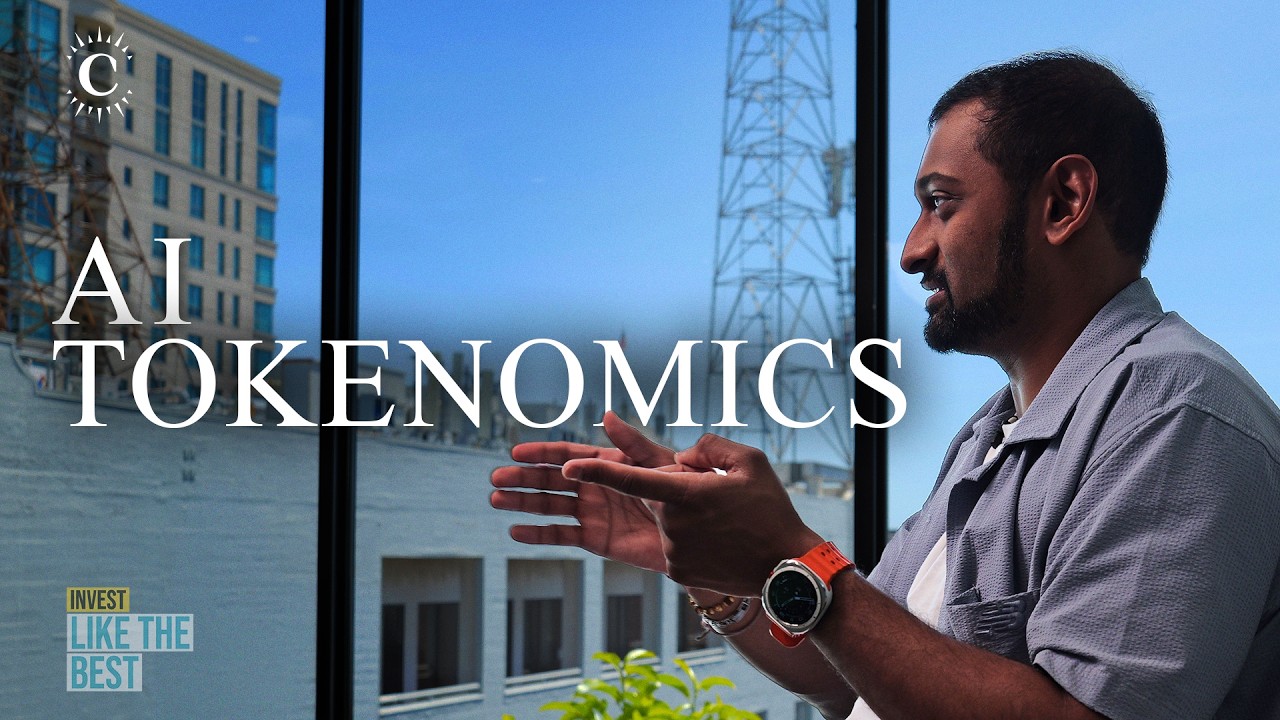
The Supply and Demand of AI Tokens | Dylan Patel Interview
Episode Summary
AI-generated · Apr 2026AI-generated summary — may contain inaccuracies. Not a substitute for the full episode or professional advice.
Dylan Patel of SemiAnalysis details how the explosive demand for AI tokens is fundamentally reordering business and the global economy. His firm, which analyzes the semiconductor industry, experienced a dramatic increase in AI token spending from tens of thousands to an annualized $7 million, signaling a profound shift where "ideas are cheap and plentiful but execution is very easy." This new paradigm means only truly impactful ideas can justify the spend on super-cheap implementation.
Patel illustrates AI's transformative power with specific examples: a single engineer, using a few thousand dollars in tokens, built an application to reverse-engineer chip architectures that previously required an entire Intel team. Similarly, an economist at his firm developed a comprehensive economic analysis and language model benchmark solo, a task that would have taken 200 economists a year. This "AI psychosis" compels businesses to rapidly adopt frontier AI models; failure to do so risks commoditization and displacement by faster-moving competitors. Patel argues that this existential pressure means continuous investment in AI is non-negotiable for survival and growth.
The episode delves into the fierce economics of AI tokens, highlighting the intense demand for leading-edge models like Anthropic's Mythos and Opus 4.7. Anthropic's gross margins have surged from an estimated 30% to over 72% due to this demand, which also necessitates strict usage rate limits. Patel asserts that access to the "most intelligent tokens" is becoming critical, and those who can effectively leverage them for high-value tasks will thrive. He posits that the economic value delivered by the best models is growing faster than the infrastructure's ability to supply tokens, leading to expanding margins for model labs and a concentration of resources among those with early access or significant capital.
On the supply side, numerous bottlenecks prevent infrastructure from keeping pace. The useful life of GPUs is extending, and prices for hardware, memory (DRAM expected to double/triple again), optics, and even basic components like copper foil are skyrocketing. Lead times for incremental supply, especially for memory fabs and TSMC's logic capacity, are extending to years, with TSMC's capex potentially reaching $100 billion by 2028. Beyond GPUs and ASICs, CPU demand is surging due to reinforcement learning environments and the compute needed for deployed AI applications. Patel anticipates breakthroughs in robotics within 6-18 months, driven by AI models, which will open a "second demand curve" for tokens, further accelerating demand.
Patel concludes that AI's rapid advancement is creating "phantom GDP" — immense value that isn't captured by traditional economic metrics, but fundamentally reorders society. He issues a stark warning: individuals and businesses who fail to "use more tokens and generate the value from them and capture that value" risk falling into a "permanent underclass." This reordering introduces significant uncertainty, with Patel even forecasting "large scale protests" against AI due to public fear and misunderstanding, underscoring the urgent need for AI companies to improve public communication and focus on uplifting, present-day applications.
👤 Who Should Listen
- Business leaders and executives evaluating or implementing AI solutions within their organizations.
- Investors in AI, semiconductors, cloud computing, and technology infrastructure.
- Entrepreneurs seeking to leverage AI for competitive advantage and rapid product development.
- Economists and policymakers interested in AI's unquantified impact on GDP, labor markets, and economic measurement.
- Anyone concerned about the societal implications of rapidly advancing AI, including resource concentration and public perception.
- Individuals aiming to understand how to thrive and avoid marginalization in an AI-driven economy.
🔑 Key Takeaways
- 1.AI token spend is skyrocketing, with Dylan Patel's firm increasing its annual spend from tens of thousands to $7 million as AI transforms operations.
- 2.AI enables extreme productivity gains, allowing individuals to accomplish tasks that previously required large teams and years of effort, such as chip reverse engineering or complex economic analysis.
- 3.Businesses face an existential choice: rapidly adopt and leverage frontier AI models to innovate and move fast, or risk commoditization and being outmaneuvered by competitors.
- 4.Demand for frontier AI tokens is so high that model labs like Anthropic are seeing gross margins surge (from ~30% to over 72%) and are forced to implement rate limits.
- 5.The economic value generated by the best AI models is outpacing the infrastructure's ability to supply tokens, leading to capacity shortages and rising costs across the entire supply chain.
- 6.Access to the newest, most capable AI models and the capital to leverage them will increasingly concentrate economic power, potentially creating a tiered system of access.
- 7.Failure to actively engage with AI, generate value from tokens, and capture that value could lead individuals and businesses to a 'permanent underclass.'
- 8.CPU demand is rapidly increasing to support reinforcement learning environments and the deployment of AI-generated applications.
💡 Key Concepts Explained
Phantom GDP
This concept describes the immense economic value and output created by AI that isn't accurately captured by traditional GDP statistics. Because AI drastically reduces costs, GDP can theoretically shrink even as output rises, making it challenging to measure AI's true economic impact.
AI Psychosis
This term refers to the overwhelming and rapidly accelerating realization within organizations of AI's capabilities. It drives explosive adoption and token usage, creating a sense of urgency and necessity for businesses to integrate advanced AI.
Software-only Singularity
This idea suggests that AI will first achieve a 'singularity' – a point of rapid, exponential self-improvement – primarily within the software domain. This precedes its extension to the physical world, implying a subsequent explosion of breakthroughs in robotics.
Permanent Underclass (AI)
This is a warning that individuals and businesses who do not actively use AI tokens to generate and capture economic value risk being left behind. As AI rapidly accelerates capabilities and concentrates resources, those not engaged in this process could become economically marginalized.
⚡ Actionable Takeaways
- →Aggressively invest in AI token usage within your organization to maintain a competitive edge and drive innovation, recognizing that implementation is now easy.
- →Identify high-value tasks where frontier AI models can dramatically increase productivity, enabling one person to achieve what previously required large teams.
- →Prioritize securing access to the most advanced AI models and higher token rate limits to stay ahead of competitors and avoid being priced out.
- →Explore new business models and services that leverage AI's ability to rapidly execute ideas and commoditize existing services, moving up the value chain.
- →Recognize and adapt to the increasing demand for CPU infrastructure driven by AI deployment and reinforcement learning, ensuring your systems can handle the load.
- →Focus on generating and capturing economic value from AI-powered outputs to avoid the 'permanent underclass,' not just automating existing tasks.
- →If in the AI industry, re-evaluate public communication strategies to focus on uplifting, present-day applications of AI rather than future capabilities, to mitigate public fear.
⏱ Timeline Breakdown
💬 Notable Quotes
“"What used to matter a lot was execution was very very difficult and ideas were cheap. Now ideas are cheap and plentiful but execution is very easy. So really only the good ideas are the ones that can justify the spend on super cheap implementation."”
“"If I don't adopt AI, someone else will and they will beat me."”
“"Economic value that the best model can deliver is growing faster than our ability to actually serve those tokens to people via the infrastructure."”
“"If you don't use more tokens and generate the value from them and capture that value... you'll never escape the permanent underclass."”
More from this guest
Dylan Patel
Listen to Full Episode
📬 Get weekly summaries like this one
No spam. Unsubscribe anytime. By subscribing you agree to our Privacy Policy.
Continue Exploring


