Invest Like the Best
What 100 Years of American Finance Tells Us About Today
Episode Summary
AI-generated · Apr 2026AI-generated summary — may contain inaccuracies. Not a substitute for the full episode or professional advice.
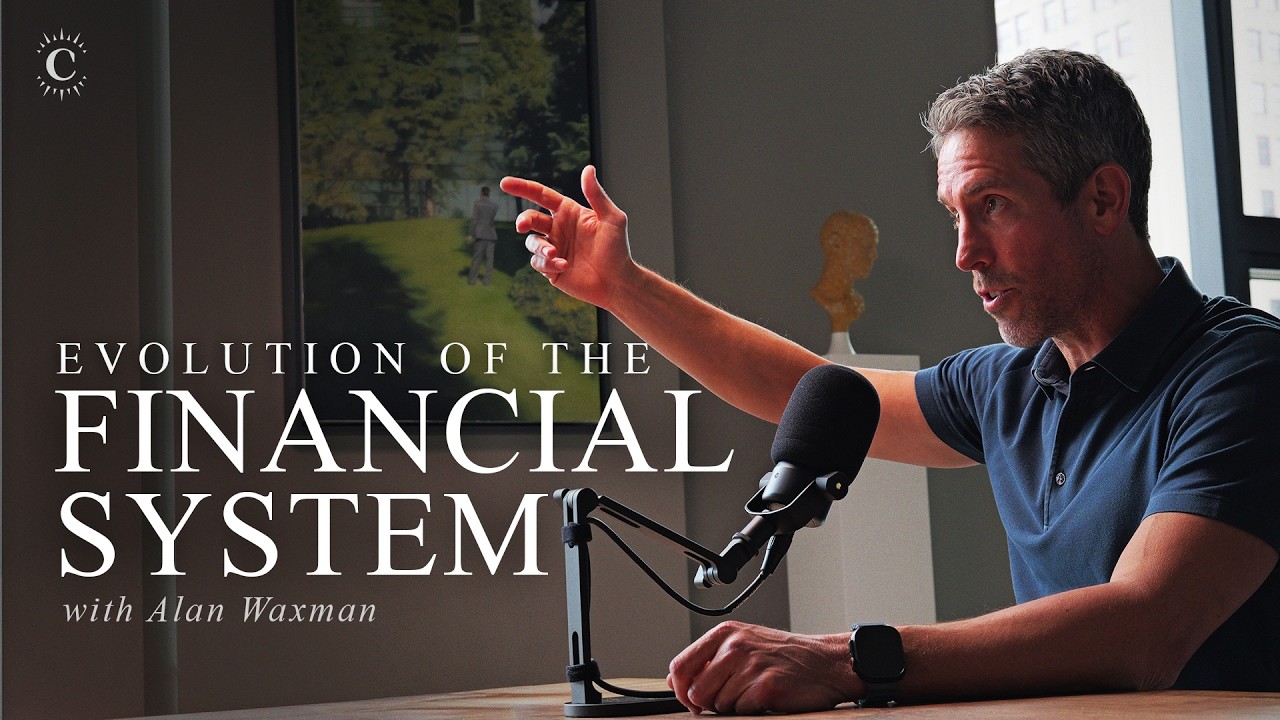
Alan Waxman, founder and leader of Sixth Street, one of the world's largest private capital investment firms, returns to discuss the historical evolution of the American financial system. He argues that understanding the shifting guardrails, incentives, and market structures that have defined three distinct "systems" since 1933 is crucial to comprehending today's financial landscape, particularly the rise of the "factory model" of investing and its current challenges in private markets. Waxman provides a deep historical lens to differentiate between symptoms and root causes of financial instability.
Waxman outlines System 1 (1933-1999), established by Glass-Steagall and the FDIC after the 1929 crash. This system separated commercial and investment banks, providing stability but wasn't optimized for economic growth, leading to its eventual repeal. System 2 (2000-2008) followed, marked by deregulation, a wave of bank mergers, increased leverage by investment banks, and the rapid growth of the fixed-income market. This period's asset-liability mismatches and lack of guardrails ultimately culminated in the Global Financial Crisis.
System 3, from post-GFC to today, was shaped by Basel 3 and Dodd-Frank, imposing capital and liquidity restrictions on commercial banks. This created a significant gap in principal risk-taking, which was rapidly filled by private capital, growing from $2 trillion pre-GFC to $14-15 trillion today. Waxman contends that this system worked well until around 2018, when a shift towards the "factory model" began to compromise its integrity. This model prioritizes the industrialization of fundraising and asset deployment, often leading to lower underwriting standards and the acceptance of less-than-perfectly matched assets and liabilities, particularly as it expanded into the wealth channel.
The conversation illuminates how high Fee Related Earnings (FRE) multiples incentivized this factory model, driving firms to raise capital as quickly and simply as possible. Waxman pinpoints the current issues with perpetual private BDCs and "stuck assets" as symptoms of this behavioral change, emphasizing the danger of mismatching illiquid assets with liabilities that offer quarterly redemption options. He concludes by stressing the need for recalibration within the industry, advocating for disciplined inflows, wide investment apertures, and a clear "clarity of purpose" focused on investor returns rather than just AUM growth, to create a truly robust and resilient American financial system.
👤 Who Should Listen
- Private equity and private credit investors seeking to understand the historical context and underlying drivers of current market trends.
- Financial services executives and policymakers interested in the evolution of financial regulation and its impact on market structure.
- Wealth managers and advisors evaluating alternative investment offerings and the risks associated with semi-liquid private capital vehicles.
- Leaders and founders of investment firms looking for principles to build resilient, long-term businesses, emphasizing clarity of purpose and risk management.
- Anyone interested in the interplay between financial incentives, guardrails, and market outcomes, particularly concerning the growth of private markets.
- Professionals seeking insights into personal development, time management, and adaptability strategies from a seasoned financial leader.
🔑 Key Takeaways
- 1.The American financial system's evolution can be understood through three historical "systems" (1933-1999, 2000-2008, post-GFC to today), each defined by distinct guardrails, incentives, and market structures.
- 2.Financial crises are often rooted in a combination of mismatched assets and liabilities, excessive leverage, and a lack of appropriate guardrails, rather than just market volatility.
- 3.System 3 (post-GFC) created a healthy financial structure with constrained commercial banks and private capital filling the risk-taking void, but this balance began to erode around 2018 due to behavioral changes.
- 4.The "factory model" of investing, driven by the industrialization of fundraising and asset deployment, can lead to compromised underwriting standards and asset-liability mismatches, especially in the pursuit of higher Fee Related Earnings (FRE) multiples.
- 5.Current issues in private markets, such as redemption gates in perpetual private BDCs and "stuck assets" in private real estate or equity, are symptoms of the factory model's influence, particularly in the wealth channel, not the root cause of systemic risk.
- 6.Responsible growth in private capital, especially within the wealth channel, requires careful governance of inflows, wide investment apertures across various strategies, and transparent communication about asset illiquidity.
- 7.A firm's "clarity of purpose" — whether to raise liabilities or drive strong investment returns — is paramount for long-term success and avoiding the pitfalls of the factory model.
- 8.The ongoing recalibration in private markets is an opportunity for the industry to adopt more prudent underwriting and behaviors, potentially leading to a more robust and balanced American financial system.
- 9.Continuous learning, adaptability, and facing challenges head-on are crucial for individuals and firms to thrive in an environment of accelerating change and creative destruction.
💡 Key Concepts Explained
System 1, 2, and 3 of American Finance
A framework developed by Alan Waxman to analyze the history of the American financial system since 1933, defined by evolving guardrails, incentives, and market structures. System 1 (1933-1999) involved strict separation of commercial and investment banking via Glass-Steagall; System 2 (2000-2008) saw deregulation and increased leverage leading to the GFC; and System 3 (post-GFC to today) features constrained commercial banks and a rapidly growing private capital sector. This framework helps distinguish root causes from symptoms in financial market behavior.
Factory Model of Investing
A business model in the investment industry characterized by the industrialization of both liability gathering (raising capital as quickly and simply as possible) and asset deployment (rapidly investing large sums). This model often contrasts with an "artisanal" approach focused purely on maximizing investment returns, and can lead to lower underwriting standards, narrow strategies, and asset-liability mismatches, especially when incentivized by high Fee Related Earnings (FRE) multiples.
Fee Related Earnings (FRE) Multiples
A financial metric representing the profit derived from management fees, calculated as management fee income minus operating expenses. The episode highlights how the increasing valuation multiples applied to FRE (e.g., from 10-15x in the early 2010s to 25-30x+ before the current moment) incentivized investment firms to prioritize asset growth and adopt the "factory model" to maximize these fee-related profits, sometimes at the expense of investment performance or risk management.
Face the Tiger
A core ethos at Sixth Street, symbolizing the approach to problems and challenges. It means confronting difficult situations head-on, collaboratively, and actively running towards them rather than away. This principle is vital for adapting to rapid change and disruption, fostering a mindset of proactive problem-solving and excellence within the firm.
⚡ Actionable Takeaways
- →Maintain well-matched assets and liabilities in your investment vehicles to avoid liquidity crises when investors demand their money back, especially in illiquid strategies.
- →Uphold stringent underwriting standards and resist lowering them to facilitate faster capital deployment, prioritizing return per unit of risk over deployment pace.
- →Define your firm's "clarity of purpose" and consistently align all business decisions—especially fundraising and investment strategy—with that purpose, rather than solely pursuing growth in Assets Under Management (AUM).
- →If operating in the wealth channel for private capital, govern capital inflows responsibly and consider multi-strategy, wide-aperture funds rather than narrow, inflow-driven vehicles to navigate oscillating supply-demand dynamics.
- →Be transparent with investors about the illiquidity of private assets, ensuring they understand that asking for money back quickly might not be possible, as if anticipating a 2008-level crisis.
- →Embrace a personal and professional commitment to continuous learning and adaptability, such as by regularly experimenting with new tools like LLMs, to remain relevant in a rapidly changing world.
- →Implement a personal organization system to dynamically prioritize time on high-impact activities, capture ideas, and avoid loose ends, much like Alan Waxman's "brain on paper" method.
⏱ Timeline Breakdown
💬 Notable Quotes
“What you're reading in the news today are the symptoms but not really the root cause.”
“Anytime you bring retail or individuals...next to principal risk-taking activity...that's one thing. I think the second thing is just anytime you mismatch assets and liabilities. And then the third thing again going back to what we talked about earlier is like what are the incentives? What are the guardrails and what's the market structure?”
“The way that we define the factory model in our industry is there's two parts to it...the industrialization of the fundraising process or I would say liability gathering...then what comes second is then as a result of that the industrialization of the asset side.”
“The biggest thing is just being very upfront when you want your money back. Like you have to assume it's like 2008 crisis 1929. And if you're comfortable keeping it invested, then you're probably suitable investor.”
More from this guest
Alan Waxman
Listen to Full Episode
📬 Get weekly summaries like this one
No spam. Unsubscribe anytime. By subscribing you agree to our Privacy Policy.
Continue Exploring


