Lex Fridman Podcast
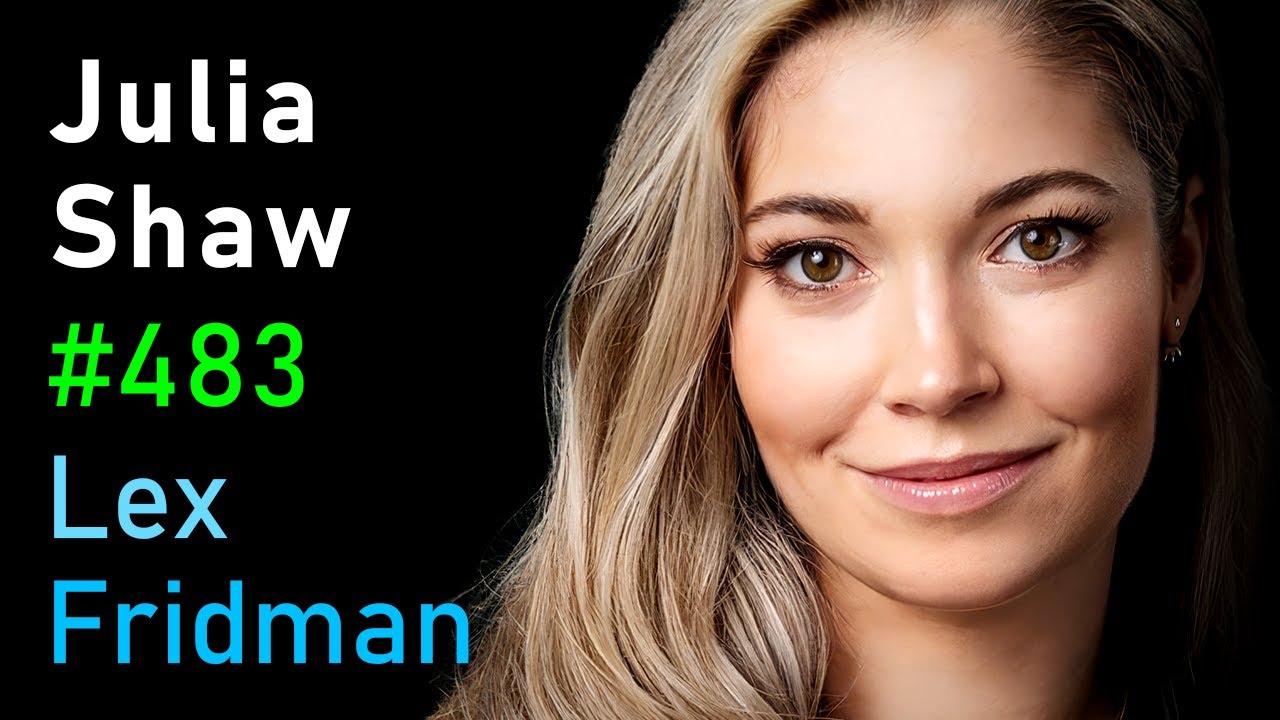
Julia Shaw: Criminal Psychology of Murder, Serial Killers, Memory & Sex | Lex Fridman Podcast
Episode Summary
AI-generated · Mar 2026AI-generated summary — may contain inaccuracies. Not a substitute for the full episode or professional advice.
Criminal psychologist Julia Shaw joins Lex Fridman for a deep dive into humanity's darkest sides, arguing against the binary labeling of people as "evil" in favor of understanding human behavior on a continuum. Shaw, author of books like “Evil: The Science Behind Humanity’s Dark Side” and “Bi: The Hidden Culture, History, and Science of Bisexuality,” challenges listeners to confront their own capacity for harm, emphasizing that understanding the roots of destructive behavior is key to preventing it.
Shaw meticulously breaks down the "Dark Tetrad" — psychopathy, sadism, narcissism, and Machiavellianism — explaining that these are not fixed labels but traits that exist on a scale within everyone. She provocatively uses the "baby Hitler" thought experiment to explore the nature-versus-nurture debate, ultimately concluding that people are not born evil, and the word "evil" itself is a conversational dead-end that dehumanizes. This leads to the critical concept of "evil empathy," which involves understanding the psychological and social factors driving individuals to commit heinous acts, not to excuse them, but to make society safer by addressing underlying causes.
The conversation explores the fascinating, often counterintuitive, psychology of crime, from serial killers like Robert Pickton, whose loneliness and untethering from reality contribute to their actions, to the surprising statistic that murder fantasies are common (70% of men, over 50% of women) and can be an adaptive "dress rehearsal" for avoiding harmful behavior. Shaw highlights that most murders are not planned acts by psychopaths but rather fights that escalate over "stupid reasons," leading to a mere 1-3% recidivism rate for homicide. She also unpacks the mechanics of fraud, exemplified by the "Tinder Swindler," as a manipulation of human desires and emotional vulnerabilities that anyone can fall victim to.
Moving into human sexuality, Shaw challenges traditional norms around monogamy and jealousy, drawing on research from the Kinsey Scale and Klein Sexual Orientation Grid to advocate for a more fluid, nuanced understanding of identity and relationships. She discusses how societal stigma negatively impacts bisexual individuals and how exploring kinks and sexual fantasies, often mistakenly conflated with "evil," can be a healthy path to disinhibition and self-discovery. Her own public coming out as bisexual is presented as an act of visibility to destigmatize and protect the rights of marginalized communities.
Listeners will walk away with a profound reframing of human nature, equipped with psychological frameworks to understand complex behaviors, critically evaluate social narratives around crime and sexuality, and apply empathy to foster a more resilient and inclusive society. The episode provides tools for self-reflection and encourages a proactive, compassionate approach to navigating both personal challenges and broader societal issues.
👤 Who Should Listen
- Anyone interested in the psychological underpinnings of violent crime, serial killers, and human cruelty.
- Individuals exploring their own sexual identity, relationship structures, or sexual fantasies, seeking frameworks and destigmatization.
- Police officers, lawyers, and investigators interested in memory, interrogation techniques, and the challenges of lie detection.
- Listeners curious about the social construction of 'evil' and the role of empathy in understanding and preventing harm.
- People interested in the intersection of AI, human memory, and social interaction, particularly regarding truth and distortion.
- Anyone reflecting on personal accountability, the bystander effect, and how to foster pro-social behavior in challenging situations.
🔑 Key Takeaways
- 1.The Dark Tetrad (psychopathy, sadism, narcissism, Machiavellianism) are a continuum of traits, not binary labels, suggesting everyone scores somewhere and that "evil" is not an inherent state [01:54].
- 2.Empathy, or "evil empathy," is crucial for understanding and preventing harmful behaviors, even in individuals traditionally labeled as evil, by investigating the psychological and social factors that lead to such actions [07:54].
- 3.Most men (70%) and over 50% of women fantasize about killing someone, which Shaw suggests can be an "adaptive dress rehearsal" for not acting on dark impulses [30:53].
- 4.Murder is often the result of "a fight that gets out of control" over "stupid reasons" rather than planned acts by psychopaths, with recidivism for homicide being only 1-3% [38:14].
- 5.Loneliness and a lack of social networks contribute to serial killer psychology by untethering individuals from reality, allowing radicalization of thoughts and delusions [25:46].
- 6.The Kinsey Scale, developed by Alfred Kinsey after WWII, revealed that most people fall on a continuum of sexual desire rather than being exclusively homosexual or heterosexual [64:05].
- 7.Fraud, exemplified by the Tinder Swindler, works by exploiting people's emotional vulnerabilities and desires for love and a certain life, demonstrating that "everybody is capable of believing" a tailored scam [47:31].
- 8.Societal stigma and lack of community connection lead to higher rates of self-harm, sexual violence, and isolation for bisexual individuals, highlighting the importance of visibility and community for mental health [72:25].
💡 Key Concepts Explained
Dark Tetrad
A set of four personality traits: psychopathy, sadism, narcissism, and Machiavellianism. This episode presents them as a continuum of traits, not binary labels, emphasizing that people fall somewhere on these scales rather than simply being a "monster or non-monster" [01:54].
Evil Empathy
Empathy directed towards individuals often labeled as "evil," not to condone their actions, but to understand the psychological and social factors that led to their behavior. Shaw argues this understanding is crucial for preventing future harm and making society safer [07:54].
Victimization Gap
The significant disparity between the impact of a severe crime on the perpetrator (e.g., imprisonment) and the victim and their family (e.g., loss of life). Society often struggles with this gap, wanting extreme consequences to align with extreme reasons, leading to misaligned justice priorities [38:14].
Heroic Imagination
A concept promoted by Philip Zimbardo, which involves mentally rehearsing intervening in difficult or dangerous situations. This exercise helps individuals develop the capacity to act heroically and overcome the bystander effect, fostering pro-social behavior [34:02].
Kinsey Scale
A 0-6 scale developed by Alfred Kinsey in the 1940s to measure human sexual orientation. It posits that sexual desire exists on a continuum rather than as exclusive homosexual or heterosexual categories, with most people falling somewhere in between [64:05].
Klein Sexual Orientation Grid
A more complex assessment tool than the Kinsey Scale, developed by Fritz Klein. It evaluates sexuality across multiple dimensions (e.g., sexual attraction, behavior, fantasies, social preferences, self-identification) and across three timeframes (past, present, and ideal) to help individuals understand their full sexual landscape [68:16].
Disinhibition Hypothesis (of Kinks/Fantasies)
This hypothesis suggests that people engage in certain sexual behaviors or fantasies, like BDSM, to achieve a state of liberation and release from the pressures of daily decision-making or social norms. It allows individuals to "let go" and explore parts of themselves in a consensual, fictional context [77:37].
⚡ Actionable Takeaways
- →Practice "heroic imagination" by simulating how you would intervene in difficult situations to avoid the bystander effect and foster pro-social behavior [34:02].
- →Consider using frameworks like the Klein Sexual Orientation Grid to analytically explore your own sexual identity, attractions, fantasies, and lifestyle preferences (past, present, and ideal) to identify sticking points [68:16].
- →Have open and honest conversations with partners early in a relationship about desired structures (e.g., monogamy, polyamory) to avoid deception and foster healthier dynamics [54:43].
- →Reappraise your own sexuality, desires, and relationship status periodically to ensure personal happiness and health, acknowledging that these aspects can change over time [72:25].
- →Recognize jealousy as a red flag, often indicating insecurity or a desire for control rather than love, and address underlying communication or relationship issues within a relationship [50:39].
- →Be aware that your "creepiness radars" and intuitive ability to detect lies are often unreliable, leading to potential misjudgments in personal relationships and even wrongful convictions in legal settings [12:22], [14:26].
- →Actively seek out communities and visible representation for non-traditional sexualities or kinks to combat isolation and destigmatize aspects of human experience [81:44].
⏱ Timeline Breakdown
💬 Notable Quotes
“Most men have fantasized about killing someone, about 70% in two studies, and most women as well. More than 50% of women have fantasized about killing somebody. So murder fantasies are incredibly common.”
“We all have the capacity to kill people and murder people and do other terrible things. The question is why we don't do those things rather than why we do those things quite often.”
“Evil is a label we place onto others. There's nothing inherent to anything that makes it evil.”
“What we've created with Gen AI is basically the ultimate false memory machine.”
More from this guest
Julia Shaw
Listen to Full Episode
📬 Get weekly summaries like this one
No spam. Unsubscribe anytime. By subscribing you agree to our Privacy Policy.
Continue Exploring


