The Tim Ferriss Show
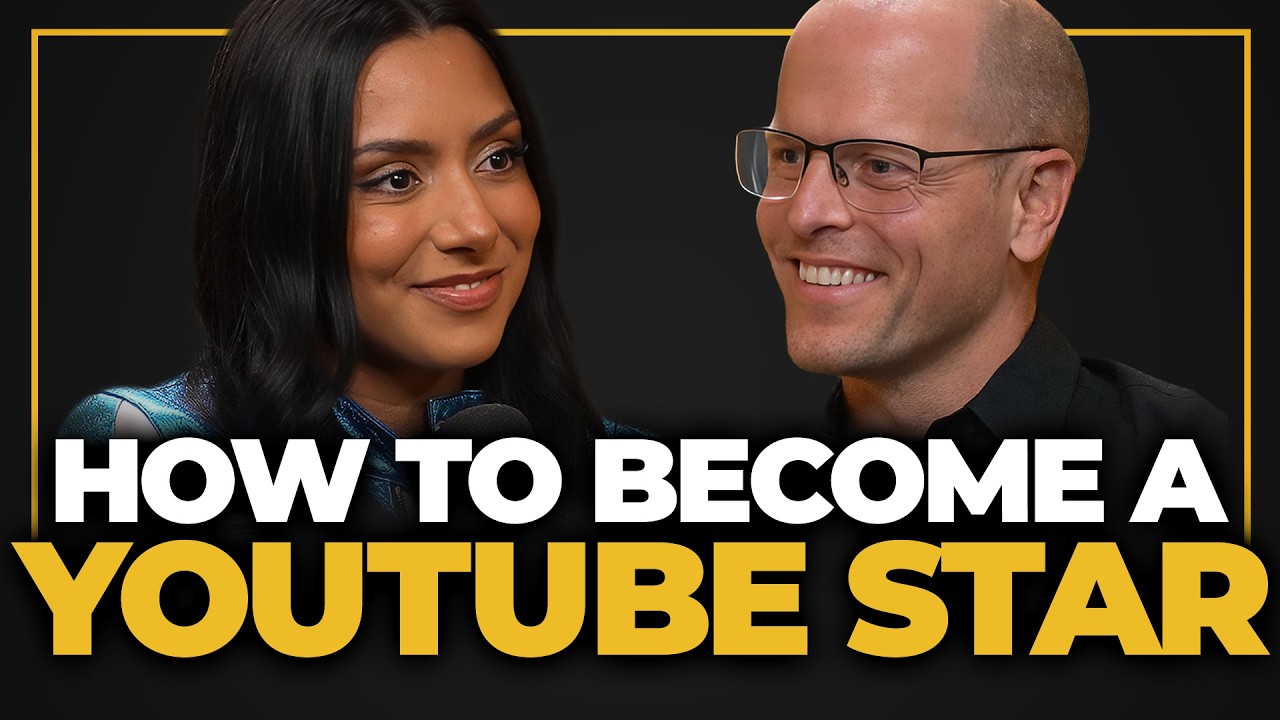
Daredevil Michelle Khare — How to Become a YouTube Superstar
Episode Summary
AI-generated · Apr 2026AI-generated summary — may contain inaccuracies. Not a substitute for the full episode or professional advice.
This episode features YouTube superstar Michelle Khare, creator of the immensely popular "Challenge Accepted" series, where she attempts "the world's toughest stunts and professions" like training with the Secret Service or recreating Tom Cruise's plane stunt [01:01, 02:03]. With over 6 million followers and a billion views, Khare is a Time 100 honoree, celebrated for her impactful storytelling that openly showcases dedication, failure, and "low lights" [02:03, 03:03]. The conversation delves into her counterintuitive approach to building a successful content empire by defying conventional wisdom, leveraging "fear setting," and strategically assembling a support system to achieve extraordinary goals.
👤 Who Should Listen
- Aspiring YouTube creators looking to build a sustainable, high-quality channel against conventional advice.
- Entrepreneurs grappling with career transitions or taking significant personal/professional risks.
- Anyone struggling with fear or anxiety about making big life changes and seeking actionable frameworks.
- Content creators interested in strategic business models that prioritize quality and uniqueness over quantity.
- Individuals seeking effective strategies for networking, cold outreach, and building a professional support system.
- Leaders looking to cultivate empathetic and effective production teams by understanding all roles.
🔑 Key Takeaways
- 1.Michelle Khare's "Challenge Accepted" series thrives by demonstrating that "with enough dedication and failure, anything is possible," often featuring "low lights" alongside highlights [02:03].
- 2.Fear setting, inspired by Tim Ferriss's *The 4-Hour Workweek*, involves defining one's nightmare, outlining steps to repair damage, and identifying the costs of postponing action to create personal security and drive big life decisions [44:54].
- 3.Defying the "culture of cortisol" and high-frequency uploads, Khare's strategy focuses on quality over quantity, releasing only "8 to 10 episodes per year" of highly produced, unique content [21:29, 25:31].
- 4.This scarcity model for unique, "one of one" content enables a premium advertising approach, where brand partners vie for limited inventory, creating a powerful economic moat [26:32].
- 5.Building a "Formula 1 team" for personal and professional growth involves identifying a coach (expert in the task), a mentor (people just a few steps ahead), and a cheerleader (detached emotional support) [68:24, 70:28].
- 6.Strategic cold emailing, essential for early collaborations with institutions like the FBI, requires a subject line showing value, a concise body with a clear ask and demonstrated homework, and an explicit call to action including a phone number [72:33, 76:36].
- 7.The "hard choices, easy life" principle suggests that addressing difficult problems upfront, such as Khare's "practicing poverty" before quitting her job, can create long-term safety and courage [31:38, 52:07].
- 8.Foundational experience in a broad role, like Khare's "producer" role at BuzzFeed covering everything from ideation to editing, provides invaluable empathetic leadership skills for managing a specialized team later [35:42, 36:44].
💡 Key Concepts Explained
Fear Setting
A Stoic-inspired practice, systematized by Tim Ferriss, that involves defining one's worst fears, outlining preventative measures, and steps for repair if fears materialize, thereby demystifying anxiety and building courage to take action [00:00, 45:57]. Michelle used it to plan her career pivot away from a stable job.
Challenge Accepted Business Model
Michelle Khare's YouTube show, where she attempts extreme stunts and professions, has a business model built on prioritizing high production quality and unique content over frequent uploads. By releasing only "8 to 10 episodes per year," this "one of one" approach creates scarcity for advertisers, allowing premium pricing and a strong economic moat [25:31, 26:32].
Formula 1 Team
A framework for personal and professional development proposed by Michelle Khare, which involves strategically surrounding oneself with three key support figures: a "coach" who provides direct, expert training; a "mentor" who has recently achieved the desired outcome; and a "cheerleader" who offers unconditional emotional support, critical for navigating entrepreneurial challenges [17:24, 68:24].
Surface Area for Luck
A concept, cited by Tim Ferriss and exemplified by Khare's early networking, where one intentionally places themselves in environments or situations that increase the probability of serendipitous encounters and opportunities. This involves putting oneself "where the action is" to foster connections that can significantly impact career or life [64:21, 75:35].
⚡ Actionable Takeaways
- →Conduct a "fear setting" exercise: define your worst-case nightmare, list specific steps to prevent or repair the damage, and identify what postponing action is costing you [45:57, 46:58].
- →Practice "poverty" to build resilience and prove to yourself you can handle worst-case scenarios, such as moving into a smaller place or cutting unnecessary memberships, before making a risky career leap [52:07, 65:21].
- →Before quitting a stable job for a passion project, moonlight and build up a backlog of work (e.g., two months of videos) to ensure a head start and financial runway [53:07, 54:08].
- →When seeking to learn new skills or enter an industry, prioritize working for someone else first to make mistakes on "someone else's dime" and gain comprehensive experience across different roles [38:47, 39:48].
- →Assemble a "Formula 1 team" by identifying specific individuals for roles: a coach for direct guidance, a mentor who has recently achieved your goal, and a cheerleader for unconditional support [68:24].
- →Craft cold emails with a value-driven subject line, a concise three-paragraph body detailing who you are, your ask, and clear details, and an explicit call to action with your phone number [76:36].
- →Study narrative arc storytelling from non-scripted media like "Survivor" to understand how producers curate engaging storylines from vast amounts of footage and apply principles like Snider's Beats or "Save the Cat" to your own content [102:01, 105:06].
⏱ Timeline Breakdown
💬 Notable Quotes
“I'm waiting for a false sense of security to inspire me to take a leap. But I'm actually being challenged and invited to create my own security. I've never designed my own rubric of success. And that's because I don't trust myself to define success. I'm scared to assume that responsibility.”
More from this guest
Michelle Khare
Listen to Full Episode
📬 Get weekly summaries like this one
No spam. Unsubscribe anytime. By subscribing you agree to our Privacy Policy.
Continue Exploring


