The Tim Ferriss Show
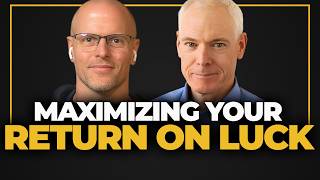
The 3 Types of Luck — What 10x Winners Do Differently

Episode Summary
AI-generated · Mar 2026AI-generated summary — may contain inaccuracies. Not a substitute for the full episode or professional advice.
This episode of The Tim Ferriss Show delves into the nature of luck, particularly examining "what 10x winners do differently." The discussion begins by defining a "luck event" as something you didn't cause, has a potentially significant good or bad consequence, and comes as a surprise. Collaborating with "Morton," the speaker found that exceptional winners (companies with 10x returns) did not experience more good luck or less bad luck than their comparisons; luck, as a distributed variable, was surprisingly even.
The core insight from their study is that the crucial differentiator for 10x winners is their "return on luck." Instead of receiving more luck, these high-achievers demonstrated an "amazing ability" to make significantly more of the luck they encountered compared to their peers. This ability to maximize the impact of lucky events emerged as the critical variable distinguishing top performers.
The speaker introduces three distinct types of luck: "what luck," referring to random good or bad events like a cancer diagnosis; "hool luck," which pertains to the people one meets or the circumstances of one's birth, often described as a continuously underappreciated kind of luck (e.g., meeting a spouse or being born at a certain time); and "zeit luck," where an individual's actions align perfectly with the prevailing spirit or "zeitgeist" of the era, such as Benjamin Franklin during the American Revolution or Alice Paul's role in the suffrage movement. These types illustrate how specific historical and personal conjunctures shape individuals' lives, with examples including Grace Hopper and Jimmy Page of Led Zeppelin.
Tim Ferriss and the speaker also explore the concept of "not all time in life is equal," or "Natalie moments," where recognizing a critical juncture demands an "unequal response." They discuss how maximizing "return on luck" involves identifying these moments and applying "10x intensity." Tim draws parallels to angel investing, noting that success often comes from a few high-impact events amidst many failed attempts. The conversation concludes with the idea of "increasing the surface area of luck"—strategically positioning oneself in environments like Silicon Valley to increase opportunities for "hool luck" to manifest and be seized.
👤 Who Should Listen
- Investors & Wealth Builders
- Lifelong Learners
- Goal-Oriented Listeners
- Self-Development Enthusiasts
🔑 Key Takeaways
- 1.A "luck event" is defined as an occurrence you didn't cause, has potentially significant consequences, and comes as a surprise.
- 2.High-achievers, or "10x winners," do not experience more good luck or less bad luck than their peers; the distribution of luck is relatively even.
- 3.The key differentiator for success is "return on luck," which is the ability to maximize the impact of the lucky events one encounters.
- 4.Luck can be categorized into three types: "what luck" (random events), "hool luck" (luck related to who you are or meet), and "zeit luck" (alignment with the spirit of the times).
- 5.Exceptional performers identify "not all time in life is equal" moments and respond with "10x intensity" to capitalize on these critical junctures.
- 6.Strategically "increasing the surface area of luck" by positioning oneself in opportune environments (e.g., Silicon Valley) can enhance the chances of encountering and leveraging beneficial luck.
- 7.Success is rarely solely due to luck or skill; it is almost always a combination of both.
💬 Notable Quotes
“A luck event... you didn't cause it... it has a potentially significant consequence, good or bad... in some way it came as a surprise.”
“It was the return on luck that when the luck came they had this amazing ability relative to the comparison to make more of the luck.”
“Not all time in life is equal. And you recognize this is a not all time in life is equal moment. And it requires an unequal response to an unequal moment.”
Listen to Full Episode
📬 Get weekly summaries like this one
No spam. Unsubscribe anytime. By subscribing you agree to our Privacy Policy.
Continue Exploring