Valuetainment
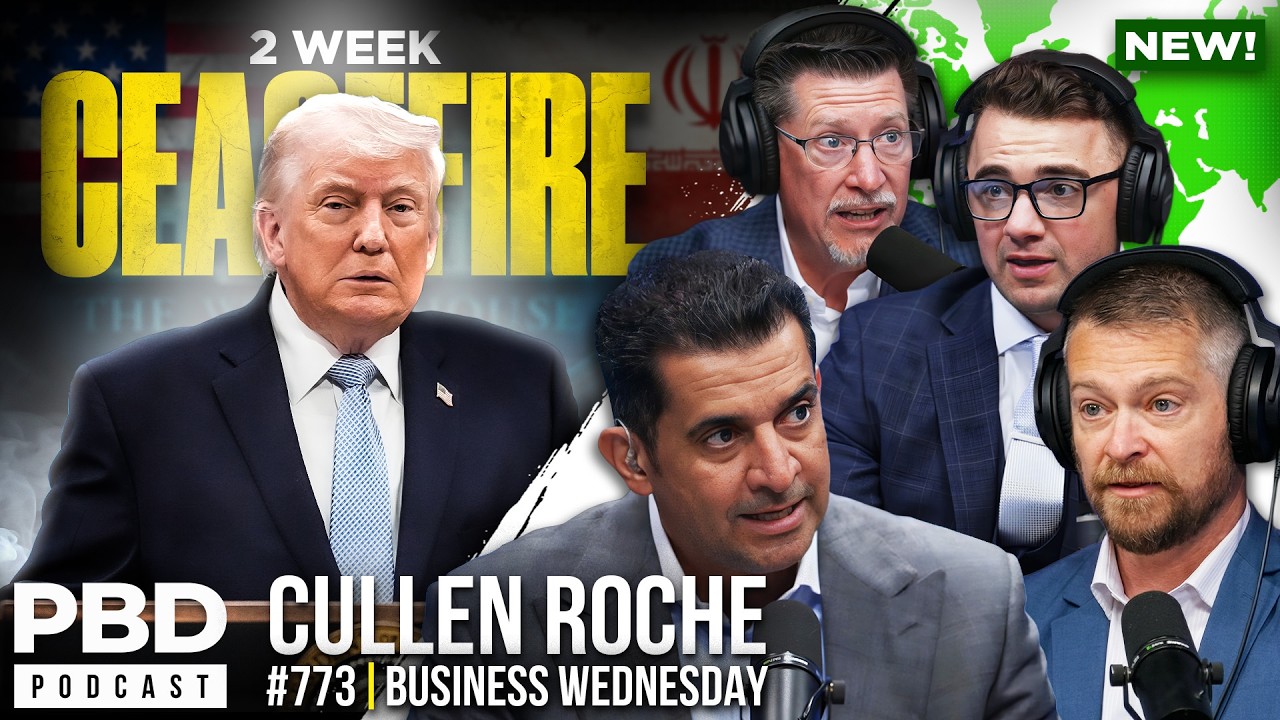
US & Iran AGREE To Ceasefire | PBD
Episode Summary
AI-generated · Apr 2026AI-generated summary — may contain inaccuracies. Not a substitute for the full episode or professional advice.
This Valuetainment episode, hosted by Pat Bet-David, convenes a panel to dissect the recent, contentious two-week ceasefire agreement between the US and Iran. The discussion opens with Pat highlighting the unprecedented nature of events leading up to the ceasefire, including provocative tweets from President Trump threatening the end of a civilization and mocking Iran's religion [01:12, 07:18, 09:23], generating widespread debate about the President's diplomatic approach and global implications.
The panel, including guest Colin Roach, extensively debates who truly 'won' the ceasefire negotiation. Tom suggests Trump employed a 'Kaiser Sosi moment' [12:30]—a tactic of appearing 1% crazier to pressure the opponent—while Colin likens it to Trump's 'tariff playbook' [14:31], using extreme positions to force a middle-ground compromise. Market reactions were immediate and significant: crude oil dropped 18% (from $112 to $92), while Dow, S&P, and NASDAQ futures saw gains of 2.7%, 2.67%, and 3.5% respectively [16:32]. Pat asserts that if the widely circulated 10-point proposal—granting Iran control of the Strait of Hormuz, nuclear enrichment rights, and lifted sanctions—is true, then 'Iran won in a big way' [29:50], emboldening them for decades to come.
Brandon offers a counter-argument, suggesting the US might be ill-equipped for prolonged conflict due to manufacturing shortages, making the ceasefire a suboptimal outcome that revealed Iran's leverage over the Strait of Hormuz. He emphasizes that the mere threat of inexpensive drones (costing thousands to take out multi-million dollar targets [44:03]) grants Iran significant power to disrupt global oil traffic, turning them into a formidable 'military power' [45:05]. The panel also touches upon Israel's selective support, backing the ceasefire but explicitly excluding Lebanon [21:36], and questions why the US should be fighting Israel's battles.
The conversation broadens to critical domestic issues, with Pat citing Jamie Dimon's warning of a business exodus from New York City due to high taxes and anti-business sentiment, evident in JPMorgan's Manhattan headcount dropping from 35,000 to 26,000 while its Texas operations grew from 11,000 to 33,000 [78:42]. The Pentagon's request for a $1.5 trillion defense budget hike (42% year-over-year) is discussed, sparking debate over necessary investment in new warfare (cyber, space, drones) versus ingrained waste in military procurement [54:15, 62:28]. Finally, the episode touches on growing public frustration, including Americans protesting by refusing to pay taxes [68:34] and the negative public perception of AI due to rising electricity prices attributed to data centers [87:56].
Listeners will walk away with a multifaceted understanding of the current geopolitical landscape, the complex interplay between foreign policy and domestic economics, and the evolving nature of global power dynamics, especially in the context of emerging technologies and shifting public trust in institutions. The episode challenges simplistic notions of 'winning' in conflict and highlights the long-term consequences of political and economic decisions both at home and abroad.
👤 Who Should Listen
- Anyone interested in the geopolitical implications of the US-Iran ceasefire and Middle East stability.
- Economists and investors tracking global oil markets and the impact of geopolitical events on commodity prices.
- Business leaders and policymakers concerned with urban economic development, tax policy, and business-friendly environments.
- Citizens and taxpayers frustrated by government waste and debating forms of political protest.
- Military strategists and technology enthusiasts observing the changing nature of modern warfare, particularly the role of drones and cyber defense.
- Listeners interested in the intersection of politics, economics, and technological advancements like AI and blockchain.
🔑 Key Takeaways
- 1.Trump's negotiating style for the US-Iran ceasefire is likened to a "Kaiser Sosi moment" [12:30] and a "tariff playbook" [14:31], using extreme positions to force opponents to the middle.
- 2.The announced two-week US-Iran ceasefire led to immediate market reactions, with crude oil prices dropping 18% from $112 to $92, while Dow Jones futures were up 2.7% [16:32].
- 3.If the circulating 10-point proposal (including Iran keeping control of the Strait of Hormuz, nuclear enrichment rights, and lifted sanctions) is accurate, the panel generally agrees Iran "won in a big way" [29:50].
- 4.The Strait of Hormuz holds immense geopolitical power for Iran, as even the threat of drones can significantly disrupt global oil markets, making Iran a "military power in my region" [45:05] regardless of traditional military strength.
- 5.Jamie Dimon warns of a business exodus from New York City, citing a headcount decrease from 35,000 to 26,000 at JPMorgan in Manhattan versus an increase from 11,000 to 33,000 in Texas [78:42], attributing it to high taxes and anti-business sentiment.
- 6.The Pentagon's proposed $1.5 trillion defense budget for 2027, a 42% year-over-year hike, reflects a need to replenish used equipment and invest in new warfare technologies like Space Force and drones [54:15].
- 7.Public perception of AI is becoming negative ("worse than ICE" [87:56]) due to rising electricity prices attributed to data centers, leading to local opposition against new data center constructions [88:58].
- 8.Milton Friedman, a proponent of free markets, is controversially credited with helping to invent the modern income tax withholding system in the early 1940s, an idea he later considered one of his worst [76:37].
💡 Key Concepts Explained
Kaiser Sosi moment
A negotiation tactic, discussed by Tom, where one side acts irrationally or "1% crazier than they are" to make the other side nervous and more willing to compromise, as cited in the context of Trump's Iran diplomacy [12:30].
Tariff Playbook
A negotiation strategy, attributed to Trump by Colin, involving making very extreme, seemingly irrational demands or threats (like tariffs) to compel the opposing party to move towards a middle ground, as observed in the Iran ceasefire discussions [14:31].
Why the Mighty Fall (Jim Collins's Framework)
A five-stage framework by Jim Collins explaining organizational decline: Hubris Born of Success, Undisciplined Pursuit of More, Denial of Risk and Peril, Grasping for Salvation, and Capitulation to Irrelevance or Death. Pat applies this framework to cities like New York and Detroit that have lost their competitive edge [85:53].
⚡ Actionable Takeaways
- →Understand that extreme negotiation tactics, like those used by Trump, can be effective in international relations by creating uncertainty and forcing opponents to reconsider positions [13:29, 14:31].
- →Monitor geopolitical developments, particularly regarding critical chokepoints like the Strait of Hormuz, as threats alone can significantly impact global commodity markets [41:59].
- →Recognize that technological advancements, like inexpensive drones, can drastically alter warfare dynamics and empower smaller nations against larger military powers [44:03].
- →If you're a business leader, evaluate state and local tax policies and business-friendly environments when considering location, as demonstrated by JPMorgan's shift from New York to Texas [78:42].
- →For citizens concerned about government spending, be aware that tax withholding, while convenient, limits direct political protest through non-payment due to severe penalties (0.5% to 5% monthly penalties, plus 7% interest) [69:35].
- →When evaluating defense budgets, consider the balance between traditional military spending, replenishment of used equipment, and investment in emerging warfare technologies like cyber and space defense [57:20, 62:28].
- →Stay informed on energy policies and the growth of energy-intensive industries like AI data centers, as they can directly impact local electricity prices and public sentiment [88:58].
⏱ Timeline Breakdown
💬 Notable Quotes
“Never in the history of America has a president ever threatened the end of a civilization. Hitler never said this. Mussolini never said this. [01:12]”
“The Kaiser associate principal says you have to the other side has to think that you're 1% crazier than they are so that they become nervous. [13:29]”
“I don't think people realize how much of a strangle hold Iran has over the global oil market. [41:59]”
“You got to compete. There's no divine right to success. Just read the history books. [78:42]”
More from this guest
Colin Roach
📚 Books Mentioned
Listen to Full Episode
📬 Get weekly summaries like this one
No spam. Unsubscribe anytime. By subscribing you agree to our Privacy Policy.
Continue Exploring


