Valuetainment
Why Iran’s IRGC Plays by Different Rules
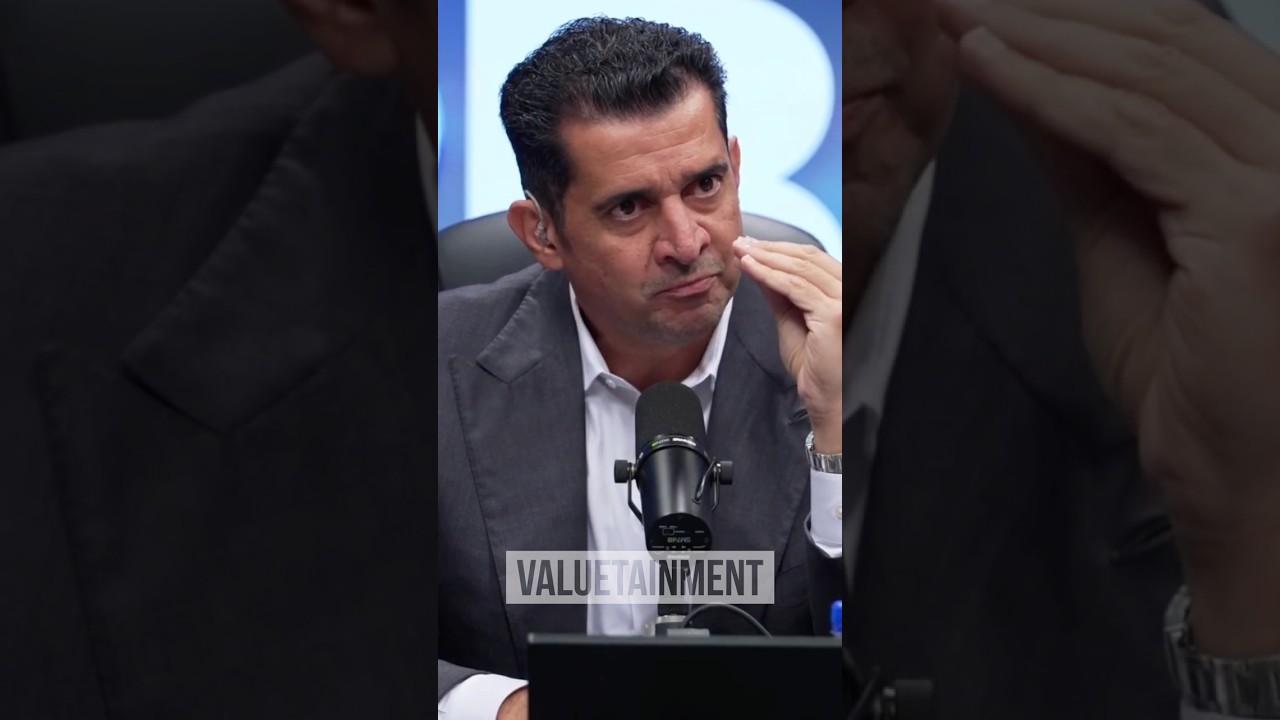
Episode Summary
AI-generated · Apr 2026AI-generated summary — may contain inaccuracies. Not a substitute for the full episode or professional advice.
This episode of Valuetainment, presented by its host, argues that the Iranian Revolutionary Guard Corps (IRGC) operates with a distinct and often underestimated approach to risk and mortality, fundamentally different from Western perspectives. The central thesis posits that the IRGC's religious convictions transform the concept of death in service to their cause into an act of "pride," rather than a deterrent.
The episode introduces this concept through an illustrative Formula 1 analogy: "I knew I was going to beat him because he has wife and kids." This quote highlights how an individual's personal attachments—like family—can introduce a subconscious braking mechanism, preventing them from taking ultimate risks, even if only for "one-tenth of a second." The host elaborates that a driver with such ties might instinctively "hit the brakes" at a critical moment where another, unburdened driver would not.
Applying this analogy, the host claims that "Iran is that the IRGC is a different religion than ours. They don't look at that the same way we do it." This distinction means the IRGC perceives death not as an ultimate loss to be avoided, but as a path to honor and divine pleasure. Martyrdom for the IRGC is framed as an act of "pride" that will make their prophet "happy" and "pleased."
The episode implies that this profound difference in religious and cultural outlook regarding life and death grants the IRGC a distinct strategic advantage, as their members are less susceptible to the deterrents that would influence adversaries with different values. This unique understanding of risk, the host suggests, is frequently "underestimate[d]" by those interacting with the IRGC.
Listeners will walk away with a provocative framework for understanding the motivational drivers and strategic calculus of groups like the IRGC, emphasizing the critical role that deeply held religious and cultural beliefs play in shaping their operational doctrines and risk tolerance.
👤 Who Should Listen
- Anyone interested in the geopolitical landscape of the Middle East, particularly involving Iran.
- Listeners seeking to understand the motivational drivers behind non-Western military or state actors.
- Individuals curious about how deeply held religious beliefs influence strategic decision-making and risk assessment.
- Analysts or students of international relations and conflict studies.
- Those interested in the psychological underpinnings of different cultural approaches to life and death.
🔑 Key Takeaways
- 1.The Iranian Revolutionary Guard Corps (IRGC) operates with a distinct risk calculus, driven by religious beliefs that differ fundamentally from Western perspectives.
- 2.An analogy from Formula 1 suggests that personal attachments, such as having "wife and kids," can create a subconscious hesitation in critical, high-risk moments.
- 3.The IRGC views death in service to its cause not as a loss, but as an act of "pride" that will please their prophet.
- 4.This religious conviction transforms martyrdom into a desired outcome, potentially eliminating the deterrence factor of death for IRGC members.
- 5.The host posits that this unique perspective on life and death is often "underestimate[d]" by those who interact with the IRGC.
💡 Key Concepts Explained
Religious Risk Calculus
This concept explores how deeply ingrained religious beliefs can fundamentally alter an individual's or group's perception and tolerance of risk, particularly concerning death. The episode uses the IRGC as an example, arguing their belief that death in service to their cause brings "pride" and divine pleasure leads to a vastly different strategic approach compared to those who view death as an ultimate loss.
⏱ Timeline Breakdown
💬 Notable Quotes
“I knew I was going to beat him because he has wife and kids.”
“I knew he would hit the brakes because he is married and he has two children and I don't and I don't.”
“Iran is that the IRGC is a different religion than ours. They don't look at that the same way we do it.”
“IRGC if I get killed, this is pride. My prophet's going to be happy with me. He's going to be pleased with me.”
Listen to Full Episode
📬 Get weekly summaries like this one
No spam. Unsubscribe anytime. By subscribing you agree to our Privacy Policy.
Continue Exploring