Invest Like the Best
How Ladder Became Strength Training App
Episode Summary
AI-generated · Mar 2026AI-generated summary — may contain inaccuracies. Not a substitute for the full episode or professional advice.
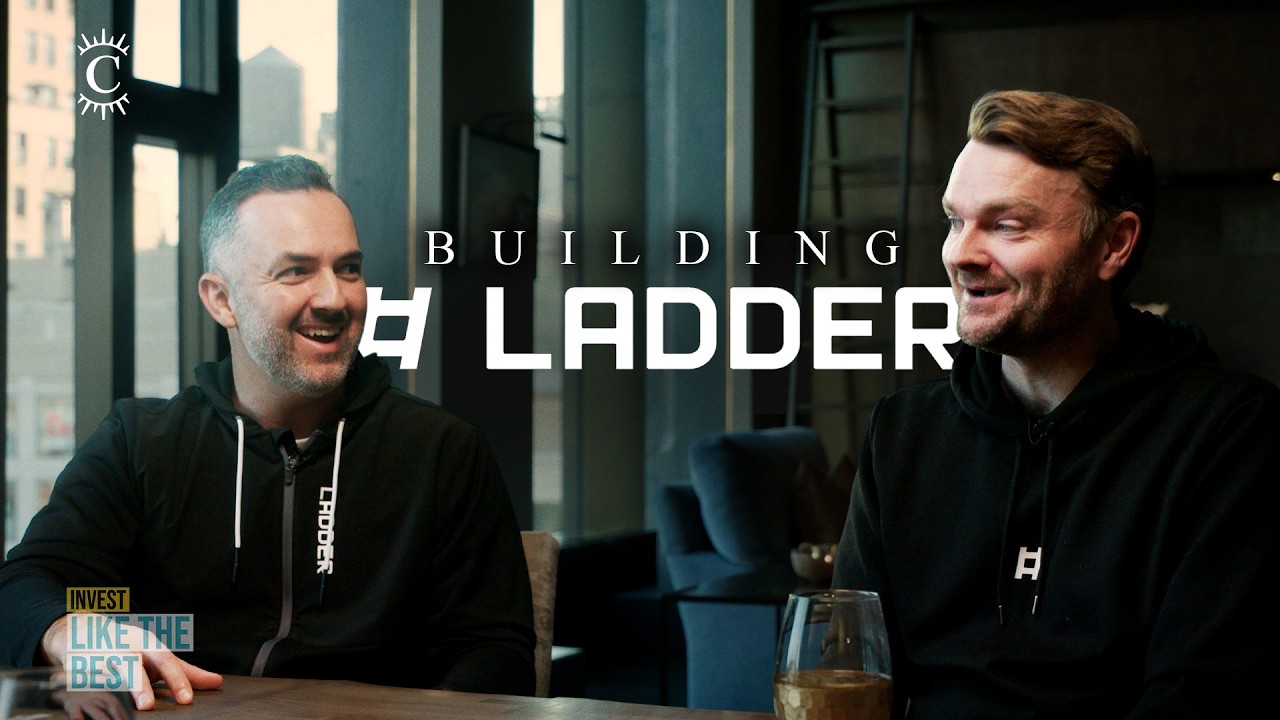
This episode features a candid conversation with Tom and Greg, co-founders of Ladder, the strength training app. Host Patrick O'Shaughnessy, an early angel investor in Ladder, explores their arduous journey from near-failure to building a company "knocking on the door at 100 million of AR" [04:04]. The discussion centers on the immense difficulty, twists, and turns involved in creating a valuable startup, highlighting the resilience, strategic pivots, and customer-centric approach that enabled Ladder's survival and subsequent rapid growth. It's a testament to what it truly takes to "go the distance" [00:00].
Ladder's success in a crowded fitness app market stems from its "engineering first business" philosophy, prioritizing deep customer understanding and leveraging "powerful motivational mechanics" to drive "workout completions" over a never-ending content churn [03:01, 28:33]. Unlike creator-led apps that often serve as mere content libraries, Ladder focuses on making consistent strength training routines as easy as possible by translating the core pillars of personal training—programming, coaching, and accountability—into a scalable, software-driven experience for the underserved "fitness enthusiast" [02:01, 07:06].
The founders recount the turbulent "Ladder 1.0" era (pre-2020), a "managed marketplace for personal training" that was "operationally complex, difficult to scale" and "could have died many times" [00:00, 06:06]. Tom's personal sacrifice, including leaving a lucrative hedge fund career and investing friends' and family's money, fueled an intense sense of obligation [05:04, 10:09]. Greg's arrival with his experienced team in Austin, and his subsequent appointment as CEO in late 2019, marked a crucial "reset" [10:09]. This survival phase involved "debt collectors," "begging for money," and "negotiating creditors at 20 cents on the dollar" during the chaotic early days of 2020 [14:16, 16:18].
The pivot to Ladder 2.0 was driven by an "empirical way of building" [36:38] informed by a trial with a coach programming for a group, which revealed significant demand for high-quality, persona-specific programming with "community elements and social accountability"—even with a "garbage" app, the renewal rate was "90% plus" [23:27, 25:31]. Ladder's explosive growth was then supercharged by mastering TikTok marketing. Greg personally dove deep into the platform, becoming an internal "performance marketer" who rejected traditional Facebook ad heuristics and instead focused on dissecting content that resonated with specific personas to achieve organic traction before scaling paid acquisition [37:38, 43:47, 45:49].
Looking ahead, Ladder aims to become the "system of record for health and fitness" [63:10], expanding into areas like nutrition, based on extensive member surveys, and exploring commerce and biomarkers. AI is a critical enabler, allowing a lean team of 50 to scale complex features like nutrition tracking and automate customer support with tools like "Ladder Pulse" and "Maiv AI," without replacing the human element [57:01, 59:06, 60:07]. The founders emphasize the dual necessity of being "black belt black belt at building products for the consumer and growth" to create a durable, generational business, acknowledging it's a "slog" but one delivering profound impact on members' lives [52:56, 53:58].
👤 Who Should Listen
- Founders navigating early-stage startup challenges, particularly those experiencing pivots or near-death moments.
- Entrepreneurs and leaders in consumer tech seeking to scale products in competitive markets.
- Marketing and growth professionals interested in non-traditional customer acquisition strategies, especially on platforms like TikTok.
- Product managers and engineers focused on empirical, customer-driven development methodologies.
- Investors and venture capitalists interested in the "system of record" approach in health and fitness, and alternative financing models like customer value funds.
- Anyone curious about the personal sacrifices, resilience, and unique problem-solving required to build a successful and enduring venture.
🔑 Key Takeaways
- 1.Building a valuable startup requires extreme resilience and persistence, as Ladder "could have died and probably should have died many times" during its early, challenging years [00:00].
- 2.Ladder attributes its dominance in the fitness app space to an "engineering first business" approach that focuses on "understanding your customers" and using "powerful motivational mechanics" to drive "workout completions," rather than relying on a "neverending content machine" [03:01, 28:33].
- 3.The core of Ladder's product philosophy is translating the benefits of personal training (programming, coaching, accountability) into a scalable app experience, making it "as easy as possible to maintain a consistent routine" for fitness enthusiasts [02:01, 07:06].
- 4.Effective growth in consumer tech, particularly on new platforms like TikTok, demands deep internal expertise, "owning the creative," and continuously dissecting "every inch" of content that works organically before scaling with paid advertising [40:43, 44:48, 47:52].
- 5.Ruthless prioritization and an "empirical way of building" based on continuous, deep member feedback (e.g., comprehensive surveys, app store reviews) are crucial for focusing on features that genuinely move the North Star metric of "workout completions" [28:33, 31:34, 36:38].
- 6.Founders must cultivate "black belt" expertise in both product development and growth strategies; a great product without effective growth, or a great growth engine with a leaky product, will not lead to a durable company [52:56].
- 7.AI is revolutionizing consumer product development by enabling smaller teams to build complex features (like nutrition tracking, which MyFitnessPal historically built by hand) and automate support, while expanding the capabilities of human coaches rather than replacing them [57:01, 60:07].
- 8.The General Catalyst customer value fund has provided Ladder with leverage, allowing them to finance growth and control their fundraising timeline, shifting focus from merely securing cash to thoughtfully choosing "really high quality investors" and "the right human beings" for their boardroom [50:53, 70:17].
💡 Key Concepts Explained
Engineering-First Business
This approach prioritizes understanding core customer problems and leveraging software engineering to create unique, scalable solutions, rather than focusing primarily on content creation. Ladder attributes its market dominance to this, contrasting it with many fitness apps that function mainly as content libraries [03:01].
Survival Phase (Startup)
A challenging early period in a startup's life characterized by constant financial struggles, lack of clear product-market fit, and existential threats. It demands extreme resourcefulness, personal sacrifice, and unconventional tactics like "begging for money" and "negotiating creditors at 20 cents on the dollar" to stay afloat, as experienced by Ladder pre-2020 [00:00, 14:16, 16:18].
Empirical Product Building
A product development methodology heavily reliant on continuous data collection and deep member feedback (e.g., extensive surveys, app store reviews, beta testing) to validate hypotheses and inform feature prioritization. Ladder used this to ruthlessly focus on features that demonstrably increased "workout completions" and guided their entry into nutrition [28:33, 31:34, 36:38].
System of Record for Health and Fitness
Ladder's long-term vision to become the definitive mobile-first platform that consolidates all aspects of a user's health and fitness data and activities, encompassing workouts, nutrition, biomarkers, and eventually commerce. This aims to establish a category winner akin to Uber for transportation or Spotify for music [00:00, 63:10].
⚡ Actionable Takeaways
- →Ruthlessly prioritize product features by anchoring development to a single North Star metric, such as "workout completions," ensuring every new build is hypothesized to be additive to it [28:33].
- →Conduct "deep" qualitative and quantitative research with your members, including comprehensive surveys (like Ladder's 5,000-person, 50-minute survey) and dissecting every app store review, to uncover true pain points and inform product roadmap [29:34, 31:34].
- →When entering new marketing channels, commit to becoming internal experts by starting organically, dissecting "every inch" of content that works, and then scaling with an internal team that owns creative, rather than relying on external agencies [40:43, 47:52].
- →If facing financial distress, learn to "negotiate creditors" by convincing them that a partial payment (e.g., "20 cents on the dollar") is preferable to zero, a strategy Ladder employed during its survival phase [16:18].
- →Before committing to new product ventures, ensure they are "pulled" by clear member demand and solve significant problems relevant to your core user base, rather than being "pushed" by internal assumptions or diffuse revenue opportunities [61:17].
- →Embrace AI as a tool to synthesize information, automate support functions (like Ladder's Maiv AI managing 90% of customer flow), and enable development of complex features, but avoid replacing the human, motivational aspects of your product [57:01, 59:06, 60:07].
- →Be prepared for a "slog" and a 10-year journey when building a consumer business, as "growth hacks are not a real thing" and sustained success requires enduring problem-solving across both product and growth [53:58].
⏱ Timeline Breakdown
💬 Notable Quotes
“"It's a company that easily could have died and probably should have died many times."”
“"We don't look at fitness almost ever."”
“"But I had a conversation with my wife where she said this is the last one. Like if you if you don't figure this one out there are no more startups."”
“"You have to be black belt black belt at building products for the consumer and growth."”
“"If we're all going to eat, someone's got to sell."”
📚 Books Mentioned
Listen to Full Episode
📬 Get weekly summaries like this one
No spam. Unsubscribe anytime. By subscribing you agree to our Privacy Policy.
Continue Exploring


