Lex Fridman Podcast
Infinity, Paradoxes, Gödel Incompleteness & the Mathematical Multiverse | Lex Fridman Podcast
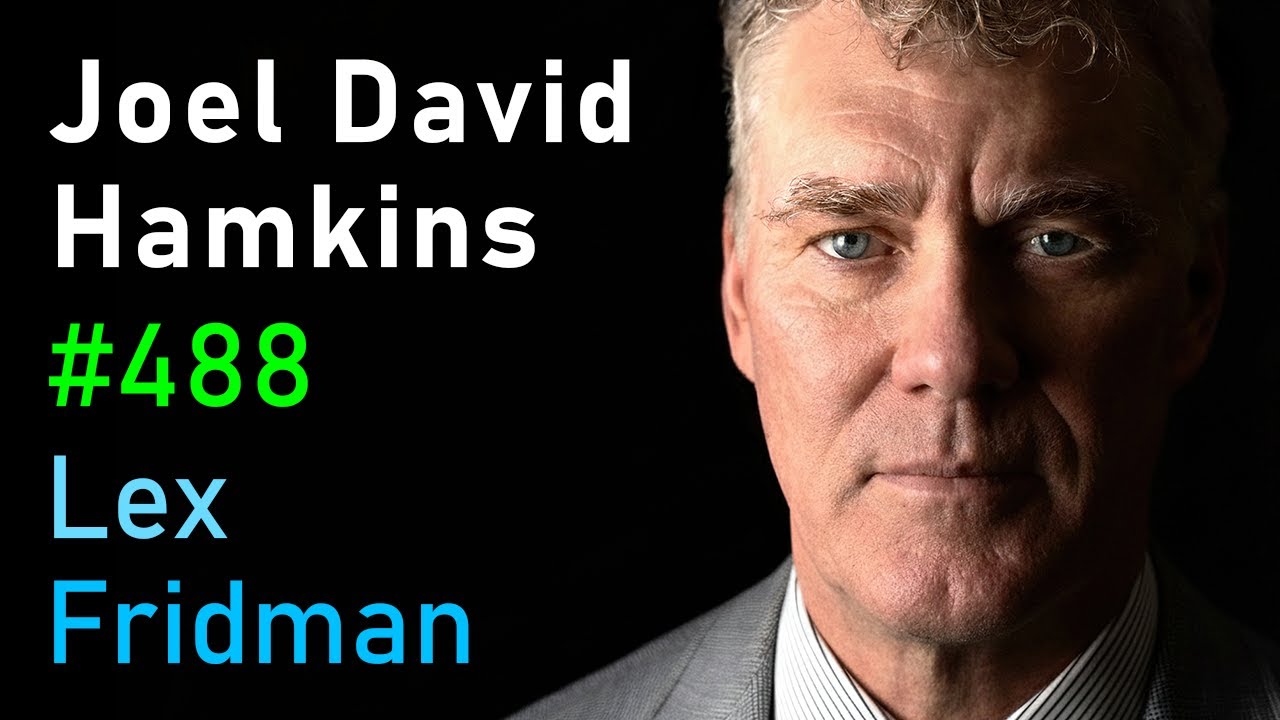
Episode Summary
AI-generated · Mar 2026AI-generated summary — may contain inaccuracies. Not a substitute for the full episode or professional advice.
This episode features Joel David Hamkins, a mathematician and philosopher specializing in set theory, the foundation of mathematics, and the nature of infinity. Hamkins, the highest-rated user on MathOverflow and author of "Proof in the Art of Mathematics," joins Lex Fridman for a deep dive into the mind-bending ideas that shaped modern mathematics. The conversation unpacks how concepts of infinity led to profound crises and ultimately a re-foundation of mathematics, challenging our understanding of reality, truth, and the limits of formal systems.
👤 Who Should Listen
- Mathematicians interested in the historical and philosophical underpinnings of their field.
- Computer scientists exploring the theoretical limits of computation and decidability.
- Philosophers of science and logic examining the nature of truth, proof, and mathematical reality.
- Anyone curious about the concept of infinity and its counterintuitive properties.
- Students transitioning to higher-level mathematics who want to understand the art of proof.
- Individuals grappling with the limits of knowledge and the implications of fundamental paradoxes.
🔑 Key Takeaways
- 1.Cantor's late 19th-century discovery that 'some infinities are bigger than others' shattered traditional mathematical and theological views, sparking a 'mathematical civil war' and leading to fascinating paradoxes.
- 2.The tension between Galileo's observations of equinumerosity (e.g., perfect squares and natural numbers having the same 'size') and Euclid's principle ('the whole is always greater than the part') was not fully resolved until Cantor's work on different sizes of infinity.
- 3.Hilbert's Hotel illustrates countable infinity, showing that a set can absorb infinitely many new elements (guests, buses, trains of infinite cars) without becoming 'larger' in a one-to-one correspondence sense, a strong violation of Euclid's principle.
- 4.Cantor's diagonal argument proved that the set of real numbers is uncountably infinite—strictly larger than the natural numbers—by constructing a real number that cannot be on any enumerable list, thus demonstrating more than one size of infinity.
- 5.Russell's paradox, which devastated Frege's monumental work on logicism, showed that the 'class of all sets that are not elements of themselves' cannot be a set, leading to the understanding that there is no universal set.
- 6.Zermelo-Fraenkel set theory with the Axiom of Choice (ZFC) emerged as the standard foundational system for modern mathematics, providing a rigorous axiomatic framework to build mathematics upon, though the Axiom of Choice itself was initially highly controversial.
- 7.Gödel's Incompleteness Theorems decisively refuted Hilbert's program, proving that any consistent, computably axiomatizable theory strong enough to include arithmetic will always contain true statements that cannot be proven or refuted within the system, and cannot prove its own consistency.
- 8.The Halting Problem, which states there is no computable procedure to determine whether an arbitrary program will ever halt, is equivalent to the undecidability of provability and illustrates a fundamental limitation of computation and formal systems.
💡 Key Concepts Explained
Cantor-Hume Principle
This principle states that two collections (finite or infinite) have the same size, or are equinumerous, if and only if there's a one-to-one correspondence between them. It was pivotal in Cantor's work to formalize the comparison of infinite quantities, contrasting with Euclid's principle.
Euclid's Principle
This principle, used by Euclid in 'The Elements,' asserts that 'the whole is always greater than the part.' Galileo's observations regarding infinite sets, such as perfect squares being equinumerous with natural numbers, challenged this principle in the context of infinity, creating a confusion that Cantor later resolved.
Hilbert's Hotel
A thought experiment involving a hotel with infinitely many rooms. It illustrates properties of countable infinity, showing how a 'full' infinite hotel can always accommodate more guests (even an infinite busload of them) by shifting existing occupants, demonstrating that adding elements to a countably infinite set doesn't necessarily make it 'larger.'
Cantor's Diagonal Argument
A profound proof method developed by Georg Cantor, initially demonstrating the uncountability of the real numbers. It works by assuming a one-to-one correspondence (an enumerated list) and then constructively defining a new element (like a real number or a subset) that, by its construction, cannot be on the original list, thus leading to a contradiction and proving the original assumption false.
Zermelo-Fraenkel Set Theory with Axiom of Choice (ZFC)
The standard axiomatic system that forms the foundation for most modern mathematics. It defines what sets are and how they behave through a collection of axioms, allowing for the rigorous construction of mathematical objects and theories while avoiding paradoxes like Russell's.
Hilbert's Program
David Hilbert's early 20th-century project aimed to provide a secure, finitary foundation for all of classical mathematics. Its two main goals were to create a strong axiomatic theory that could answer all mathematical questions and to prove its consistency using only very elementary, finitary reasoning.
Gödel's Incompleteness Theorems
Kurt Gödel's seminal results that demonstrated fundamental limitations of formal axiomatic systems. The first theorem states that any consistent, sufficiently strong axiomatic system will contain undecidable propositions, while the second states that such a system cannot prove its own consistency, thereby refuting Hilbert's program.
Halting Problem
A decision problem in computability theory asking whether it's possible to determine, for an arbitrary program and its input, if the program will eventually halt or run forever. Alan Turing proved that the Halting Problem is computably undecidable, meaning no general algorithm exists to solve it for all possible programs, demonstrating an inherent limit to computation.
⚡ Actionable Takeaways
- →To better understand complex mathematical concepts, anthropomorphize them by imagining the objects as people or animals with wills and goals, as demonstrated with the 'pointing game' proof for finite sets.
- →Recognize that not all mathematical truths are provable within a given axiomatic system, as revealed by Gödel's Incompleteness Theorems, fostering a deeper appreciation for the nuanced nature of mathematical reality.
- →When evaluating arguments or theories, distinguish clearly between 'truth' (semantic, referring to reality) and 'proof' (syntactic, conforming to logical rules), a distinction pivotal in mathematical logic post-Gödel and Tarski.
- →Consider the foundational axioms of any field of study you engage with, as ZFC underpins modern mathematics, to understand the fundamental principles and their implications.
⏱ Timeline Breakdown
💬 Notable Quotes
“"No one shall cast us from the paradise that Cantor has created for us."”
“"Wir müssen wissen, wir werden wissen." (We must know, we will know.)”
“"Hardly anything more unwelcome can befall a scientific writer than to have one of the foundations of his edifice shaken after the work is finished. This is the position into which I was put by a letter from Mr. Bertrand Russell as the printing of this volume was nearing completion."”
“"The smallest uninteresting number is a super interesting property to have. So therefore, there cannot be any boring numbers."”
More from this guest
Joel David Hamkins
Listen to Full Episode
📬 Get weekly summaries like this one
No spam. Unsubscribe anytime. By subscribing you agree to our Privacy Policy.
Continue Exploring


