Lex Fridman Podcast
Infinity, Paradoxes, Gödel Incompleteness & the Mathematical Multiverse | Lex Fridman Podcast
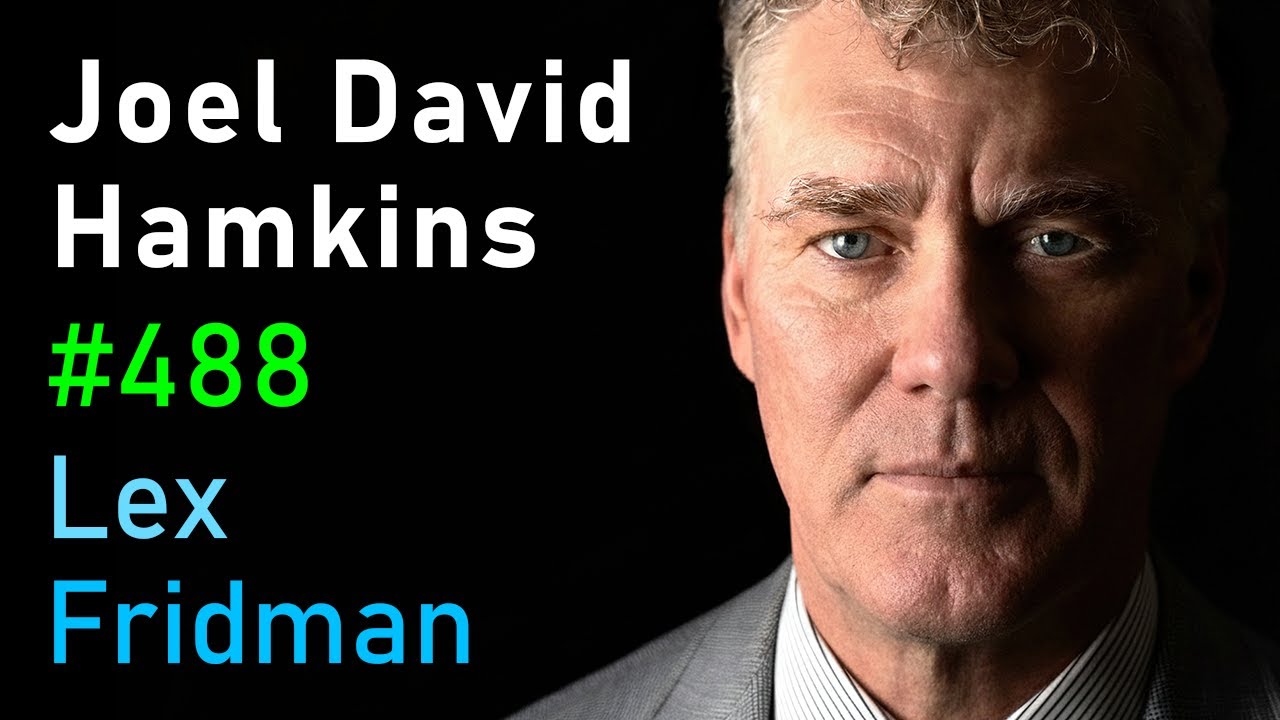
Episode Summary
AI-generated · Mar 2026AI-generated summary — may contain inaccuracies. Not a substitute for the full episode or professional advice.
Lex Fridman speaks with Joel David Hamkins, a mathematician and philosopher specializing in set theory, the foundation of mathematics, and the nature of infinity. Hamkins, the highest-rated user on MathOverflow, explores the mind-bending ideas of infinity, truth, and mathematical paradoxes, highlighting how discoveries like Cantor's work on different sizes of infinity reshaped the understanding of mathematical reality.
The conversation delves into the historical controversies surrounding infinity, from Aristotle's potential infinity to Galileo's paradoxes, before arriving at Cantor's revolutionary proof that “some infinities are bigger than others.” Hamkins illustrates countable infinity using the thought experiment of Hilbert's Hotel, demonstrating how even an infinite number of infinite sets can still be accommodated within a single countable infinity. He then explains Cantor’s diagonal argument, which definitively proves the uncountability of real numbers, establishing the existence of strictly larger infinities than the natural numbers.
This “infinity crisis” led to the formalization of mathematics through set theory, particularly the Zermelo-Fraenkel axioms with the Axiom of Choice (ZFC), which now serves as the rigorous foundation for most modern mathematics. Hamkins details Russell's paradox—illustrated through analogies like committees and fruit salads—which exposed contradictions in early set theory and emphasized the need for careful axiomatization. He recounts the devastating impact of Russell’s discovery on Frege’s monumental logicism project.
The episode culminates in a deep dive into Gödel’s incompleteness theorems, which Hamkins describes as a decisive refutation of Hilbert’s program to create a complete and consistent axiomatic system for all mathematics. Gödel proved that no sufficiently powerful, computably axiomatizable theory can be both consistent and complete, nor can it prove its own consistency. Hamkins connects this to the undecidability of the Halting Problem, demonstrating how these concepts reveal fundamental limits to what can be known or proven within formal systems, shifting our understanding of mathematical truth and proof.
👤 Who Should Listen
- Anyone curious about the fundamental nature of mathematics and its philosophical underpinnings.
- Students and enthusiasts of mathematics, computer science, or philosophy seeking to understand foundational concepts like set theory and logic.
- Listeners interested in the history of mathematical thought and the intellectual crises that shaped modern understanding.
- Individuals grappling with the limits of knowledge and provability in formal systems, including those in AI and theoretical computer science.
- Anyone who enjoys thought experiments and elegant proofs that challenge intuition, such as Hilbert's Hotel or the Halting Problem.
- Programmers and logicians interested in the theoretical roots of computability and undecidability.
🔑 Key Takeaways
- 1.Cantor's discovery that "some infinities are bigger than others" (02:05) was profoundly transformative, causing theological and mathematical crises before rebuilding the foundations of mathematics.
- 2.The Cantor-Hume principle states that two collections have the same size (are equinumerous) if and only if there's a one-to-one correspondence between their elements, a concept that challenges Euclid's principle that the whole is always greater than the part in infinite sets (07:11).
- 3.Hilbert's Hotel demonstrates that adding elements or even infinite sets to a countable infinity does not make it larger, as a one-to-one correspondence can still be maintained (10:20, 14:24).
- 4.Cantor's diagonal argument proves that the set of real numbers is an uncountable infinity, meaning it cannot be put into a one-to-one correspondence with the natural numbers, establishing the existence of different sizes of infinity (27:55).
- 5.Zermelo-Fraenkel set theory with the Axiom of Choice (ZFC) became the standard foundation for modern mathematics, providing a rigorous axiomatic framework to avoid paradoxes like Russell's (39:21).
- 6.Gödel's incompleteness theorems definitively show that no sufficiently powerful, computably axiomatizable theory can be both complete (answer all questions) and consistent (free from contradiction), nor can it prove its own consistency (75:48, 76:51).
- 7.The Halting Problem, the question of whether a given program will ever complete its task, is computably undecidable, meaning no algorithm can universally determine if any given program will halt (91:17).
- 8.Gödel's theorem can be directly proven using the undecidability of the Halting Problem, illustrating that a complete theory of elementary finite mathematics cannot exist (96:28).
💡 Key Concepts Explained
Cantor-Hume Principle
This principle states that two collections, whether finite or infinite, are equinumerous (have the same size) if and only if a one-to-one correspondence can be established between their elements. It was central to Cantor's work on infinity and challenges Euclid's principle in the realm of infinite sets.
Hilbert's Hotel
A thought experiment illustrating properties of countable infinity. A hotel with infinitely many rooms, even when full, can always accommodate a new guest (or even an infinite busload of guests) by shifting existing occupants, demonstrating that adding to a countable infinite set does not increase its 'size' in terms of one-to-one correspondence.
Cantor's Diagonal Argument
A groundbreaking proof by Georg Cantor showing that the set of real numbers is uncountable, meaning it cannot be put into a one-to-one correspondence with the natural numbers. This established that there are different, strictly larger sizes of infinity, fundamentally altering the understanding of mathematical magnitude.
Zermelo-Fraenkel Set Theory with Axiom of Choice (ZFC)
The standard axiomatic system serving as the foundation for most modern mathematics. It consists of a set of nine axioms (like Extensionality, Pairing, Union, Power Set, Infinity, Separation, Replacement, Regularity) plus the Axiom of Choice, designed to provide a rigorous and consistent framework for building mathematical concepts and avoiding paradoxes.
Russell's Paradox
A fundamental paradox discovered by Bertrand Russell, which showed that naive set theory (where any property defines a set) leads to contradictions. It involves considering 'the set of all sets that do not contain themselves,' which can neither contain itself nor not contain itself, highlighting the need for careful axiomatization in set theory.
Gödel's Incompleteness Theorems
Two theorems by Kurt Gödel demonstrating inherent limitations of formal axiomatic systems. The first states that any consistent, sufficiently powerful axiomatic system (like Peano arithmetic or ZFC) cannot be complete (there will always be true statements that cannot be proven or disproven within the system). The second states that such a system cannot prove its own consistency.
Halting Problem
A decision problem in computer science asking whether it is possible to determine, for any arbitrary program and its input, if the program will eventually halt or run forever. Alan Turing proved that the Halting Problem is undecidable, meaning no general algorithm can correctly answer all instances of this question.
Hilbert's Program
David Hilbert's early 20th-century project aiming to provide a secure, finitary foundation for all classical mathematics. It sought to formalize all mathematics into precise axiomatic systems and then prove their consistency using only elementary, finitary reasoning about symbols. Gödel's incompleteness theorems ultimately refuted both goals of this program.
⚡ Actionable Takeaways
- →Anthropomorphize mathematical ideas by imagining objects as people or animals to make complex problems more intuitive, as demonstrated by the 'more pointed at than pointing' proof (103:40).
- →Recognize that every natural number can be considered 'interesting' by applying a proof by contradiction: if there were uninteresting numbers, there would be a smallest uninteresting number, which is a super interesting property (25:51).
- →Distinguish clearly between 'truth' (semantic, regarding mathematical reality in a structure) and 'proof' (syntactic, conforming to logical rules of a formal system) in mathematical reasoning (79:56).
- →Understand that mathematical reality, as revealed by Gödel's theorems, is one where even the strongest theories will have unanswerable questions and cannot definitively prove their own consistency, fostering intellectual humility (75:48, 89:15).
- →Explore the 'disquotational theory of truth' by Tarski as a formal method to define truth in a mathematical structure, by removing quotation marks to connect a sentence to the state of affairs it describes (81:56).
⏱ Timeline Breakdown
💬 Notable Quotes
“"Some infinities are bigger than others. This idea from Cantor at the end of the 19th century, I think it's fair to say, broke mathematics before rebuilding it." (02:05)”
“"But that's a contradiction, because the smallest uninteresting number is a super interesting property to have. So therefore, there cannot be any boring numbers." (26:54)”
“"Hardly anything more unwelcome can befall a scientific writer than to have one of the foundations of his edifice shaken after the work is finished. This is the position into which I was put by a letter from Mr. Bertrand Russell as the printing of this volume was nearing completion." (60:10)”
“"Wir müssen wissen, wir werden wissen." (We must know, we will know) (64:18)”
More from this guest
Joel David Hamkins
Listen to Full Episode
📬 Get weekly summaries like this one
No spam. Unsubscribe anytime. By subscribing you agree to our Privacy Policy.
Continue Exploring


