The Tim Ferriss Show
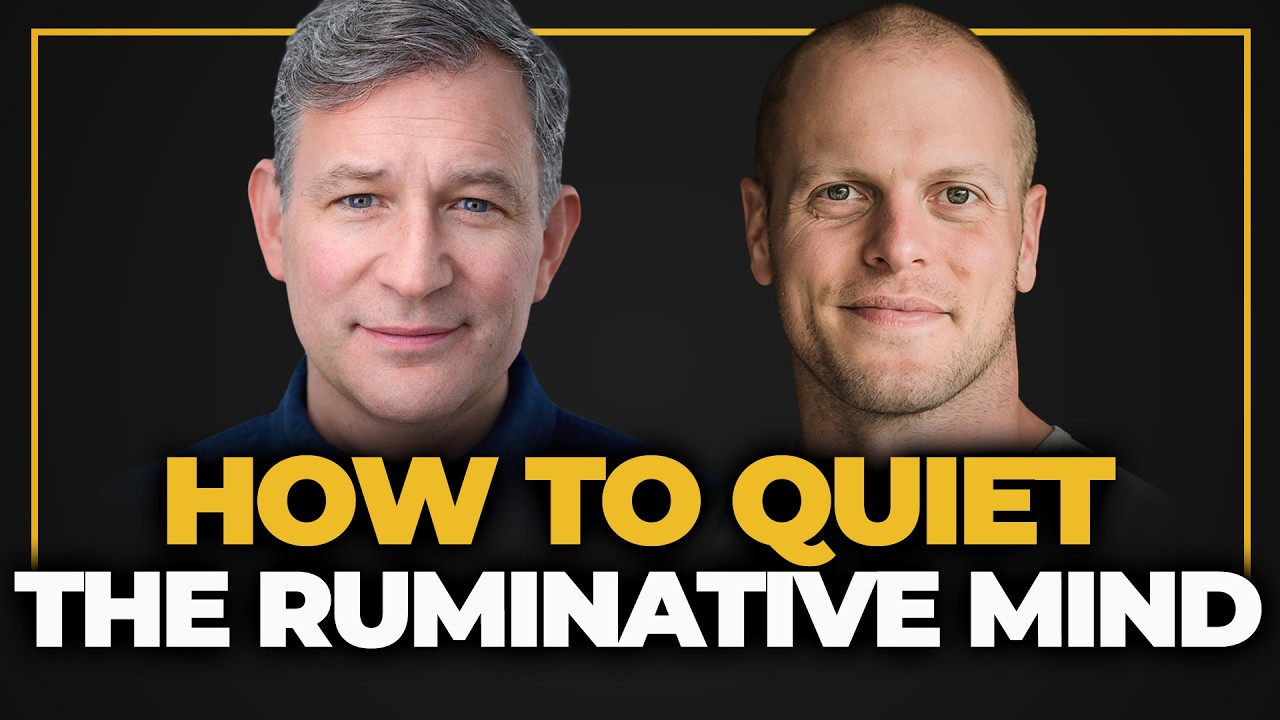
How to Quiet the Ruminative Mind and Avoid The Traps of Self-Help — Tim Ferriss
Episode Summary
AI-generated · Mar 2026AI-generated summary — may contain inaccuracies. Not a substitute for the full episode or professional advice.
In this episode, host Dan welcomes Tim Ferriss back to the show, asking about his current well-being. Tim enthusiastically shares that he is feeling "better than ever" and "absolutely fantastic" across mind, body, and soul. He then delves into the practices and interventions that have contributed to this profound improvement, emphasizing a shift away from what he calls the "trap of self-help" – endless self-polishing without engaging in life.
Ferriss highlights several key areas. Firstly, he stresses the critical role of relationships, counterbalancing the risk of self-help becoming self-infatuation or obsession. He practices an annual review of top relationships and blocks out extended time with close friends, underscoring our evolution as a social species and how isolation worsens mental instability. Secondly, he details his experience with accelerated Transcranial Magnetic Stimulation (TMS), a brain stimulation technique that he first found "near miraculous" for severe OCD and ruminative loops. He describes the SAINT protocol (Stanford Accelerated Intelligent Neuromodulation Therapy), which compresses months of conventional TMS into a single week, and his recent success with a one-day treatment augmented by the old antibiotic descloer (DCS) to catalyze neuroplasticity, noting its potential for anxiety and OCD.
He also discusses lifestyle interventions, including consistent twice-daily meditation and the benefits of intermittent ketosis and time-restricted feeding (intermittent fasting). Ferriss explains that ketosis is "phenomenal for addressing a lot of psychiatric pains" and offers neuroprotective and anti-cancer effects, while intermittent fasting has dramatically improved his insulin sensitivity and mitigated pre-diabetes risks. Lastly, he touches on taking prescription drugs for genetically predisposed cardiovascular risks. Ferriss also reflects on his past tendency towards "compulsive isolation" due to workaholism and the belief of needing to "fix himself" before engaging with others, using a soccer analogy to illustrate this self-help trap, and advocating for optimizing with a clear "why" (e.g., mitigating Alzheimer's and cardiovascular disease risks) using time-tested methods where possible.
👤 Who Should Listen
- Mental Health Advocates
- People Navigating Relationships
- Lifelong Learners
- Goal-Oriented Listeners
- Self-Development Enthusiasts
🔑 Key Takeaways
- 1.Cultivating and prioritizing strong relationships is a crucial counterbalance to the pitfalls of self-help, which can otherwise lead to self-infatuation, obsession, and isolation, ultimately worsening mental instability.
- 2.Accelerated Transcranial Magnetic Stimulation (TMS), particularly when combined with descloer (DCS) to enhance neuroplasticity, has provided Tim Ferriss with "near miraculous" relief from severe anxiety and ruminative OCD, compressing months of treatment into a single day.
- 3.Consistent meditation, typically twice daily for 10 minutes, is a straightforward yet effective practice for improving overall mental well-being.
- 4.Intermittent ketosis and time-restricted feeding (intermittent fasting) are powerful lifestyle interventions for addressing psychiatric pains, improving insulin sensitivity, and offering neuroprotective and anti-cancer benefits with well-understood, manageable risks.
- 5.Before engaging in self-optimization, it is essential to critically ask "what are you optimizing for?" to ensure a clear direction and avoid aimless pursuits often influenced by external pressures like social media.
- 6.The "partial trap of self-help" involves compulsive self-improvement in isolation, akin to endlessly practicing soccer alone without ever playing the actual game, preventing real engagement with life and others.
- 7.A balanced approach to health and longevity combines cutting-edge therapies like accelerated TMS with millennia-old practices such as intermittent fasting and ketosis, favoring interventions with credible upside and limited, manageable downside potential.
💬 Notable Quotes
“One of the risks of personal development or let's just call it more broadly self-help is that it can very easily become self-infatuation or self-obsession. And the counterbalance to that, the bet that offsets it is relationships.”
“You want to play soccer, but first you're going to read all the textbooks and get a master's degree and PhD in soccer... If you get caught in that trap, which is the partial trap of self-help, you're always polishing this self and you never actually play soccer.”
“The one thing that has most dramatically changed my blood tests with respect to specifically insulin sensitivity and avoiding pre-diabetes which runs rampant in my family: intermittent fasting.”
More from this guest
Tim Ferriss
Listen to Full Episode
📬 Get weekly summaries like this one
No spam. Unsubscribe anytime. By subscribing you agree to our Privacy Policy.
Continue Exploring


