Ranked List
Best Podcast Episodes About Brain health
We've compiled 8 podcast episodes about brain health from Diary of a CEO, The Tim Ferriss Show, Huberman Lab and distilled each into AI-generated summaries, key takeaways, and actionable insights. Guests like Jesse Inchauspé have covered this topic in depth. Each episode is scored by depth of insight — the most information-dense conversations are ranked first so you can skip straight to the best.
8 episodes rankedBrowse all brain health episodes →
8 Episodes Ranked by Insight Depth
#1
Diary of a CEO
They're Lying About 'Healthy' Foods & Sugar! Shocking New Research That's Harming You
- →A mother's diet during pregnancy directly "programs" the baby's DNA through epigenetic switches, influencing their future risk of diseases like diabetes, obesity, and psychiatric disorders.
- →90% of pregnant mothers do not consume enough choline, a nutrient crucial for brain formation, with the American Association of Pediatrics stating that a deficiency can lead to "lifelong brain deficits in the baby."
#2
The Tim Ferriss Show
This Workout Protects Your Brain For Years
- →Norwegian 4x4 high-intensity training involves four rounds of 4 minutes at near-maximal heart rate (Zone 4) followed by 3 minutes of active rest.
- →Performing the Norwegian 4x4 protocol three times a week for six months can result in beneficial brain effects lasting up to five years afterward.
#3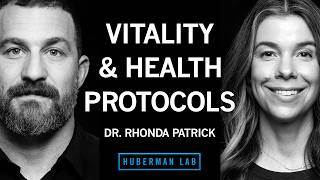
Huberman Lab
The Best Vitality & Health Protocols | Dr. Rhonda Patrick
- →Engaging in just 9 minutes of unstructured exercise snacks daily (three 1-3 minute bursts) can lead to a 40% reduction in all-cause mortality, a 40% reduction in cancer-related mortality, and a 50% reduction in cardiovascular-related mortality.
- →Even 10 minutes of vigorous intensity exercise can immediately increase neuronal connections, improve executive function by 14%, and enhance impulse control by boosting plasma serotonin levels.
#4
Huberman Lab
Essentials: The Biology of Taste Perception & Sugar Craving | Dr. Charles Zuker
- →Perception is the brain's transformation of electrical signals from detection (e.g., taste molecules on the tongue) into a conscious experience that guides actions.
- →The five basic tastes (sweet, sour, bitter, salty, umami) have innate evolutionary valences: sweet, umami, and low salt are appetitive, while bitter and sour are aversive.
#5
Huberman Lab
Essentials: The Biology of Taste Perception & Sugar Craving | Dr. Charles Zuker
- →Perception is the process by which the brain transforms external reality into electrical signals to represent the world and guide behavior, distinct from mere sensation or detection.
- →Taste is initially hardwired with innate preferences (e.g., liking sweet, disliking bitter), but this system is highly plastic and can be modulated by learning and experience throughout life.
#6
The Tim Ferriss Show
How to Quiet the Ruminative Mind and Avoid The Traps of Self-Help — Tim Ferriss
- →Cultivating and prioritizing strong relationships is a crucial counterbalance to the pitfalls of self-help, which can otherwise lead to self-infatuation, obsession, and isolation, ultimately worsening mental instability.
- →Accelerated Transcranial Magnetic Stimulation (TMS), particularly when combined with descloer (DCS) to enhance neuroplasticity, has provided Tim Ferriss with "near miraculous" relief from severe anxiety and ruminative OCD, compressing months of treatment into a single day.
#7
Huberman Lab
Restore Youthfulness & Vitality to the Aging Brain & Body | Dr. Tony Wyss-Coray
- →Young blood contains factors that can rejuvenate the brain and other tissues in older individuals, as demonstrated in parabiosis experiments with mice.
- →Dr. Tony Wyss-Coray's research showed that factors from young blood reactivate stem cells, reduce inflammation, increase brain activity, and improve memory function in old mouse brains.
#8
Huberman Lab
Science-Based Meditation Tools to Improve Your Brain & Health | Dr. Richard Davidson
- →Consistent meditation of just five minutes a day for 30 days can lead to significant reductions in depression, anxiety, and stress symptoms, alongside increased well-being and reduced inflammation markers like IL6.
- →The purpose of meditation is not to clear the mind, but to observe thoughts and stress, which acts as a 'lactate of the mind' to build stress resilience and focus outside of the meditation practice.