Invest Like the Best
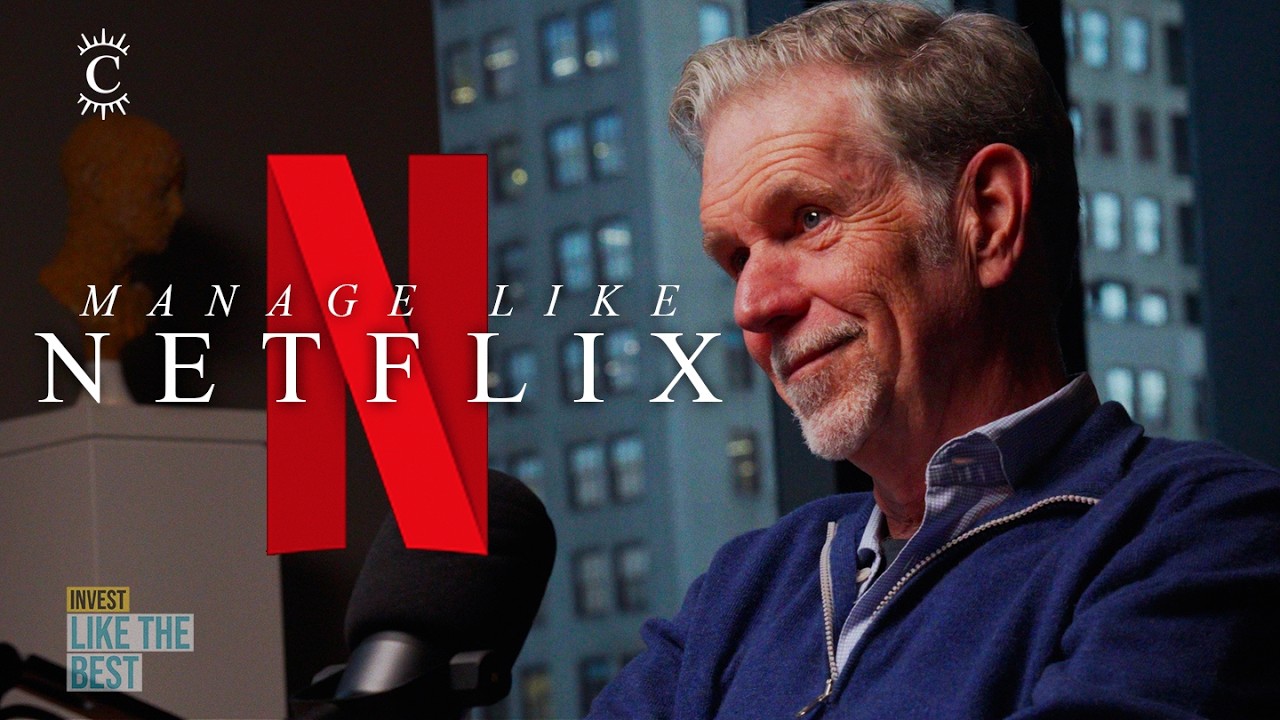
The Netflix Culture Code That Changed Entertainment Forever | Reed Hastings Interview
Episode Summary
AI-generated · Mar 2026AI-generated summary — may contain inaccuracies. Not a substitute for the full episode or professional advice.
Reed Hastings, co-founder of Netflix, joins Patrick O'Shaughnessy to dissect the two foundational principles he believes fueled Netflix's unprecedented success: relentlessly pursuing a single, simple idea over decades, and cultivating extreme "talent density." Hastings shares the surprising origins of these concepts, tracing them back to his first company, Pure Software, and explaining how they were meticulously refined and scaled to build one of the world's most influential entertainment companies.
Hastings elaborates on Netflix's long-term vision, revealing that the company's name and initial DVD-by-mail service were merely strategic stepping stones toward an envisioned streaming future from its 1997 founding. This contrarian thesis, combined with a willingness to "shovel money" into content, minimized early competition and enabled Netflix to focus on becoming a dominant digital distribution network. He discusses the evolution of their content strategy, likening it to a venture capital portfolio focused on generating massive, unpredictable hits like "K-pop Demon Hunters" by empowering people with "great taste and judgment" to pick projects and reinforce the brand's broad appeal.
The discussion delves deep into "talent density," a concept Hastings pioneered, advocating for a "professional sports team" model over a "family" one. This entails high compensation, a broad hiring funnel with a notably high 20% first-year attrition rate, and a commitment to surrounding employees with "great people" working on "hard problems." He explains how to manage "on the edge of chaos" to foster creativity and dynamism, and introduces the "keeper test" framework, where managers are encouraged to let go of employees they wouldn't actively fight to retain, supported by generous severance packages.
Hastings reflects on Netflix's decision-making evolution, notably after the 2011 Qwikster debacle, which led to the "informed captain" model and a "10-negative-10" collective information process. He also shares insights from his board roles at companies like Microsoft and Facebook, stressing the importance of sticking to core monetization engines. Outside of Netflix, Hastings applies his organizational principles to the turnaround of Powder Mountain, a ski resort and real estate development, demonstrating the portability of these high-performance culture concepts. He also shares his philanthropic focus on education, advocating for AI-driven individualized tutoring to replace traditional classroom models.
Listeners will gain a profound understanding of the intentional, often contrarian, and rigorously applied principles that drove Netflix's rise. Hastings offers actionable insights on building and sustaining a high-performance culture, making strategic long-term bets, and fostering an environment of informed, individual decision-making, while also touching on the broader implications of AI for society and the future of work and entertainment.
👤 Who Should Listen
- Founders and CEOs building or scaling high-performance organizations.
- HR and talent leaders interested in innovative talent management and culture strategies.
- Investors and strategists seeking insights into Netflix's long-term vision, competitive advantage, and capital allocation.
- Entrepreneurs and business leaders studying contrarian strategies and market disruption.
- Board members and executives looking to understand effective board governance and leadership selection.
- Anyone interested in the future of entertainment, technology, and AI's impact on industries and education.
🔑 Key Takeaways
- 1.Netflix's monumental success is attributed to two core principles: taking a simple, long-term idea extraordinarily seriously (DVD-by-mail as a stepping stone to streaming) and maintaining an exceptionally high "talent density." [00:00]
- 2.The concept of "talent density" originated from Reed Hastings' analysis of his first company, Pure Software, where declining talent density led to excessive rules and decreased productivity, teaching him to manage software more "artistically." [01:45]
- 3.To build a high-performance culture, companies should adopt a "professional sports team" analogy over a "family" one, prioritizing direct honesty and achievement, with an understanding that player changes (layoffs) are part of winning. [03:39]
- 4.Maintaining talent density at scale requires competitive compensation, continuous evangelization of its benefits to leaders, and a broad hiring funnel that accepts a high first-year attrition rate (around 20% at Netflix). [04:59]
- 5.Netflix aims to manage "on the edge of chaos," fostering creativity and dynamism by avoiding over-management, tight processes, or rigid hours that filter out performance. [08:18]
- 6.The "keeper test" framework asks managers: 'If someone were quitting, would you try to get them to stay?' If the answer is no, the company is "supposed to let you go," typically with a generous severance package. [10:48]
- 7.Following the Qwikster debacle, Netflix instituted a "10-negative-10" collective information process, where everyone weighs in on decisions in a shared document, informing the "informed captain" who ultimately makes the non-consensus choice. [12:16]
- 8.Hastings' original thesis for Netflix was contrarian: building a DVD-by-mail business as an "extremely efficient digital distribution network" that would eventually be replaced by internet streaming, which minimized early competition. [16:19]
- 9.Board members should view their role as an "insurance layer," focusing on deeply learning the business to be prepared for the critical task of replacing a CEO, rather than attempting to provide tactical advice. [22:25]
💡 Key Concepts Explained
Talent Density
A core Netflix concept pioneered by Reed Hastings, it describes an organizational state where the average talent level is exceptionally high. This density eliminates the need for numerous rules and processes, as highly talented individuals make fewer mistakes and inspire each other, leading to higher productivity and creativity. It's crucial for sustained high performance over decades. [00:46], [01:45]
Professional Sports Team Model
A cultural metaphor advocated by Reed Hastings to describe an ideal high-performance organization, contrasting it with the traditional "family" model. In this model, achievement is paramount, and leaders are expected to make changes to players (employees) as needed to "win the championship," promoting honesty and directness over conventional niceness and loyalty. [03:39]
Managing on the Edge of Chaos
Netflix's operational philosophy to foster creativity and dynamism. It involves running the organization with sufficient looseness to prevent stifling innovation and performance, without falling into complete chaos where basic operations fail. This approach encourages high variance and last-minute saves, contrasting with industries that aim to reduce variation and error. [08:18]
The Keeper Test
A framework used at Netflix to maintain high talent density. Managers are asked: "If someone were quitting, would you try to get them to stay to keep them?" If the answer is no, the company is obligated to let that person go, often with a generous severance package, to ensure everyone on the team meets a high bar of performance. [10:48]
The Informed Captain
Netflix's decision-making model, particularly after the Qwikster experience, which emphasizes individual decision-making by a designated leader. This captain is expected to gather comprehensive information and diverse opinions (e.g., through a "10-negative-10" rating system), but ultimately makes the final decision, avoiding consensus or averaged opinions. [14:00]
⚡ Actionable Takeaways
- →Evaluate your organizational culture to determine if it operates more like a "family" or a "professional sports team"; consider shifting towards the latter to emphasize performance and direct feedback. [03:39]
- →Implement the "keeper test" in your team: for each employee, consider if you would actively fight to keep them if they resigned, and if not, address the performance gap or consider a severance. [10:48]
- →Empower individual leaders to be "informed captains" in decision-making by encouraging them to gather diverse opinions and data (e.g., using a 10-negative-10 system) without resorting to decision by committee. [14:00]
- →Cultivate an environment that manages "on the edge of chaos" by minimizing unnecessary rules and processes to allow for greater creativity, dynamism, and autonomy in your organization. [08:18]
- →For board positions, select individuals based on their "wisdom in a crisis" and encourage them to deeply understand the business, rather than seeking those primarily focused on offering advice. [23:26]
- →When expanding, prioritize adding content or features that reinforce your core product's monetization engine and brand, rather than diversifying into unrelated business models. [19:22]
⏱ Timeline Breakdown
💬 Notable Quotes
“"We would say we're not going to guarantee you a lot, but we'll guarantee that we'll always surround you with great people and have you work on hard problems." [07:10]”
“"If you're more of a performance junkie and the thing that makes you vibe the most is working around incredibly talented people and running fast and loose with great teammates, then you're willing to put up with the job and security." [07:53]”
“"The looser that you can run, the more creative that the organization will be. So we talk about it as managing on the edge of chaos." [08:18]”
“"I'm here as a board member as an insurance layer. Okay? If the company falls apart, I will step in and be part of replacing the CEO. And that's basically the entire job, which is replacing the CEO." [22:54]”
More from this guest
Reed Hastings
Listen to Full Episode
📬 Get weekly summaries like this one
No spam. Unsubscribe anytime. By subscribing you agree to our Privacy Policy.
Continue Exploring


