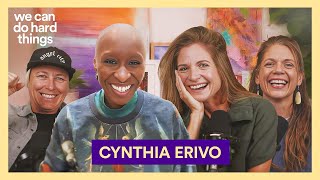
We Can Do Hard Things
Amanda’s Breakthrough: Finally Letting Go

Episode Summary
AI-generated · Mar 2026AI-generated summary — may contain inaccuracies. Not a substitute for the full episode or professional advice.
This episode of "We Can Do Hard Things" features hosts Glennon Doyle, Abby Wambach, and Amanda Doyle answering listener questions on their metaphorical couch. The central theme revolves around re-evaluating ingrained beliefs and practices to find peace and authenticity, culminating in Amanda's profound breakthrough on letting go of control and perceived burdens. The discussion opens with lighthearted banter but quickly delves into deep personal and societal critiques, offering insights into how individual choices align with broader life goals.
The first question unpacks the difference between a "vacation" and a "trip," sparked by a listener's frustration with family camping suggestions. While Abby Wambach advocates for camping as a way to disconnect and appreciate modern luxuries, Glennon Doyle humorously counters with a reinterpretation of a Bible story, arguing that humanity's creation of air conditioning, overhead lighting, and hotels represents "far greater works" than God's original nature, thus justifying indulgence in modern comforts. This segues into a broader reflection on appreciating present luxuries rather than feeling the need to deprive oneself to earn them.
Next, Glennon addresses a memoirist's query about the perceived arrogance of writing one's own story. She firmly rejects this notion, positing that using oneself as a "specimen" to explore the human condition is less arrogant than presuming to analyze or criticize others' lives. Glennon highlights the gendered criticism women memoirists face—being labeled as "navel-gazing" or "confessional" while men are seen as exploring great ideas. She asserts that women's stories matter and that embracing one's own narrative can defang societal weapons and empower self-sovereignty, citing Audre Lorde's wisdom that "anything that I accept about myself cannot be used against me."
The episode culminates with Amanda Doyle sharing her personal breakthrough regarding control, particularly after the one-year anniversary of her cancer diagnosis. Despite enduring a year of treatment, she realized she hadn't changed her life, schedule, or expectations, leading to profound sadness. Amanda felt her "highest goal" was "to do all the things," and not achieving that felt like defeat. Her perspective shifted after reading Buddhist master Huji U Kennet, whose goal for students was not to lighten their burden, but to make it "so heavy that they put it down." This reframing allowed Amanda to question which "plates" she truly wanted to hold, leading to a lighter existence with less need for excessive control.
Listeners will walk away with powerful tools for self-reflection: challenging outdated rules and beliefs, distinguishing between self-sacrifice and self-imposed prisons, and understanding that the path to peace *is* peace, rather than a delayed reward. The episode encourages listeners to critically examine their own "walls" and "burdens," and to dare to put down what doesn't serve their authentic, present self.
👤 Who Should Listen
- Anyone struggling with feeling overwhelmed by responsibilities and seeking ways to let go of control.
- Writers, especially women memoirists, who grapple with self-consciousness or criticism about telling their own stories.
- Individuals reflecting on their definition of rest and vacation, and those considering alternative approaches to leisure.
- People who find themselves stuck in cycles of 'doing all the things' and need a paradigm shift to prioritize peace.
- Listeners interested in how personal experiences and spiritual teachings can inform practical life changes.
- Those re-evaluating long-held beliefs and rules that may no longer serve their current life circumstances and privileges.
🔑 Key Takeaways
- 1.Glennon Doyle humorously reinterprets a Bible story to argue that human innovations like air conditioning and hotels are "far greater works" than natural elements, justifying indulgence in modern luxuries over activities like camping.
- 2.Writing one's own memoir is not inherently arrogant; rather, using one's own life as a "specimen" to explore the human condition can be a humble act, contrasted with the arrogance of critically analyzing others' lives.
- 3.Criticism of women writers as "naval-gazing" or "confessional" is often a gendered dismissal, whereas men writing about themselves are typically perceived as exploring universal ideas.
- 4.Amanda Doyle's post-cancer diagnosis realization was that her "highest goal" of "doing all the things" had not changed, causing her to feel sadness and an inability to let go of control.
- 5.A key insight from Buddhist master Huji U Kennet suggests that the ultimate goal is not to lighten one's burden, but to make it so heavy that one chooses to put it down, fundamentally shifting the paradigm of control.
- 6.The concept of "horizon living"—sacrificing present peace for a promised future peace—is suspicious because peace must be the means if it is to be the end.
- 7.Embracing and openly sharing your own story can defang potential weapons others might use against you, turning vulnerability into power, as inspired by Audre Lorde's quote.
💡 Key Concepts Explained
Vacation vs. Trip
This concept explores the differing definitions of leisure travel. Abby Wambach suggests a "trip" might involve depriving oneself of modern luxuries (like camping) to appreciate them more, while Glennon Doyle defines a "vacation" as indulging in comforts (like air conditioning and hotels) as humanity's "far greater works." The episode presents this as important for understanding personal preferences and challenging preconceived notions of what constitutes rest.
Arrogance of Memoir
This framework critiques the notion that writing a memoir is inherently self-centered or egotistical. Glennon Doyle argues that using one's own life as a "specimen" to explore the human condition is a humble act that fosters universal connection. The episode highlights how this criticism is often gendered, used to dismiss women's narratives while men's self-explorations are lauded as profound.
Putting Down the Burden
Inspired by Buddhist master Huji U Kennet, this concept shifts the goal from endlessly holding up life's burdens to recognizing when the burden is so heavy that the appropriate action is to put it down. Amanda Doyle's personal journey illustrates this, moving from a paradigm where not "doing all the things" felt like defeat, to understanding that releasing control and shedding unnecessary responsibilities is the true achievement and path to peace.
Horizon Living
Coined during the episode, 'horizon living' describes the practice of sacrificing present peace and well-being for the promise of future peace. The hosts argue that this approach is problematic, emphasizing that if peace is the ultimate goal, then peace must also be the means to achieve it, rather than something to be earned or perpetually delayed.
⚡ Actionable Takeaways
- →Question your definition of a "vacation": decide if it means indulging in luxuries or intentionally depriving yourself to appreciate everyday life more.
- →Reflect on whether your "highest goal" is to "do all the things"; consider if this goal is leading to resentment and burnout, and explore shifting it.
- →Examine your current burdens and consciously decide which "plates" genuinely belong to you and which you can choose to put down, following Amanda's breakthrough.
- →Identify outdated rules and beliefs you're currently living by that may no longer serve your present circumstances, especially if you have newfound agency or resources.
- →Practice self-sovereignty by daring to tell your own story and claiming your voice, understanding that your unique experiences are valuable.
- →Be suspicious of "horizon living"—the idea of sacrificing present peace for future peace; instead, strive to embody peace as both the means and the end.
⏱ Timeline Breakdown
💬 Notable Quotes
“"If Christians know anything, it's how to use the Bible to get what we want." - Glennon Doyle (00:54)”
“"I may have made tents, but You, my beloveds, will make hotels, far greater works. So I don't camp because I believe Jesus. Far greater works have been done and we should not go backwards." - Glennon Doyle (06:57)”
“"Your story is your [ __ ] right to tell. And by the way, they only say this about women." - Glennon Doyle (13:56)”
“"Her ultimate goal was not to lighten their burden, but to make their burden so heavy that they put it down." - Amanda Doyle, quoting Huji U Kennet (34:25)”
“"Anything that I accept about myself cannot be used against me." - Glennon Doyle, quoting Audre Lorde (23:14)”
📚 Books Mentioned
Listen to Full Episode
📬 Get weekly summaries like this one
No spam. Unsubscribe anytime. By subscribing you agree to our Privacy Policy.
Continue Exploring