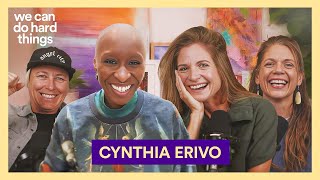
We Can Do Hard Things
Your Inner Child: Is Yours a Voyager, a Defensive Driver, or a Scuba Diver?

Episode Summary
AI-generated · Mar 2026AI-generated summary — may contain inaccuracies. Not a substitute for the full episode or professional advice.
The We Can Do Hard Things panel — Abby Wambach, Amanda Doyle, and Glennon Doyle — delve into the enduring influence of their "inner children" on their adult lives, exploring how these foundational selves shape their approaches to stress, conflict, and personal fulfillment. The episode opens with Abby's recent struggle with internal anxiety, contrasting it with her past ability to inject external joy to counteract outside stressors. She shares her current therapeutic practice of actively "injecting joy" and "play" into anxious moments, asserting that this present-focused approach alleviates anxiety rooted in future expectations.
Amanda presents her childhood self as a "defensive driver" personality, illustrating this with a six-year-old contract she drafted for a $7 loan to Glennon, complete with 10% interest, collateral (babysitting), and a dinosaur stamp notarization (10:10). She reflects on how this early impulse to create structure and guard against being "screwed" became a coping mechanism, solidifying her role as a "fixer" within the family system, potentially at the expense of developing her "feeler" self. This dynamic, she suggests, arose from a shared family environment rather than as a reaction to Glennon's later challenges (24:26).
Abby identifies her inner child as a "voyager" or "experiential human," characterized by an "obnoxious" confidence and a deep knowing that drove her to envision and pursue experiences, like winning an Olympic gold medal for women's soccer before it was even an Olympic sport (40:47). She acknowledges how fear of rejection led her to suppress these parts in adulthood but now seeks to reconnect with that childlike awe and playfulness. She grapples with whether her continued pursuit of "more" is true to her spirit or merely a reflection of a "capitalistic treadmill," posing the question of whether to "move the boat" to new adventures or "scuba dive" deeper into current experiences (46:52).
Glennon uncovers her inner child through a third-grade poem titled "Hope," which posits that "a disagreement is two different ways of thinking" and "an agreement is a compromise" (57:05). She connects this to a childhood grandiosity, believing her words could solve global conflicts, indicating a deep-seated belief that "all the problems in the world result from my failure to communicate" (61:09). Each host concludes by identifying aspects of their inner child they wish to honor and integrate, and those they aim to "upgrade" with adult consciousness to foster a healthier existence.
Listeners will walk away with a richer understanding of how childhood coping mechanisms, inherent personalities, and early-formed beliefs continue to shape adult responses to life's challenges. The episode encourages self-reflection on one's own inner child archetypes—the "voyager," "defensive driver," or the "poem-writing peacemaker"—and offers pathways to both reclaim and refine those foundational parts of self for greater joy and authenticity.
👤 Who Should Listen
- Anyone struggling with chronic anxiety or overwhelm looking for new coping strategies.
- Individuals interested in understanding how their childhood experiences impact adult behavior and relationships.
- People who feel a tension between striving for more and finding contentment in the present.
- Those exploring the concept of their "inner child" and its influence on their adult decisions.
- Listeners seeking to reclaim or re-evaluate aspects of their personality they might have suppressed.
🔑 Key Takeaways
- 1.Abby Wambach counteracts anxiety by "injecting joy" and play into stressful moments, shifting focus from future worries to present experiences (01:01, 04:02).
- 2.Amanda Doyle's inner child is characterized as a "defensive driver," stemming from an early need to create structure and protection against perceived untrustworthiness (17:16).
- 3.As a child, Amanda drafted a contract with 10% interest and collateral for a $7 loan, demonstrating a precocious analytical and protective nature (10:10).
- 4.Abby Wambach's "voyager" inner child drove her to confidently dream of achievements, like an Olympic gold medal, even before they were institutionally possible (40:47).
- 5.Glennon Doyle's third-grade poem defined "a disagreement as two different ways of thinking" and "an agreement as a compromise," revealing her childhood approach to conflict (57:05).
- 6.The panel explores the tension between pursuing new experiences ("moving the boat") and deepening appreciation for current reality ("scuba diving") (47:53).
- 7.Childhood family dynamics can lead individuals to adopt roles like "fixer" (Amanda) or "feeler," potentially leading to an abandonment of other parts of their personality (21:24).
- 8.The belief that one's communication can solve global problems (Glennon) or that one's worth is tied to performance (Abby) can be both powerful and maladaptive expressions of the inner child (39:46, 60:08).
💡 Key Concepts Explained
Injecting Joy
Abby Wambach's therapeutic practice of deliberately bringing moments of joy and play into anxious or stressful situations. This method helps her shift focus from future-based anxiety to present reality, preventing internal anxiety from taking root (01:01, 04:02).
Defensive Driving Personality
Amanda Doyle's self-identification, characterized by a constant anticipation of potential problems and a need to create order and protection. This approach, stemming from a perceived untrustworthy world, led her to develop mechanisms like detailed contracts even as a child (17:16, 18:17).
Voyager / Experiential Human
Abby Wambach's inner child archetype, driven by a deep desire to fully experience and explore life, often with a loud, confident, and sometimes "obnoxious" belief in possibilities before they materialize. This spirit fueled her pursuit of ambitious dreams (32:36, 40:47, 41:49).
Scuba Diving vs. Moving the Boat
Abby Wambach's framework for approaching adventure and fulfillment. "Moving the boat" signifies constantly seeking new external destinations for joy, while "scuba diving" represents mining deeper into current experiences and relationships for joy and meaning (47:53).
Disagreement as Two Different Ways of Thinking, Agreement as Compromise
A concept articulated by Glennon Doyle in her third-grade poem. It redefines conflict as a difference in thought processes rather than fundamental opposition, and agreement as a mutual compromise that respects individual worldviews (57:05).
⚡ Actionable Takeaways
- →Identify your inner child's primary coping style, asking if it's more like a "voyager," a "defensive driver," or a "scuba diver" (47:53).
- →Actively "inject joy" and play into everyday moments, particularly when feeling anxious or overwhelmed, as Abby describes doing (01:01).
- →Reflect on how your childhood experiences shaped your current relationship with stress, conflict, and self-worth, particularly if you find yourself constantly striving or defending.
- →Consider if your pursuit of "more" is genuinely aligned with your spirit or if it's a "proxy to the capitalistic treadmill," as Abby questions (46:52).
- →Practice viewing disagreements as simply "two different ways of thinking" and agreements as "compromises," allowing for mutual respect without abandoning your perspective (57:05).
- →Place a picture of your child self somewhere visible to foster connection and honor your "tender child self doing the best she could" (65:15).
⏱ Timeline Breakdown
💬 Notable Quotes
“"I have been actively making our life worse because I'm not injecting what joy we need in the world." (00:00)”
“"If you have the power to create an anxiety with your head, with your with your thoughts... then I also have the other power to not to create something different which is possibility and hope and motivation and inspiration." (06:06)”
“"If defensive driving was a personality, that's what I'd be like." (17:16)”
“"A disagreement is two different ways of thinking. An agreement is a compromise." (57:05)”
Listen to Full Episode
📬 Get weekly summaries like this one
No spam. Unsubscribe anytime. By subscribing you agree to our Privacy Policy.
Continue Exploring