Topic
Best Authenticity Podcast Episodes
Authenticity is covered across 14 podcast episodes in our library, spanning 7 shows and 11 expert guests — including The Ed Mylett Show, The School of Greatness, We Can Do Hard Things. Conversations explore core themes like god or nothing, benevolent manipulation, fatigue guy, drawing on firsthand experience and research from leading practitioners.
Below you'll find key insights, core concepts, and actionable advice aggregated from the top episodes — followed by a ranked list of the best authenticity discussions to explore next.
Key Insights on Authenticity
- 1.Pete Holmes's Boston upbringing, characterized by a "repressed" environment, ironically provided fertile ground for developing stand-up comedy as a safe outlet for emotional expression.
- 2.Early career success in any field can be effectively measured by comparing oneself to peers at the same developmental stage, rather than established giants, to avoid being overwhelmed.
- 3.A comedian's stage presence, as demonstrated by Pete Holmes, can involve "benevolent manipulation" through smiles, laughter, and cues to guide the audience into a joyful, open, and receptive state.
- 4.To prevent fatigue and keep material fresh, performers (and professionals in other fields) should vary their delivery, sequence, and continuously remind themselves the audience is hearing it for the first time.
- 5.Pete Holmes's "God or nothing" framework proposes that both rigid atheism and theism ultimately converge on the acknowledgment of an unknowable, unprovable mystery at the heart of existence.
- 6.Cultivating a practice of "witnessing" the present moment allows individuals to escape the addiction to future goals and find deeper meaning and presence in their current experiences.
Key Concepts in Authenticity
God or nothing
Pete Holmes's concept posits that both atheism and theism, despite their seeming opposition, ultimately describe an unknowable, unprovable mystery at the core of existence. This framework encourages shared understanding and focuses on the common ground of human experience rather than dogmatic division.
Benevolent manipulation
This describes Pete Holmes's intentional use of stage techniques—like smiling, laughing at his own jokes, or moving the microphone—to subtly guide the audience's emotional experience. The goal is to create a joyful, light atmosphere where they can relax and enjoy, treating the performance like a 'vacation' for their minds.
Fatigue guy
Pete Holmes's self-description as someone whose comedic material 'dies' if he performs it too often, losing its emotional resonance. This concept highlights the importance of managing one's creative output to maintain freshness and authenticity, rather than simply maximizing repetitions, applicable to any performance-based role.
Witnessing yourself/the moment
A practice championed by Ed Mylett and Pete Holmes for cultivating presence. It involves consciously observing oneself and the immediate surroundings, snapping out of the tendency to constantly chase the 'next moment' or dwell on past experiences, thereby deepening one's engagement with life as it unfolds.
Actionable Takeaways
- ✓Gauge your early progress by comparing yourself to others at your current level, aiming to be among the top performers in your immediate peer group, as Pete Holmes did in open mics [07:09].
- ✓Identify what truly "juices" or excites you in your work; the euphoric feeling after a good performance or achievement can be a reliable indicator of your correct path [09:11].
- ✓When speaking or performing, intentionally use positive non-verbal cues like smiling and laughter to create a welcoming and joyful atmosphere for your audience [13:15].
- ✓Combat content fatigue by actively varying the order or delivery of familiar material, or by openly acknowledging when a message feels stale, to keep your engagement authentic [23:26].
- ✓Assume the "position of the authority" in your role, whether as a parent, leader, or speaker, as a kindness to others to provide clear, confident guidance and put them at ease [25:29].
Top Episodes — Ranked by Insight (showing 10 of 14)
View all 14 →
The Ed Mylett Show
Why You Feel Empty Even When You’re Winning Feat. Pete Holmes
Pete Holmes's Boston upbringing, characterized by a "repressed" environment, ironically provided fertile ground for developing stand-up comedy as a safe outlet for emotional expression.

The School of Greatness
7 Manifestation SECRETS You Were Never Told!
Your inner voice and emotional environment, shaped by both conscious and unconscious stories, fundamentally determine your reality, and belief in these stories is more vital than mere affirmations.

The Ed Mylett Show
He Was in the Pentagon on 9/11 | The Truth About Real Leadership Feat. Vice Admiral James Crawford
True leadership is revealed in times of crisis, where individuals revert to their training and core character, highlighting the importance of having strong foundational values.

We Can Do Hard Things
Jon Batiste + Suleika Jaouad: WHAT IS ENOUGH?
Creative collaboration, especially in romantic partnerships, requires navigating inherent differences (e.g., planner vs. improviser) and pushing each other to find deeper authenticity.

The Ed Mylett Show
John Maxwell: The REAL Reason You’re Afraid to Fail
The primary reason people avoid failure is ego and an excessive concern for how they appear to others, not the inherent difficulty or consequences of the failure itself [00:00, 07:06].
Conan O'Brien Needs a Friend
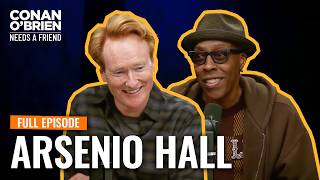
Arsenio Hall (FULL EPISODE) | Conan O'Brien Needs A Friend
Arsenio Hall's memoir, "Arsenio," was written to correct public "misconceptions" [05:22] about his career, particularly the erroneous belief that he retreated into reclusion after his talk show.

SmartLess
Charli xcx | SmartLess
Charli XCX describes her early career as a "strange career" where she was often the writer or feature on big hits but remained "completely anonymous," a phase she found "very useful" for preparing her for wider audiences later (27:35).
Conan O'Brien Needs a Friend
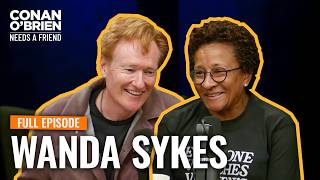
Wanda Sykes (FULL EPISODE) | Conan O'Brien Needs A Friend
Wanda Sykes's comedic voice evolved from observational jokes echoing others to a deeply personal and authentic style, catalyzed by significant life events like her divorce.

We Can Do Hard Things
We're Moving Back To Audio...Join Us!
The "We Can Do Hard Things" podcast is discontinuing its video format on YouTube and returning to audio-only episodes on traditional podcast platforms.

Modern Wisdom
Miley Cyrus Addresses the Tongue 😛
Miley Cyrus's signature tongue-out pose originated as a nervous habit due to her intense discomfort with taking pictures, not as a deliberate brand strategy.
Episodes ranked by insight density — scored on key takeaways, concepts explained, and actionable advice. AI-generated summaries; listen to full episodes for complete context.