Found My Fitness
How the Menstrual Cycle Affects Training and Recovery | Abbie Smith-Ryan, Ph.D.
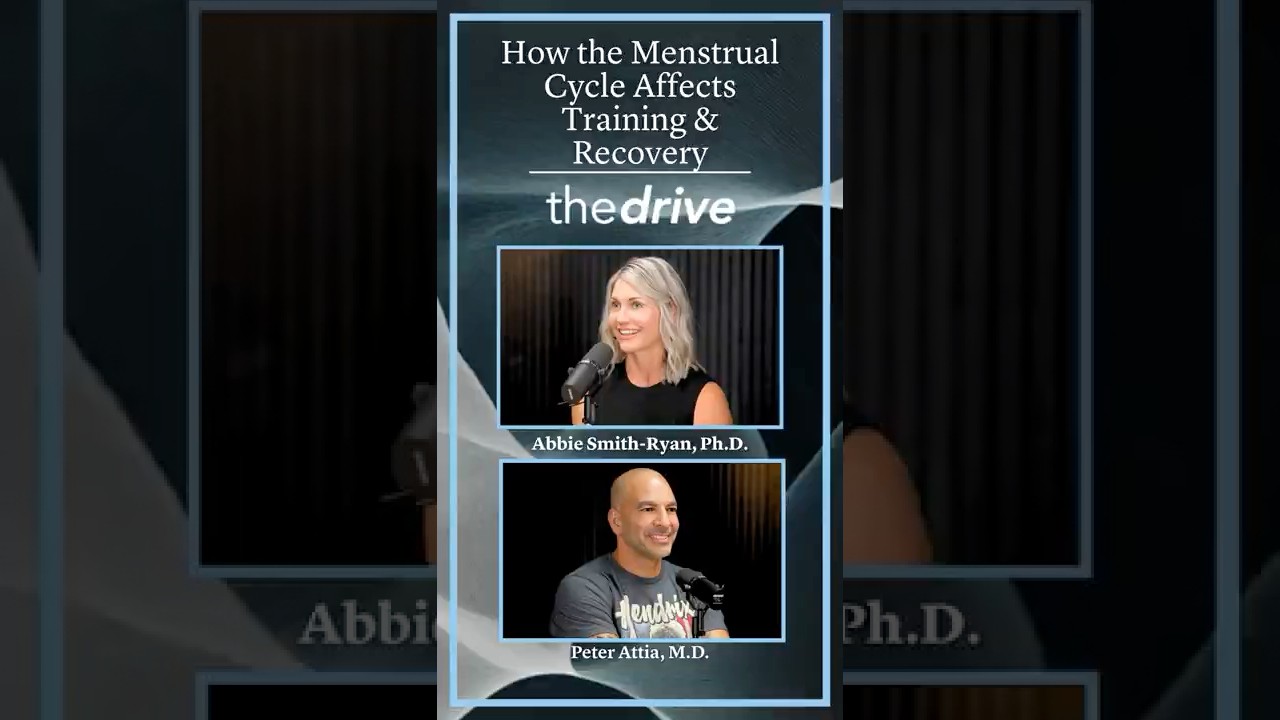
Episode Summary
AI-generated · Mar 2026AI-generated summary — may contain inaccuracies. Not a substitute for the full episode or professional advice.
Abbie Smith-Ryan, Ph.D., a renowned expert in exercise physiology and nutrition with a focus on female athletes, challenges common misconceptions about the menstrual cycle's impact on training and performance. Her central thesis, grounded in extensive data, posits that women are capable of training and competing effectively at any point in their cycle. However, she emphasizes that the physiological responses experienced during different phases significantly affect how women *feel* and how efficiently they *recover*.
Dr. Smith-Ryan explains that women frequently report feeling worse during specific phases, particularly the luteal phase (the period right before menstruation). During this time, symptoms such as increased fatigue, bloating, and elevated soreness can significantly impact an athlete's subjective experience and recovery process. She clarifies that this is a normal physiological response, not necessarily an inherent limitation on peak performance capacity.
The conversation addresses the perceived "injustice" for female athletes if key events coincide with challenging points in their cycle. While acknowledging these feelings, Dr. Smith-Ryan argues that data indicates women will compete regardless. She pivots the focus from performance impairment to the critical role of recovery, especially in multi-event competitions like the Olympics, where repeated efforts demand robust recovery strategies. She stresses the importance of applying scientific insights to optimize recovery, specifically by tailoring approaches to address inflammation and protein breakdown differently during the luteal versus the follicular phase.
Ultimately, Dr. Smith-Ryan advocates for a nuanced approach to training around the menstrual cycle. Instead of assuming performance is inherently impeded, the emphasis should be on utilizing targeted recovery tools and strategies to mitigate the impact of adverse physiological symptoms, thereby enabling consistent high-level performance and overall well-being throughout the cycle.
👤 Who Should Listen
- Female athletes across all sports and ages
- Coaches and trainers working with female athletes
- Women who regularly engage in exercise and fitness training
- Sports scientists and researchers interested in women's physiology and performance
- Anyone seeking to optimize their training and recovery based on their menstrual cycle
🔑 Key Takeaways
- 1.Women can effectively train and compete at any point in their menstrual cycle, according to data from Dr. Abbie Smith-Ryan's research.
- 2.The luteal phase (pre-menstruation) is often associated with women feeling more fatigued, bloated, and experiencing increased soreness, which is a normal physiological response.
- 3.Subjective feelings of discomfort or reduced energy during certain cycle phases do not inherently mean peak performance is unattainable.
- 4.The primary focus for managing training around the menstrual cycle should be on optimizing recovery, rather than on limitations to performance.
- 5.Scientific strategies should be employed to assist with recovery, including managing inflammation and protein breakdown, which may need to be adjusted between the luteal and follicular phases.
- 6.For multi-event competitions, tailored recovery protocols based on cycle phase are crucial for sustained performance.
💡 Key Concepts Explained
Luteal Phase
This is the phase of the menstrual cycle immediately following ovulation and preceding menstruation. Dr. Smith-Ryan explains that women often feel more fatigued, experience bloating, and report increased soreness during this period, impacting their subjective experience and recovery.
Follicular Phase
This is the phase of the menstrual cycle from the first day of menstruation until ovulation. The episode implies contrasting recovery strategies between this phase and the luteal phase, suggesting different needs for managing inflammation and protein breakdown.
Cycle-Adaptive Recovery
This concept, central to the discussion, involves tailoring recovery strategies—specifically addressing inflammation and protein breakdown—differently across the various phases of the menstrual cycle (e.g., luteal vs. follicular) to optimize an athlete's ability to recover and maintain performance.
⚡ Actionable Takeaways
- →Acknowledge that feelings of increased fatigue, bloating, or soreness during the luteal phase are normal physiological responses, not necessarily signs of inability to train.
- →Prioritize and implement specific recovery strategies, such as those targeting inflammation and protein breakdown, with heightened attention during the luteal phase.
- →Adjust recovery protocols based on the specific phase of the menstrual cycle, differentiating approaches for the luteal versus follicular phases.
- →Coaches and female athletes should focus on science-backed recovery tools to support performance in repeated events, regardless of cycle timing.
⏱ Timeline Breakdown
💬 Notable Quotes
“"We can train at any given time in our cycle. Uh but what we do see is it's very clear that women uh and girls feel worse during different phases of the cycle and I think that's a really important point."”
“"I do think it's more about the recovery. So if we take an event where they often the Olympics is not just a single event, it's repeated and so really bringing science and to help with recovery and inflammation and protein breakdown where we might do it differently in the ludial phase versus the follicular phase."”
More from this guest
Abbie Smith-Ryan, Ph.D.
Listen to Full Episode
📬 Get weekly summaries like this one
No spam. Unsubscribe anytime. By subscribing you agree to our Privacy Policy.
Continue Exploring


