Found My Fitness
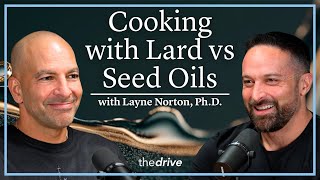
The Evolutionary Argument Against Eating Seed Oils | Layne Norton, Ph.D.

Episode Summary
AI-generated · Mar 2026AI-generated summary — may contain inaccuracies. Not a substitute for the full episode or professional advice.
In this episode of Found My Fitness, Dr. Layne Norton dissects the common "evolutionary argument" often made against consuming seed oils. He opens by pointing out the stark contrast between ancestral diets, which largely lacked seed oils, and modern diets, where these oils now contribute 10-15% of total calories for many individuals, posing the initial "first principles argument" against them. This sets the stage for a deeper exploration of whether evolutionary history is a reliable guide for optimal modern health.
Dr. Norton then challenges simplistic interpretations of "natural" or "ancestral" diets. He highlights that even supposedly natural foods, like a fatty ribeye, come from animals (cows) that have been significantly modified through domestication and agriculture, making them far different from their wild counterparts. He further explains that human biology is primarily designed for genetic propagation; evolution's "purpose" wanes after breeding age, around 40, contributing to natural decline and the emergence of diseases like cardiovascular disease, which are now prevalent precisely because modern humans live long enough to develop them, unlike ancestors who faced other mortality risks.
He argues against using ancestral presence or absence as the sole barometer for health. Instead of asking if we evolved eating a particular food, Dr. Norton suggests the more crucial question should be: "based on the best evidence we have, what is the overall net effect of these [things]?" This framework emphasizes empirical data and comprehensive understanding over historical precedent alone, acknowledging humanity's remarkable adaptability as a key to survival, not just strength.
Listeners will walk away with a more sophisticated understanding of how to critically evaluate nutritional claims rooted in evolutionary biology, particularly regarding modern dietary components like seed oils. The discussion provides tools to move beyond simplistic appeals to nature and instead focus on a more evidence-based approach to diet and health.
👤 Who Should Listen
- Anyone interested in the debate surrounding seed oils and their impact on health.
- Listeners who seek a nuanced and evidence-based perspective on 'ancestral' or 'evolutionary' nutrition claims.
- Individuals who are skeptical of simplistic dietary advice and want to understand underlying biological principles.
- People curious about how human longevity and evolution intersect with modern disease patterns.
- Those interested in Layne Norton's scientific approach to fitness and nutrition.
🔑 Key Takeaways
- 1.Modern diets often derive 10-15% of total calories from seed oils, a consumption level dramatically higher than any seen in ancestral human environments.
- 2.The concept of an "ancestral diet" is complicated by modern agricultural practices, as even common foods like fatty ribeye come from animals significantly modified from their wild ancestors.
- 3.Evolution's primary drive is genetic propagation, meaning human health naturally declines after breeding age (around 40) because evolutionary pressure diminishes.
- 4.The rise in diseases like cardiovascular disease is partly a consequence of increased human longevity, allowing individuals to live long enough to develop these conditions.
- 5.Humanity thrived due to its adaptability to diverse environments, making adaptation a more crucial survival trait than mere strength.
- 6.The central question for evaluating dietary components like seed oils should be "what is the overall net effect of these?" based on current evidence, rather than solely "did we evolve eating this?"
💡 Key Concepts Explained
First Principles Argument Against Seed Oils
This concept posits that because humans did not evolve consuming seed oils in significant quantities, and now they constitute a substantial portion of modern caloric intake (10-15%), there is a fundamental reason to view them as potentially harmful. The episode challenges the simplicity of this argument by introducing biological and historical nuances.
Adaptability as a Survival Trait
This framework suggests that the ability of an organism to adapt to its changing environment is more crucial for its survival and thriving than brute strength. The episode uses this to argue that human evolution demonstrates a capacity to adapt to varied diets, questioning rigid interpretations of "ancestral" eating.
⚡ Actionable Takeaways
- →Critically assess dietary recommendations that solely rely on arguments about ancestral consumption or absence of specific foods like seed oils.
- →Consider that modern agriculture has altered many food sources, making direct comparisons to "ancestral" versions problematic for nutritional evaluation.
- →Shift focus from whether a food was historically present to its overall net effect on human health, supported by current scientific evidence.
- →Recognize that increased lifespan in modern society means the body will naturally experience age-related declines and diseases that were less common in earlier human history.
- →Prioritize scientific adaptability and evidence-based reasoning when making dietary choices over rigid adherence to perceived evolutionary diets.
⏱ Timeline Breakdown
💬 Notable Quotes
“We did not evolve in an environment where people were consuming seed oils in much quantity at all. And yet today, people are probably getting 10 to 15% of their total calories from these things.”
“I don't think what we think might be natural is necessarily a good barometer for what is conducive to living the longest healthiest life.”
“The question really shouldn't be did we evolve eating seed oils or did we evolve eating this. The question should be based on the best evidence we have, what is the overall net effect of these.”
More from this guest
Layne Norton, Ph.D.
Listen to Full Episode
📬 Get weekly summaries like this one
No spam. Unsubscribe anytime. By subscribing you agree to our Privacy Policy.
Continue Exploring