Huberman Lab
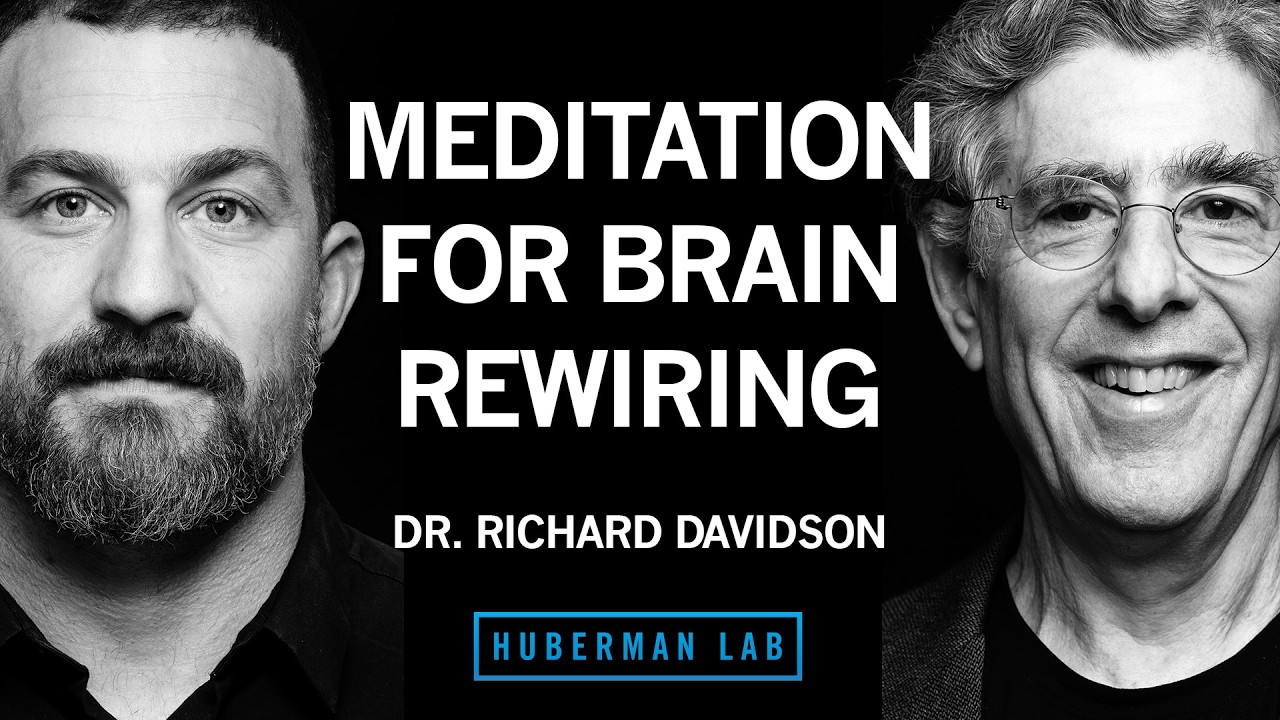
Science-Based Meditation Tools to Improve Your Brain & Health | Dr. Richard Davidson
Episode Summary
AI-generated · Mar 2026AI-generated summary — may contain inaccuracies. Not a substitute for the full episode or professional advice.
This Huberman Lab episode features Dr. Richard Davidson, a pioneer in studying how meditation impacts the brain and its neuroplasticity. The discussion highlights the scientifically proven benefits of regular meditation, even in very brief durations. Randomized controlled trials show that meditating for just five minutes a day over 30 days can lead to significant reductions in symptoms of depression, anxiety, and stress, an increase in well-being, and a reduction in IL6, a pro-inflammatory cytokine.
Dr. Davidson debunks common myths, explaining that the goal of meditation is not to clear your mind or achieve inner peace during the practice. Instead, it's about observing your thoughts and any stress you might experience. This observation process acts like a "lactate of the mind," fostering adaptation and making individuals more stress-resilient, focused, and peaceful outside of meditation. Host Andrew Huberman shares his personal experience, noting a profound positive impact on his mental clarity, focus, sleep, and stress levels after implementing a five-minute daily stress resilience meditation as described by Dr. Davidson.
The conversation delves into the distinction between "states of mind" and "traits," where frequent states can lead to shifts in one's baseline traits, captured by the phrase, "the after is the before for the next during." They explore various brain oscillations (delta, theta, alpha, beta, gamma waves) and their association with different mental states. Notably, long-term meditators demonstrate sustained, high-amplitude gamma oscillations, typically associated with fleeting moments of insight. The episode also categorizes meditation into types like focused attention and open monitoring, emphasizing the shift from a "doing" mode to a mode of simply "being" and clarifies that meditation does not replace the need for adequate sleep, citing the Dalai Lama's nine hours of sleep per night despite four hours of daily meditation.
👤 Who Should Listen
- Mindfulness Practitioners
- Mental Health Advocates
- Anyone Struggling with Sleep
🔑 Key Takeaways
- 1.Practicing meditation for just 5 minutes a day over 30 days can significantly reduce symptoms of depression, anxiety, and stress, while increasing well-being.
- 2.Brief daily meditation can also lead to a reduction in IL6, a pro-inflammatory cytokine.
- 3.Contrary to common belief, the point of meditation is not to clear your mind or feel inner peace, but to observe your thoughts and stress, which builds stress resilience.
- 4.The 'stress' experienced and observed during meditation acts like 'lactate of the mind,' leading to increased focus and peacefulness outside of the meditation practice.
- 5.Meditation practices can be classified into categories like focused attention (narrowing awareness to a specific object) and open monitoring (broadening awareness to whatever arises).
- 6.In open monitoring, the invitation is to shift from a 'doing' mode (e.g., planning, ruminating) to a 'being' mode, simply being aware of thoughts or feelings without trying to change them.
- 7.Sustained, high-amplitude gamma oscillations in the brain, associated with insight, are observed in long-term meditators.
💬 Notable Quotes
“If you do it for 30 days and you do it just five minutes a day, you will see a significant reduction in symptoms of depression, symptoms of anxiety, and symptoms of stress.”
“The point of meditation is not to clear your mind or to feel inner peace during the meditation, but rather to observe your thoughts and any stress you might experience during the meditation.”
“The invitation is to shift from a mode of doing to a mode of simply being.”
More from this guest
Dr. Richard Davidson
Listen to Full Episode
📬 Get weekly summaries like this one
No spam. Unsubscribe anytime. By subscribing you agree to our Privacy Policy.
Continue Exploring