We Can Do Hard Things
Let’s Help Care for Gaza’s Orphans w/ Our Friend Akram Ibrahim
Episode Summary
AI-generated · Mar 2026AI-generated summary — may contain inaccuracies. Not a substitute for the full episode or professional advice.
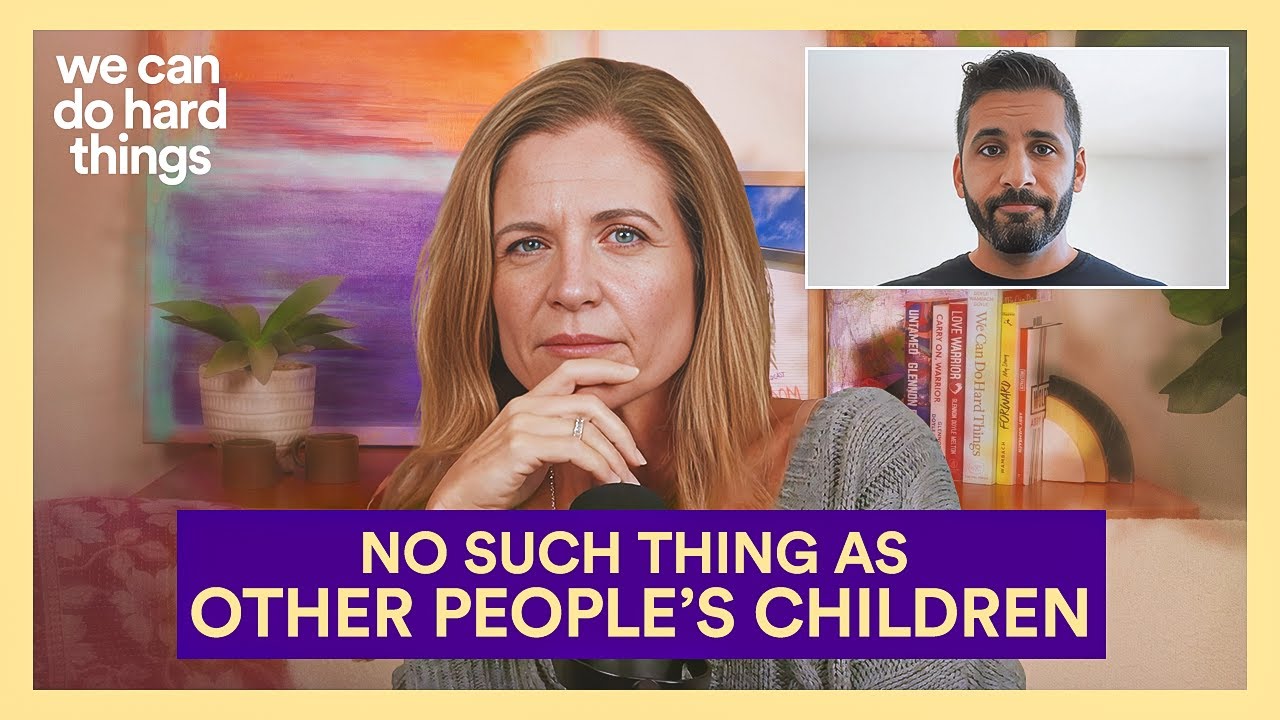
This episode features Akram Ibrahim, a Palestinian American volunteer for the Palestinian Children's Relief Fund (PCRF), to discuss the urgent humanitarian crisis facing children in Gaza. The hosts, who lead the nonprofit Together Rising, frame the conversation around their community's long-standing belief that "there is no such thing as other people's children," a principle that has guided $56 million in collective aid globally. The central thesis of the episode is a direct call to action to support the most vulnerable children in Gaza: those designated as "Wounded Child, No Surviving Family" (WCNSF) by Doctors Without Borders.
Akram Ibrahim details PCRF's 30-year history of providing critical medical care and rebuilding infrastructure for Palestinian children, operating continuously through various bombardments and ceasefires. He explains that the WCNSF designation highlights a new level of devastation, where children injured by bombs have no parents or extended family left to care for them—a stark departure from historical community support. While a recent ceasefire is a welcome reprieve, Akram emphasizes it is "the beginning, not the end" of the necessary work, as thousands of children require ongoing medical, nutritional, rehabilitative, and psychological support.
Throughout the conversation, Akram provides crucial historical context, countering the narrative that the current crisis began on October 7th. He shares personal anecdotes from his childhood activism, explaining the deep importance of recognizing "Palestine as a place"—not just a people—in the face of decades of occupation, restricted movement, and illegal settlements. He highlights the resilience, hospitality, and deep-rooted community of Palestinians, symbolized by the olive tree, and encourages listeners to support Palestinian businesses and elevate Palestinian voices.
Together Rising has previously supported PCRF with significant grants, and the hosts commit to matching the first $100,000 in donations for this initiative. The funds raised will go directly to PCRF's Gaza Orphan Sponsorship Program, supporting communities caring for these WCNSF children with medical needs, nutrition, infant support, eyeglasses, and mental health services, ensuring they remain in Palestine. The episode concludes with a powerful message of sustained involvement and a rejection of apathy, urging listeners to combine acts of care with personal joy to avoid burnout in long-term advocacy.
👤 Who Should Listen
- Individuals seeking to provide direct humanitarian aid to children severely impacted by the conflict in Gaza.
- Anyone interested in understanding the specific challenges and needs of orphaned and wounded children in conflict zones.
- Listeners who want a historical overview of the Israeli-Palestinian conflict and the long-term impact of occupation beyond recent events.
- Activists and community organizers looking for insights into effective, sustained grassroots efforts and transparent charitable giving for international causes.
- People aiming to support Palestinian culture and economy through ethical consumption and amplification of Palestinian voices.
- Supporters of the philosophy that all children deserve care and protection, regardless of their background or location.
🔑 Key Takeaways
- 1.The designation "Wounded Child, No Surviving Family" (WCNSF), created by Doctors Without Borders, describes children in Gaza who are injured and have no parents or extended family left to care for them, indicating a new level of crisis.
- 2.PCRF (Palestinian Children's Relief Fund) has been operating for over 30 years, providing medical care, rebuilding hospitals, and offering humanitarian aid to Palestinian children, consistently earning four-star ratings on Charity Navigator for transparency.
- 3.The number of orphaned children in Gaza is staggering, with over 32,132 children having lost fathers, 4,417 mothers, and 1,918 both parents as of late last year, with current estimates now exceeding 40,000.
- 4.Akram Ibrahim argues that the current humanitarian crisis did not begin on October 7th, encouraging listeners to "pay attention to when you started paying attention" to understand the decades-long Israeli occupation, checkpoints, and settlements.
- 5.The Palestinian community strongly emphasizes the importance of Palestine being recognized as a physical place, not just a scattered people, to maintain identity, roots, and resist displacement, with the olive tree serving as a profound symbol of their deep connection to the land.
- 6.The ceasefire, while welcome, is viewed by humanitarian workers as "the beginning, not the end" of efforts, as extensive needs for medical, nutritional, rehabilitative, and psychological support for children and communities persist.
- 7.Beyond direct aid, listeners can support Palestinians by actively seeking out and purchasing Palestinian-made products (like olive oil) and by following, elevating, and supporting Palestinian voices, authors, musicians, and businesses.
- 8.Akram advises maintaining personal joys and self-care activities (like going to brunch or coaching sports) to avoid being "swallowed up by the dark stuff," enabling sustained and effective engagement in long-term advocacy for the Palestinian cause.
💡 Key Concepts Explained
Wounded Child, No Surviving Family (WCNSF)
This is a new designation created by Doctors Without Borders for children in Gaza who have been wounded and have no remaining parents or family members to care for them. It signifies an unprecedented level of familial decimation due to the scale of the recent conflict, where traditional extended family networks are no longer sufficient to absorb orphaned children.
Pay attention to when you started paying attention
This phrase, used by Akram Ibrahim, encourages listeners to critically examine their awareness of the Israeli-Palestinian conflict. It highlights that while many people are only recently paying attention, the struggle for Palestinians has been ongoing for decades, and understanding this history is crucial to comprehending the current situation.
The olive tree as a symbol of Palestinian culture
The olive tree is deeply rooted in Palestinian culture and serves as a powerful symbol of the Palestinian people's connection to their land, resilience, and rootedness. Akram explains that uprooting olive trees is especially devastating as they represent a vital source of economy, culture, and identity.
⚡ Actionable Takeaways
- →Donate funds to the Palestinian Children's Relief Fund (PCRF) through the link provided by Together Rising to support wounded children with no surviving family (WCNSF) in Gaza, with the first $100,000 matched by the hosts.
- →Seek out and purchase Palestinian olive oil and other Palestinian-made exports to support the Palestinian economy directly.
- →Follow and elevate Palestinian voices, authors, creators, and musicians on social media and other platforms.
- →Identify and support Palestinian-owned businesses, such as restaurants and grocery stores, in your local community or online.
- →Leave positive reviews for Palestinian businesses you support to counter potential negative sentiment and help them thrive.
- →Continue to engage in personal self-care and enjoyable activities, such as going to brunch or hobbies, to sustain your energy and avoid burnout in advocacy efforts.
- →Engage in conversations with others to raise awareness about the Palestinian cause, understanding that even small acts of sharing information can create a domino effect.
⏱ Timeline Breakdown
💬 Notable Quotes
“There is no such thing as other people's children.”
“Wounded child, no surviving parent.”
“Pay attention to when you started paying attention.”
“We want Palestinians to stay in Palestine. The more you take out, the easier it is to be like, 'This land is open. Let's move in.'”
“The scariest thing somebody can say is I can't like what can I do that would be enough or I can't do enough to make a difference...”
“At the end of the day, if I let myself get swallowed up by the dark stuff, then I can't help out the way that I know I need to help out.”
More from this guest
Akram Ibrahim
📚 Books Mentioned
Listen to Full Episode
📬 Get weekly summaries like this one
No spam. Unsubscribe anytime. By subscribing you agree to our Privacy Policy.
Continue Exploring